
Do Not Hoard Money in Bank Accounts: Experts Reveal the Ideal Limit
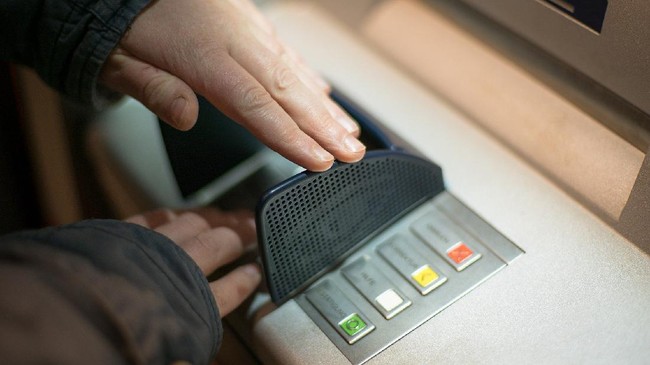
Keeping cash in bank savings accounts remains a primary choice for many people. Besides the high liquidity factor, easily accessible funds are crucial for maintaining daily financial stability, especially amidst the uncertainty of global economic conditions.
However, placing too much money in one place carries its own set of risks, ranging from the threat of cybercrime and potential transaction errors to the erosion of money’s value by inflation if left stagnant for the long term without diversification into other instruments.
So, what is the ideal nominal limit or portion that is safe to keep in a bank account?
Several financial planners generally suggest that the cash remaining in a savings account should be sufficient to cover living expenses or routine bills for one full month.
“Savings accounts often do not have the same protections as credit cards,” meaning that “funds can be more difficult to recover” if your account is compromised, stated Jessica Goedting, a certified financial planner in Pennsylvania, USA, as quoted from CNBC Make It.
Store in More Productive Instruments
Therefore, hoarding large amounts of cash in daily transaction accounts is considered an unwise financial move. According to another financial planner, Gregory Guenther, ideally, one should only keep enough funds for one to two weeks of needs in their primary account, while the remainder of their wealth is allocated to more productive investment instruments.
“If the balance is too low, you will feel anxious about every transaction; but if it is too high, you will lose the potential for wealth growth from accounts with higher yields. The equilibrium point is highly personal, but ideally, it should allow you to live comfortably without having to re-check your balance before purchasing daily necessities,” Gregory emphasised.
Do Not Mix with Emergency Funds
It should be noted that the allocation of operational funds in daily accounts follows a different principle from emergency funds.
Emergency funds are specifically designed to anticipate large, sudden, and unexpected expenses, such as emergency medical bills or the risk of redundancy (layoffs).
Financial planners suggest that emergency funds should be set aside in an amount equivalent to three to six months of routine expenses. The storage of these funds should be kept in separate, still-liquid instruments, such as high-interest savings accounts, so that the money is always ready when needed without compromising long-term financial security.
Source: jawawa.id (https://jawawa.id/newsitem/do-not-hoard-money-in-bank-accounts-experts-reveal-the-ideal-limit-1788670505)
Originally published by CNBC Indonesia (https://www.cnbcindonesia.com/market/20260906011355-17-765385/jangan-timbun-uang-di-rekening-bank-maksimal-segini-menurut-pakar), translated from Indonesian