
Do Not Change the Use of Forests Burnt by Wildfires, Task Force Warns
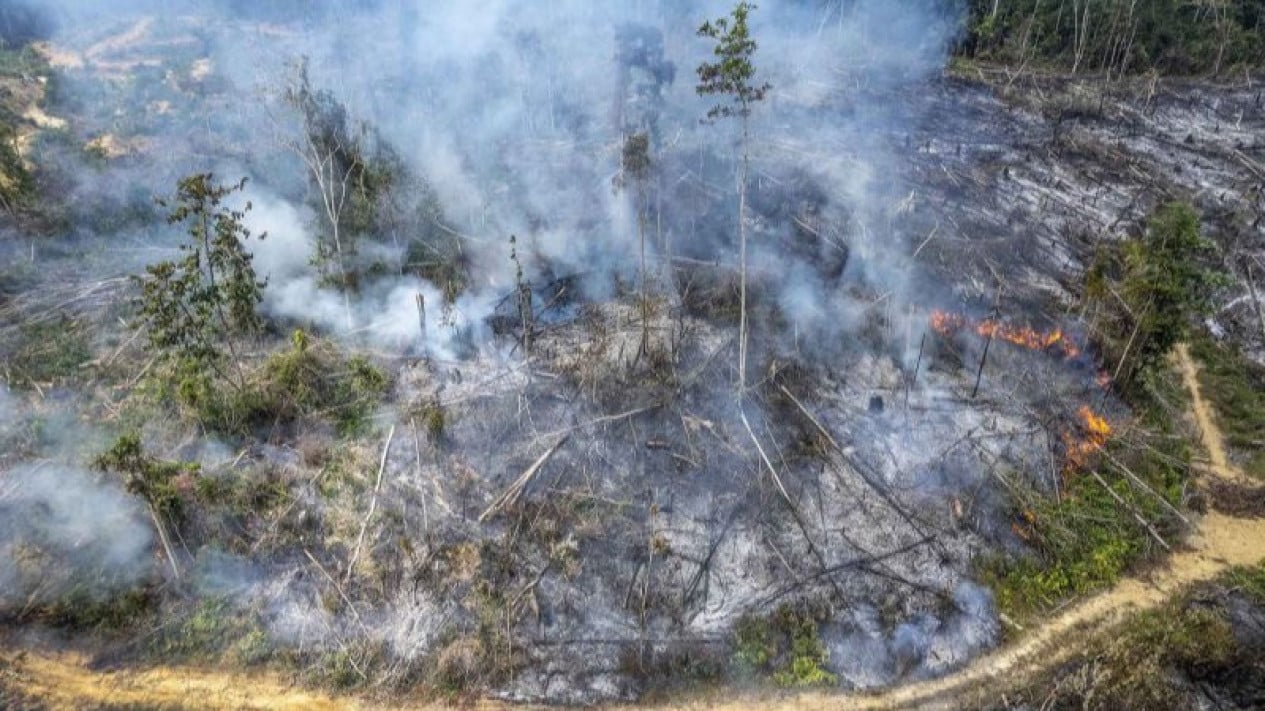
Forest areas burnt by forest and land fires must not simply be converted into land for other purposes.
The Forest Area Enforcement Task Force (Satgas PKH) has warned that those who change the designated use of forest areas could face criminal charges.
The warning comes as authorities deal with wildfire cases in several parts of Indonesia. Satgas PKH stressed that fires cannot be used as a reason to change the designation of forest areas, particularly protected and conservation forests.
Barita Simanjuntak, the task force’s spokesperson, said that changing the use of forest areas carried legal consequences. Criminal penalties could also be compounded if violations were found in connection with the fires.
“Any change of use in a forest area carries the threat of criminal penalties, so it cannot be done,” Barita said, as quoted on Sunday (25 October 2026).
Barita explained that burnt protected and conservation forests must be restored as forest areas. Once the fires have been extinguished, restoration through reforestation should be carried out under the respective authority of the Ministry of Forestry, the Ministry of Environment and local governments.
“If a forest and land fire occurs within a forest area, what kind of forest area is it? If it is a protected or conservation forest, its use cannot be changed; it must remain forest,” he said.
However, companies may also face legal consequences if their activities cause fires in legally managed production forests. In such cases, investigations and criminal inquiries fall under the authority of the police.
“The fire has already happened, and the police have immediately investigated and established the facts. They will carry out their investigative functions and exercise their authority,” he said.
Police have so far named 11 companies and 223 individuals as suspects in forest and land fire cases across Indonesia.
Barita stressed that handling suspected fire-related crimes is separate from the task force’s work to enforce regulations in forest areas. Once a case enters the criminal justice system, those suspected of responsibility must go through the legal process.
“So it does not go back upstream to become the task force’s matter; it has entered law enforcement, which is much tougher than simply enforcing order. This is no longer just enforcement, but legal accountability for an alleged criminal act that caused a forest fire,” he said.