
Do Indonesian Citizens Love Electric Vehicles So Much They Ignore the Lack of Charging Stations?
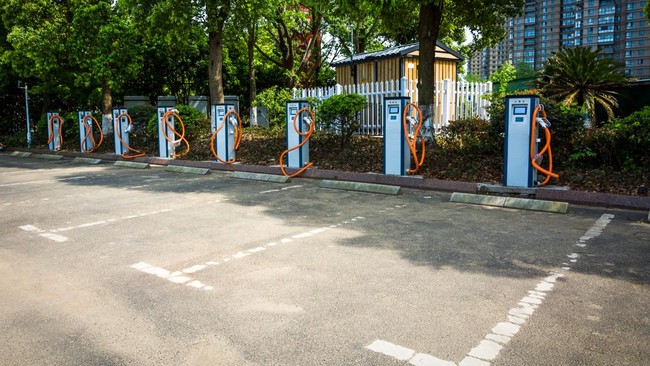
The use of electric vehicles in Indonesia faces challenges beyond just price and battery technology. The habit of Indonesian citizens travelling long distances also presents a unique challenge, particularly regarding the readiness of electric vehicle charging facilities.
Automotive observer Bebin Djuana stated that driving range is not actually a major issue for daily electric vehicle use, as consumers’ daily travel needs generally remain relatively short.
“Regarding driving range, it is slightly different for Indonesian consumers. For daily use, it might be around 50 to 100 kilometres,” Bebin told CNBC Indonesia on Monday (21/09/26). For context, 100 km is roughly the distance from Jakarta to Bandung.
However, Indonesian consumers have a habit of travelling or taking road trips, especially during holidays. “But Indonesian consumers love to travel. When Friday is a holiday,” he said.
Bebin went on to describe the condition of toll roads when the public travels simultaneously during holiday periods, where vehicle congestion can last for a very long time. “Then you will hear from social media that toll gates are full, and cars are everywhere, 24 hours a day,” said Bebin.
This situation raises questions regarding the readiness of public charging facilities if the number of electric vehicles undertaking long-distance journeys increases. “Is the public charging facility ready to serve so many cars?” he asked.
The characteristic of Indonesian consumers who insist on travelling makes the availability of charging facilities a challenge that must be addressed. Consequently, the growth of electric vehicles requires not only an increase in the number of vehicles but also the readiness of the supporting ecosystem, specifically charging infrastructure for long-distance travel.
“But they do not care. They still set off. Yes, that is the Indonesian consumer,” said Bebin.
In fact, Indonesian consumers may accept the consequence of having to wait quite a long time to charge their vehicle batteries. “They are even willing to stay overnight just to charge their car to full,” he added.
As is known, the Association of Indonesia Automotive Industries (Gaikindo) recorded wholesale sales for petrol-powered vehicles—comprising LCGC, non-LCGC ICE passenger cars, and commercial vehicles—at 54,683 units in August 2026. This figure represents a 4.34% decrease compared to July, which reached 57,166 units.
During the same period, pure electric vehicle sales actually recorded a surge. The distribution of Battery Electric Vehicles (BEV) from factories to dealers increased from 13,972 units in July to 17,413 units in August 2026, representing a growth of 24.63% in just one month.
Source: jawawa.id (https://jawawa.id/newsitem/do-indonesian-citizens-love-electric-vehicles-so-much-they-ignore-the-lack-of-charging-stations-1789988088)
Originally published by CNBC Indonesia (https://www.cnbcindonesia.com/news/20260921154052-4-769631/benarkah-warga-ri-doyan-mobil-listrik-sampai-tak-peduli-spklu-kurang), translated from Indonesian