
Do Hindus Worship Vehicles During Tumpek Landep? The Meaning and Philosophy Explained
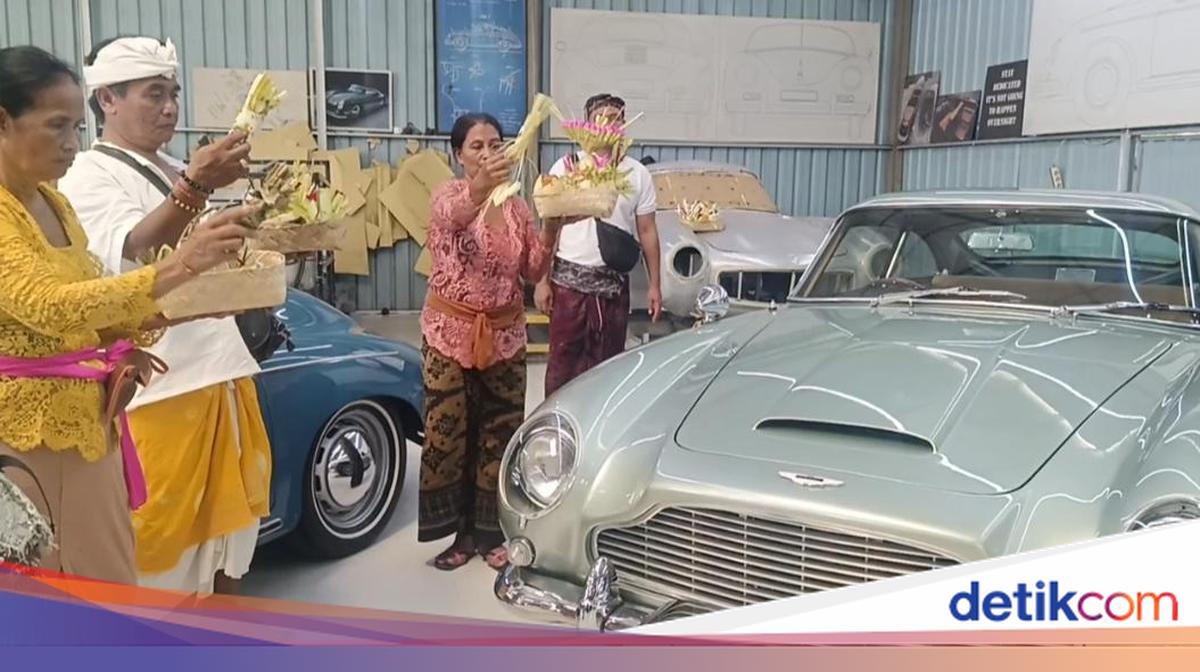
Every Tumpek Landep, motorbikes and cars in Bali are adorned with palm-leaf decorations such as ceniga, sampian gantung and tamiang. At first glance, the sight may make it seem as though Hindu worshippers are worshipping their vehicles.
In fact, the practice has a much deeper meaning and philosophy.
The meaning and philosophy of Tumpek Landep
Tumpek Landep is made up of the words ‘tumpek’ and ‘landep’. ‘Tumpek’ comes from ‘tu’ (metu), meaning to be born, and ‘pek’, meaning to stop or end. Tumpek falls when two cycles of days end at the same time: Saniscara (Saturday), the final day of the seven-day week, and Kliwon, the final day of the five-day week. ‘Landep’ means sharp or pointed, and is also the name of the second wuku, or week, in the Balinese calendar.
The core philosophy of Tumpek Landep is expressed in the Lontar Sundarigama as pinaka landepin idep—a means of sharpening the mind. What is sharpened is therefore human thought, not sharp objects.
During Tumpek Landep, Hindus worship Ida Sang Hyang Widhi Wasa in the manifestation of Sang Hyang Pasupati, Lord Shiva as the ruler of weapons and iron implements.
The Lontar Sundarigama describes Tumpek Landep as the pujawali of Bhatara Shiva. Worshippers honour Shiva Pasupati as the deity of taksu by making an offering called sesayut pasupati. Thus, Hindus are not worshipping objects during Tumpek Landep; they are asking Sang Hyang Pasupati, or Shiva Pasupati, to make those objects useful and prevent them from harming their owners.
A wide range of objects receive ceremonial blessings. Ancestral heirlooms, such as krises and spears, were among the earliest, followed by tools made by blacksmiths. In more recent times, motorbikes, cars and computers have also been included. Farmers make offerings for hoes, sickles and even tractors. Vehicles on the road are decorated with palm-leaf ornaments in the forms of ceniga, sampian gantung and tamiang.
The ceremony can be held at home or in a temple and takes place from morning until afternoon. Offerings include peras daksina, bebanten and sesayut, as well as rayunan putih kuning, canang, pasepan, tepung tawar, unga, sesangku, clean water and yellow rice.
For Hindus, Tumpek Landep offers a simple reminder: care for the tools that support life, but sharpen the mind before using them. A sharp mind can combat ignorance and restrain the bhuta kala, or negative forces, within oneself.
When Tumpek Landep is celebrated
Tumpek Landep falls on Saniscara Kliwon in the wuku Landep. It recurs every 210 days, or six months according to the Balinese calendar. Because this cycle is shorter than a year, Tumpek Landep is celebrated twice annually. In 2026, it falls on 18 April and 14 November.
Tumpek Landep is the first of six tumpek observances in a calendar cycle. The other five are Tumpek Wariga, Tumpek Kuningan, Tumpek Krulut, Tumpek Uye and Tumpek Wayang.
The festival is also connected with Saraswati, the day on which knowledge is said to descend. Worshippers pray that the knowledge they acquire will be fruitful and sharpen their minds.
Source: jawawa.id (https://jawawa.id/newsitem/do-hindus-worship-vehicles-during-tumpek-landep-the-meaning-and-philosophy-explained-1794621022)
Originally published by detikBali (https://www.detik.com/bali/budaya/d-8752099/umat-hindu-menyembah-kendaraan-saat-tumpek-landep-ini-makna-filosofinya), translated from Indonesian