
DNA Forensics Offers 99.99 Percent Accuracy as Legal Evidence, Says Police General
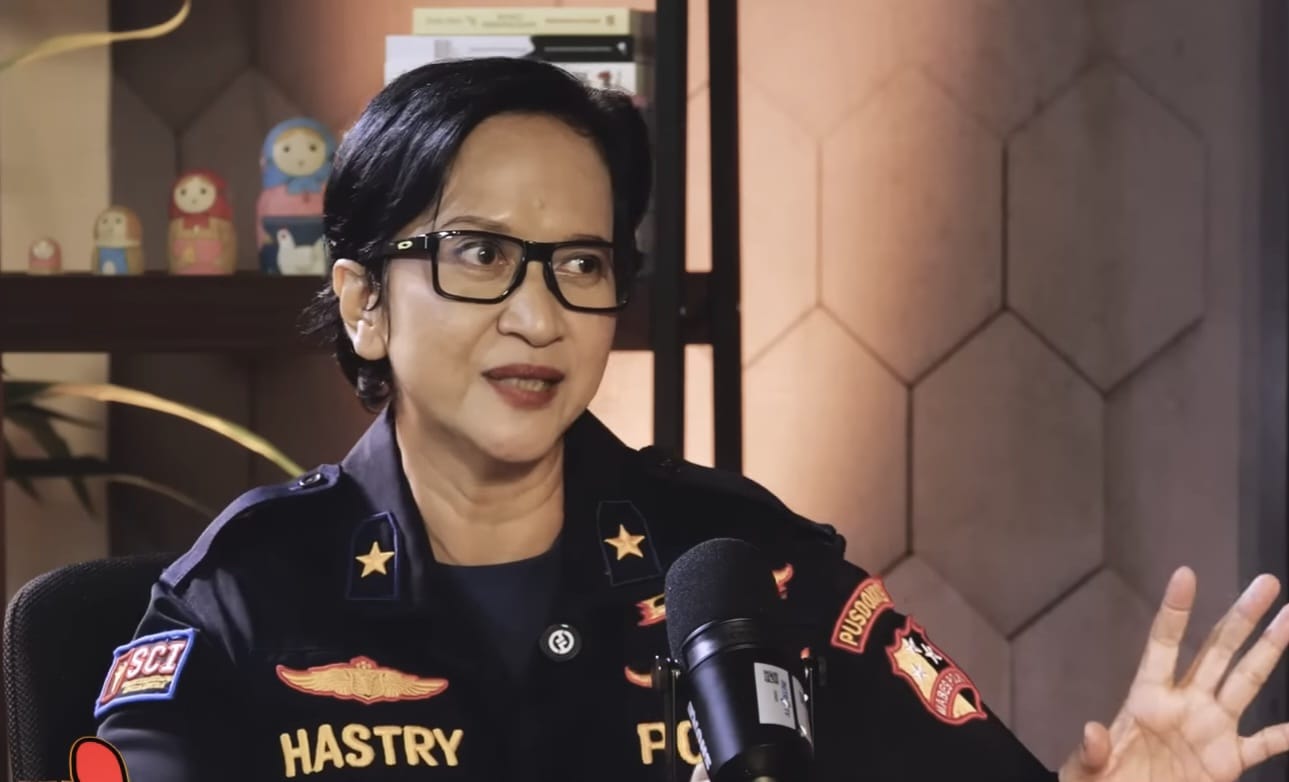
Modern law enforcement in Indonesia has undergone a remarkable transformation in recent decades. One of the main pillars of this transformation, according to Brigadier General Pol. Dr. Sumy Hastry Purwanti, Sp.FM DFM, is the use of forensic DNA to solve crimes.
Not just in one or two cases, forensic DNA has successfully uncovered various types of legal and criminal cases, ranging from serial murders, sexual violence, identity fraud, to disputes over biological family relationships.
“In the global and domestic legal realm, this technology acts as absolute evidence. The accuracy of forensic DNA as evidence is 99.99 percent,” said Brigadier General Hastry on Tuesday (4/8/2026).
DNA stands for DeoxyriboNucleic Acid, or in Indonesian called asam deoksiribonukleat. DNA is a double-stranded chemical chain molecule found in the cells of all living things.
“This unique molecule acts as the main instruction book or blueprint that regulates all body functions, cell development, and the determination of a person’s physical traits such as eye colour, hair type, and blood type — all of which are encoded within this molecule,” she said.
Forensic DNA is the use of DNA analysis results for legal purposes, such as identifying perpetrators or victims of crime, linking one crime scene to another, and recognising evidence such as the sharp weapon used by a perpetrator to kill their victim.
“DNA plays a significant role in the forensic world because it has uniqueness, consistency and stability,” she said.
Because DNA is located inside cells, DNA can be detected from biological material or traces originating from the human body. Biological traces commonly found at crime scenes include bloodstains, semen stains on clothing, lip epithelial cells attached to objects such as cups or cutlery, saliva stains on masks or cigarette butts or bite marks, strands of hair found on the floor, and epithelial cells from hands that have touched other objects (touch DNA) such as door handles, car steering wheels, handles of sharp weapons, duct tape, or ropes/cables used by perpetrators to strangle their victims.
In addition, other parts of the human body can also be used as DNA sources, namely muscle tissue, bones and teeth, which are generally taken from the bodies of deceased persons who have been burned, decomposed or become skeletons.
For DNA to become forensic evidence, several steps must be carried out. These steps include DNA sample collection, DNA sample examination in the laboratory, and the preparation of an expert statement. Only after going through these three stages can DNA become forensic evidence.
Today, forensic DNA has broken new ground in the world of criminal justice. From a scientific discovery, DNA analysis has transformed into the gold standard of scientific evidence capable of providing legal certainty in the courtroom.
The name Brigadier General Pol. Dr. Sumy Hastry Purwanti is already well known, especially in the forensic world. As the first female forensic DNA expert in Indonesia and even Asia, she is often involved in the autopsy and identification of victims, whether in criminal cases or accidents.
Thanks to her expertise in forensics, Brigadier General Hastry was appointed as Karodokpol Pusdokkes Polri in 2025.
Before entering the forensic world, Brigadier General Hastry completed her undergraduate education at Diponegoro University (Undip), Semarang, with a medical profession degree in 1997, and a master’s degree at Undip as a forensic specialist in 2005. Sumy Hastry then continued her doctoral studies at Airlangga University, Surabaya in 2016.
For Brigadier General Hastry, an autopsy is not merely about unravelling death. An autopsy is a way to seek justice. Every body, she said, has a human right to be identified. “Because without that, they will depart in vain,” she said.
The inspirational story of Brigadier General Hastry’s 25 years in the forensic field has been made into a film titled Autopsy: ‘Dead Body Can Talk’. The film is scheduled to be released this year.
The film Autopsy: Dead Body Can Talk is scheduled for release in cinemas starting 3 September 2026.
The film combines a scientific crime investigation approach with the supernatural experiences experienced by the forensic doctor throughout her handling of various unnatural death cases.