
DMC Dompet Dhuafa Urges Mosques to Become Hubs for Disaster Resilience and Climate Crisis Response
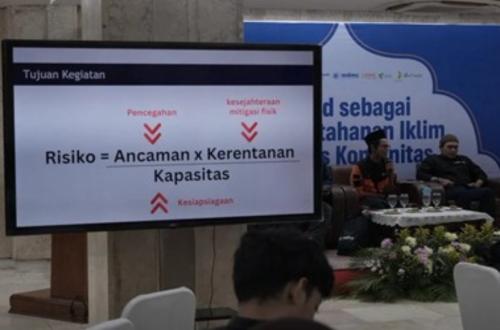
Mosques have long played a strong social role in the history of Islamic civilisation, serving as centres for education, social services and community empowerment. As the climate crisis intensifies and Indonesia faces growing risks from natural disasters, that strategic role is now being extended to make mosques a bulwark of community resilience.
In response to this challenge, Disaster Management Center (DMC) Dompet Dhuafa and a cross-organisational coalition officially launched the Guide to Mosques as Community-Based Climate Resilience Centres at Istiqlal Mosque in Central Jakarta on Wednesday, 7 October 2026.
The guide was developed collaboratively by DMC Dompet Dhuafa, Ummah for Earth–Greenpeace Indonesia, Kader Hijau Muhammadiyah, Eco Masjid and Muhammadiyah Disaster Management Center (MDMC).
DMC Dompet Dhuafa head Shofa Qudus said mosques are closely connected to worshippers’ everyday lives. That proximity represents considerable social capital, including networks between residents, adequate public spaces and people who can be mobilised when a crisis strikes.
“Mosque resilience is measured not only by the strength of its physical buildings, but also by the preparedness of worshippers and the surrounding community. Mosques have substantial social capital and can serve as spaces for education, prevention, emergency response and post-disaster recovery, including in crises caused by climate change,” Shofa said.
The guide sets out practical steps for mosque administrators and congregations across three key disaster phases: before a disaster (education and mitigation), during a disaster (response and protection), and afterwards (recovery).
Before a disaster, sermons, religious study groups, youth activities and children’s education can be used to raise environmental awareness and promote a culture of preparedness. During a disaster, mosques can serve as safe evacuation sites, logistics coordination centres, information posts and aid distribution points for affected residents. After a disaster, they can provide space for trauma recovery and help restore communities’ social and economic lives.
Shofa added that disaster preparedness must not depend solely on formal disaster-management agencies. True resilience must grow from within communities and become part of everyday life.
As the country with the world’s largest number of mosques, Indonesia has significant potential to strengthen this community-based approach. The practical guide covers climate action, disaster-risk reduction, building residents’ capacity and the use of Islamic social finance instruments—including zakat, infaq, sadaqah and waqf—to support environmental resilience programmes.
Through the collaboration, DMC Dompet Dhuafa said it would continue supporting mosques in different regions to develop as independent humanitarian hubs that can adapt to the climate crisis and withstand disasters.
Source: jawawa.id (https://jawawa.id/newsitem/dmc-dompet-dhuafa-urges-mosques-to-become-hubs-for-disaster-resilience-and-climate-crisis-response-1791784335)
Originally published by Republika (https://halalhub.republika.co.id/berita/tms1xj490/dmc-dompet-dhuafa-dorong-masjid-juga-jadi-simpul-ketangguhan-bencana-dan-krisis-iklim), translated from Indonesian