
DMC Dompet Dhuafa Sets Up Public Kitchen for Hundreds of Earthquake Survivors in Sigi
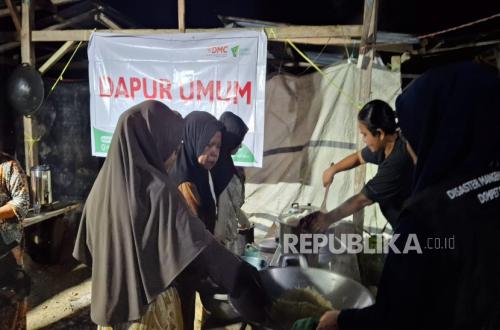
The Disaster Management Centre (DMC) of Dompet Dhuafa is continuing to strengthen its humanitarian response for communities affected by the earthquake that shook Central Sulawesi. As of Friday (19/6/2026), a public kitchen established in Kamarora B village, Nokilalaki District, Sigi Regency, remains operational to meet the food needs of impacted residents. The magnitude 6.7 earthquake on Tuesday (16/6/2026) at 10.27 WIB caused panic across several areas and affected thousands of people. According to data from the Sigi Regency PUSDALOPS-PB as of 19 June 2026 at 10.00 WIB, three people died, 115 were injured (98 with minor injuries and 17 with serious injuries), and 7,821 individuals were affected. Additionally, 2,137 houses sustained damage, comprising 1,917 with minor damage, 147 with moderate damage, and 73 with severe damage. As part of its rapid humanitarian response, DMC Dompet Dhuafa set up a public kitchen to fulfil the consumption needs of residents during the emergency response period. Through this service, the team provides ready-to-eat meals for approximately 80 beneficiaries affected in Kamarora B village. Before the public kitchen began operations, the DMC Dompet Dhuafa team conducted a needs assessment at the affected location. The assessment results indicated that food and clean water were urgent needs for the community, particularly residents of Kamarora B village who still require support to meet their basic needs. To support the public kitchen’s operations, the team procured staple food supplies and cooking equipment, which were then prepared into ready-to-eat meals and distributed to the affected community. Notably, the cooking and food serving process was carried out together with local residents. Community involvement in the public kitchen is part of an effort to foster a spirit of mutual cooperation and strengthen social solidarity amid the emergency situation. Residents participated in preparing ingredients, cooking, and distributing food to fellow survivors. Syarif Syamsuddin, Social and Disaster Programme staff at Dompet Dhuafa South Sulawesi, explained that establishing the public kitchen was an initial step to support the basic needs of the community and volunteers working at the affected location. ‘Establishing this public kitchen is our first effort to help affected residents while also supporting the volunteers on duty in the field,’ said Syarif in a statement on Monday (22/6/2026). He expressed hope that the availability of ready-to-eat meals would facilitate a smoother recovery and evacuation process, allowing the team and community to focus more on post-earthquake handling. In addition to the public kitchen service, DMC Dompet Dhuafa is carrying out various other emergency response efforts, including needs assessments, evacuation support, and a warm post service that has reached around 460 beneficiaries. The public kitchen itself serves approximately 100 beneficiaries per day. DMC Dompet Dhuafa has deployed 10 personnel, one ambulance, three motorcycles, and one four-wheeled vehicle to support field operations. Currently, some residents are still choosing to shelter in their yards due to fears of aftershocks. This situation means that tents, tarpaulins, blankets, mosquito nets, food logistics, baby supplies, medicines, and clean water remain urgently needed by the affected community. DMC Dompet Dhuafa remains committed to delivering fast, precise, and sustainable humanitarian services for disaster-affected communities. Beyond the public kitchen, the team continues to monitor needs on the ground to ensure that the assistance provided aligns with the conditions and requirements of the affected population. Through collaboration between volunteers and the community, it is hoped that the post-disaster recovery process can proceed more effectively and strengthen community resilience in facing emergency situations.