
DKI Targets 50% Emissions Reduction by 2030 through Electric Vehicles
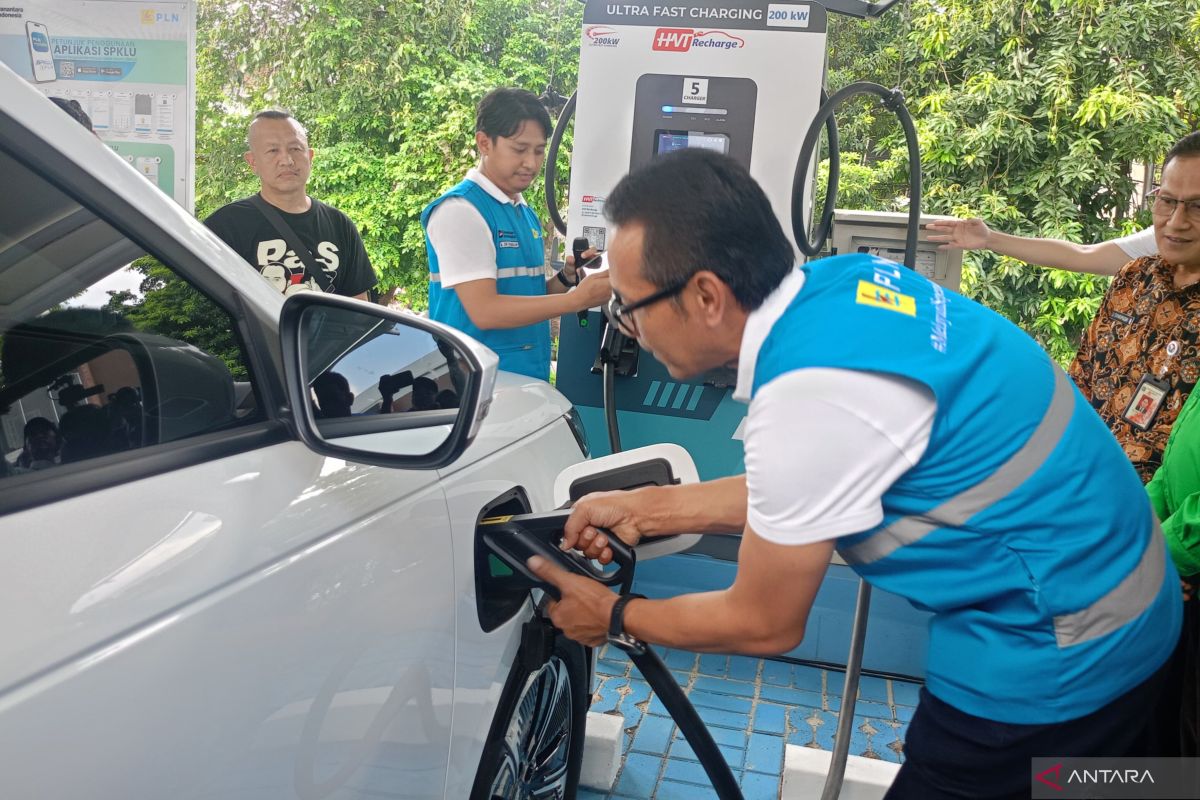
Jakarta (ANTARA) - The DKI Jakarta Provincial Government is promoting the acceleration of energy transition and a reduction in emissions by up to 50 per cent by 2030 through increased use of electric vehicles (EVs). “The population of electric vehicles increases every year. This is part of our movement to reduce low carbon emissions. Our ambitious target for 2030 is to lower emissions by up to 50 per cent,” said the Head of the DKI Jakarta Provincial Manpower, Transmigration, and Energy Office, Syaripudin, when contacted in Jakarta on Friday. This step is part of efforts to curb carbon emissions and achieve net zero emissions by 2050. According to Syaripudin, the continuously increasing population of electric vehicles in Jakarta each year provides an important momentum for the local government to strengthen clean energy policies. To support this, the DKI Jakarta Provincial Government is striving to provide conveniences for the public in accessing electric vehicle charging facilities. One of them is by providing Public Electric Vehicle Charging Stations (SPKLU) that can be used 24 hours a day at affordable costs. Syaripudin hopes that the energy transition in Jakarta continues to increase from year to year. Then, the use of internal combustion engine (ICE) vehicles is gradually balanced with the growth of electric vehicles. “The biggest contribution to air pollution in Jakarta comes from vehicles. With the increasing use of EVs, we hope that air pollution can be further suppressed in the future,” explained Syaripudin. The DKI Provincial Government is also beginning to adopt electric vehicles for operations. In addition, supporting facilities in the form of Electric Vehicle Charging Stations (SPKL) have been prepared in various government offices. “SPKLU is for the public, while SPKL is for internal use. Currently, they are available in the mayor’s office, governor’s office, DPRD office, and departmental offices. Several regional government organisations have also started using electric vehicles,” said Syaripudin. Regarding data collection on electric vehicle users, Syaripudin mentioned that his side has collaborated with business actors and PT PLN to monitor the growth of electric vehicle users, both two-wheeled and four-wheeled. This data serves as the basis for planning charging infrastructure needs, including applications for home charging services for electric cars and the construction of SPKLU. According to him, community involvement is also an important factor in developing the electric vehicle ecosystem in Jakarta.