
DKI Provincial Government States Handling of Sailfin Catfish Must Involve Upstream Regions
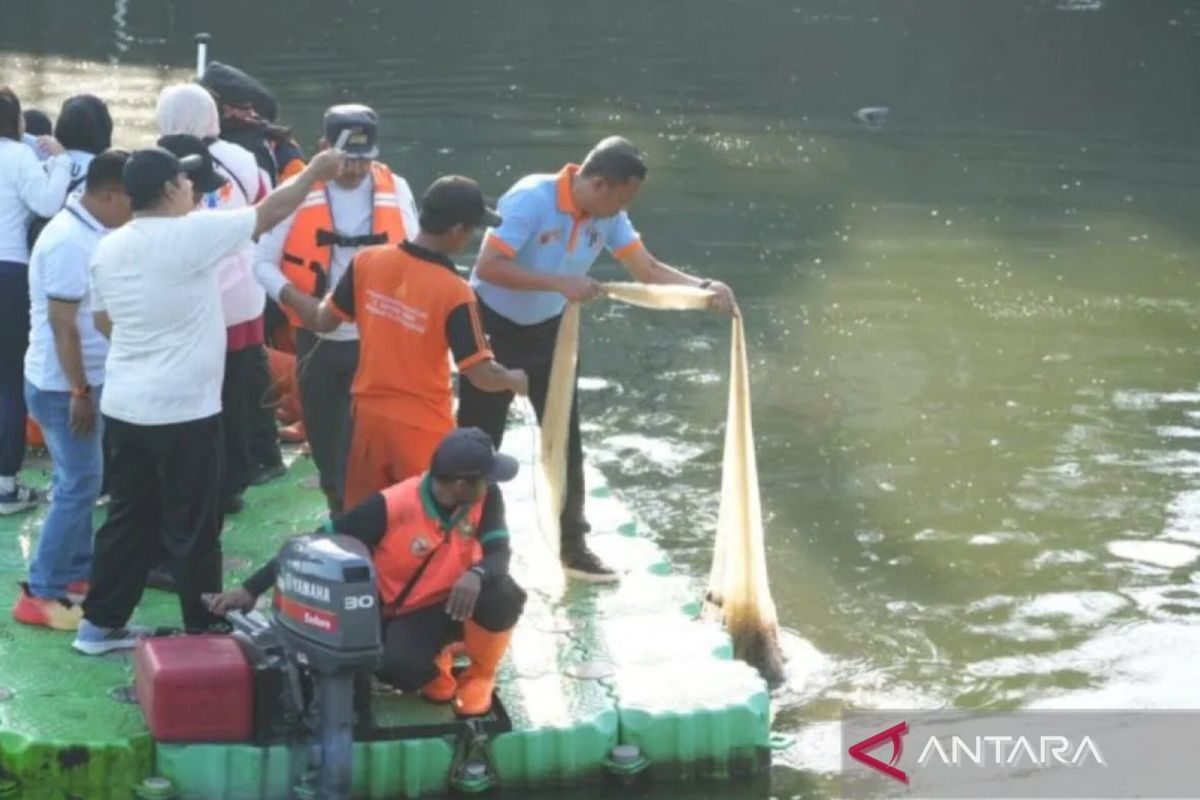
Jakarta (ANTARA) - The DKI Jakarta Provincial Government has stated that addressing the sailfin catfish in Jakarta’s rivers cannot be done independently without support from buffer regions, particularly the upstream areas of the rivers in West Java. “Efforts to control this invasive fish are deemed necessary to be carried out in an integrated manner across regions to ensure effective and sustainable results,” said Head of the DKI Jakarta Food Security, Maritime Affairs, and Agriculture Office (KPKP), Hasudungan A Sidabalok, during a webinar themed “From River to Literacy” discussing the sailfin catfish phenomenon in Jakarta’s waters, in Jakarta on Thursday. According to him, the issue of sailfin catfish in Jakarta is closely linked to the conditions in the upstream river areas outside the capital. “If it’s only controlled in Jakarta, while it still exists in the upstream areas, I think it won’t be effective,” Hasudungan stated. He explained that 13 rivers crossing Jakarta have their upstream sources in West Java. Therefore, controlling the sailfin catfish cannot be done partially or only in the downstream areas, but requires cross-regional and cross-stakeholder cooperation. This strategy includes strengthening regulations, public education, and collaboration with various institutions. In addition to intensifying the capture of sailfin catfish in several rivers and reservoirs, the DKI KPKP Office is also partnering with the National Research and Innovation Agency (BRIN) to develop the utilisation of the captured fish into non-food products. Some forms of utilisation currently being studied include processing sailfin catfish into organic fertiliser, maggot cultivation material, and charcoal that can help reduce environmental pollution. “We are collaborating with BRIN to study the captured sailfin catfish so it can be utilised for non-food needs,” Hasudungan said. He assessed that a downstream approach is very important so that handling the sailfin catfish does not stop at mere capture and destruction. With the added value from the captured results, control efforts are expected to run more consistently and involve more parties. “This is not just the government’s work, but also the entire community and related stakeholders,” Hasudungan stated. He also hopes that public awareness of the importance of maintaining river ecosystems will continue to increase to preserve the environment and the future of coming generations. As is known, the presence of sailfin catfish has been a concern because it is an invasive species that can disrupt local fish habitats and the balance of aquatic ecosystems. Therefore, synergy between regions is seen as the main key in curbing the spread of this fish in interconnected river flows from upstream to downstream. Previously, the DKI KPKP Office recorded that 68,880 sailfin catfish were caught in a simultaneous activity in five areas carried out on 17 April 2026. The total catch of sailfin catfish reached 6,979.5 kilograms (kg) or equivalent to 6.98 tonnes.
Source: jawawa.id (https://jawawa.id/newsitem/dki-provincial-government-states-handling-of-sailfin-catfish-must-involve-upstream-regions-1778158497)
Originally published by Antara (Indonesian) (https://www.antaranews.com/berita/5558301/pemprov-dki-sebut-penanganan-ikan-sapu-sapu-harus-libatkan-daerah-hulu), translated from Indonesian