
DKI Ministry of Religious Affairs Reveals Common Issues Hindering Hajj Pilgrims
Jakarta (ANTARA) - The DKI Jakarta Regional Office of the Ministry of Religious Affairs (Kanwil Kemenag) has revealed several issues frequently faced by Indonesian hajj pilgrims that slow down the process of entering Saudi Arabia, namely excessive baggage and misuse of visas.
“We have already informed them through manasik [hajj simulations], not to bring excessive items, for example, bringing stoves, rice, some bring knives. In the end, all that gets held (at the airport), and it will delay,” said the Head of the Hajj Services and Hajj and Umrah Economic Ecosystem Development Facilitation Division of the DKI Jakarta Kanwil Kemenag, Sapta Putri, in a podcast monitored in Jakarta on Thursday.
She said that hajj pilgrims often bring items like stoves, scissors, irons, and others that are not necessary to bring. In addition, cigarettes often become a problem.
“And one more thing, cigarettes. We have repeatedly conveyed that cigarettes are a maximum of two cartons, but often excessive, sometimes entrusted to women,” said Sapta.
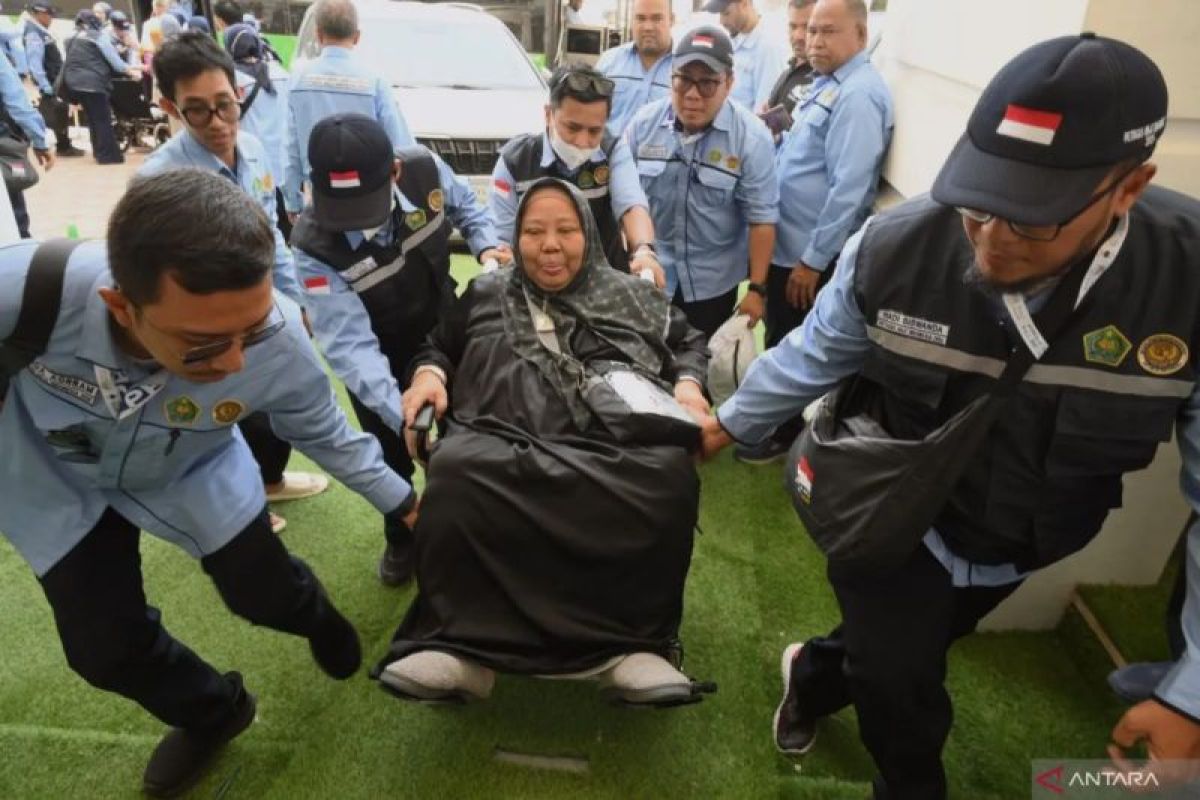
Besides baggage, the problems experienced by hajj pilgrims are based on the 2025 experience, namely hajj pilgrims with severe medical conditions who still depart and cause build-up at the airport.
“The solution is intensive education for the pilgrims. Then, control of food baggage, coordination with airlines, and placement of officers at vulnerable points,” said Sapta.
“For buying souvenirs, the Ministry of Hajj and Umrah already has a plan, has a scheme, later there will be SMEs (micro, small, and medium enterprises) preparing hajj souvenirs. Everything is available, dates, food,” revealed Sapta.
Based on data from the Indonesian Hajj Pilgrims Health Information System (Siskohatkes) as of 6 April 2026, there are 13,837 pilgrim quotas for the DKI Jakarta region.
Of the total, 7,970 are regular hajj pilgrims, 5,645 are special hajj pilgrims, 135 are officials, and 87 are potential hajj pilgrims for the following year.
In terms of age, hajj pilgrims are dominated by the 51-60 age group, namely 33 percent. Then, hajj pilgrims over 71 years old number 5 percent. Meanwhile, based on gender, the number of female hajj pilgrims dominates, namely 7,615 (56 percent), while males are 6,000 (44 percent).
Source: jawawa.id (https://jawawa.id/newsitem/dki-ministry-of-religious-affairs-reveals-common-issues-hindering-hajj-pilgrims-1775713851)
Originally published by Antara (Indonesian) (https://www.antaranews.com/berita/5518660/kemenag-dki-ungkap-masalah-yang-kerap-hambat-calon-haji), translated from Indonesian