
DKI Jakarta's MRF-500 Firefighting Robot Operates Suboptimally Amid Water Shortages
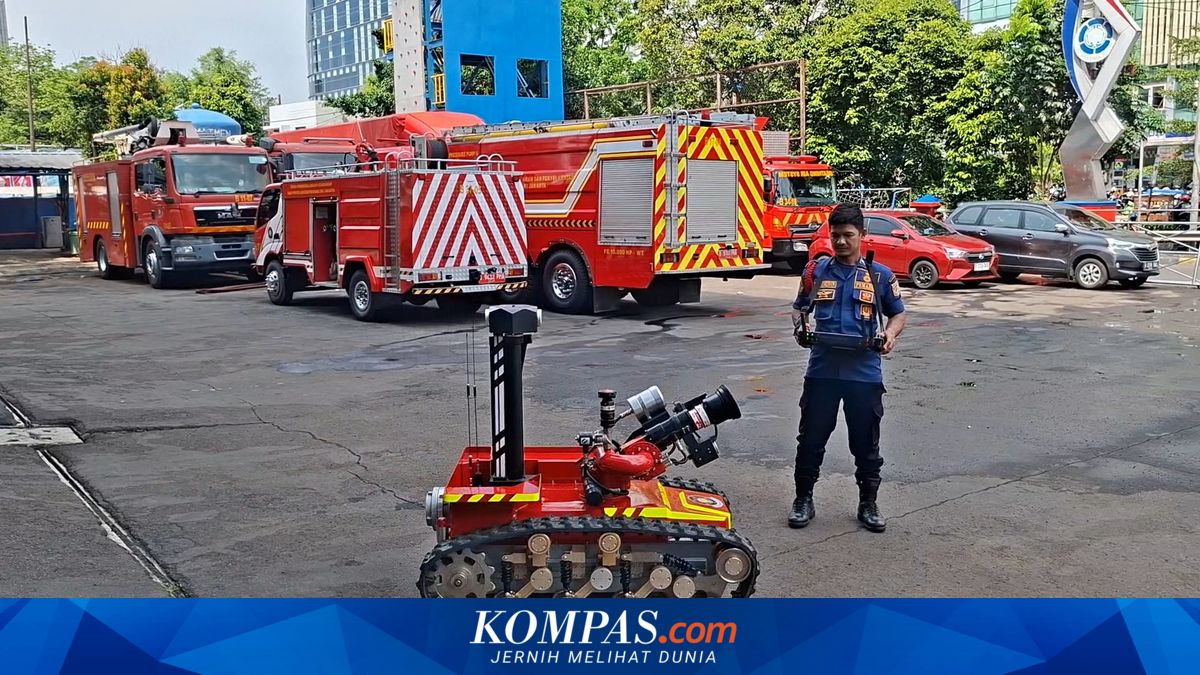
JAKARTA, KOMPAS.com - Behind the sophistication of the MRF-500 firefighting robot operated by DKI Jakarta’s Fire and Rescue Department (Gulkarmat), a key operational challenge remains in the field. Effectiveness of the advanced robot is said to diminish when firefighting efforts are hindered by insufficient water supply. Rescue officer Tohirudin from the West Jakarta Gulkarmat Sub-District Office revealed that the robotic unit still heavily relies on water supply from conventional fire pump trucks. Despite its high spray capacity of 750 to 1,250 GPM (gallons per minute), adequate water supply is essential for the robot to function optimally. Tohirudin explained that water supply issues most frequently occur in the initial minutes after responders arrive at the fire scene. Typically, the robot is deployed immediately to assess hazardous situations at the fire site. “Usually, the initial issue is low water supply. As the water hasn’t yet been connected to a source, it’s using the water from the fire truck’s tank. Once the fire truck’s water runs out, the supply to the robot unit naturally decreases,” he said. “If the water supply to the robotic unit is insufficient, its operation becomes ineffective. Especially as the unit requires two hoses; even with one, the spraying is less effective,” Tohirudin added. This suboptimal situation occurred when the MRF-500 was deployed in a firefighting operation at the Miami Warehouse in Kalideres, West Jakarta, on Monday, May 11, 2026. The fire site, which destroyed four chemical storage warehouses, was located far from the water source—a canal alongside Kamal Raya Road. Due to interrupted water supply at the start of operations, the MRF-500 had to be used solely for building safety assessments and air quality monitoring, which detected toxic gas levels with CO2 at 250 percent.