
DKI Jakarta Regional House of Representatives says Velodrome-Dukuh Atas LRT extension will ease traffic congestion
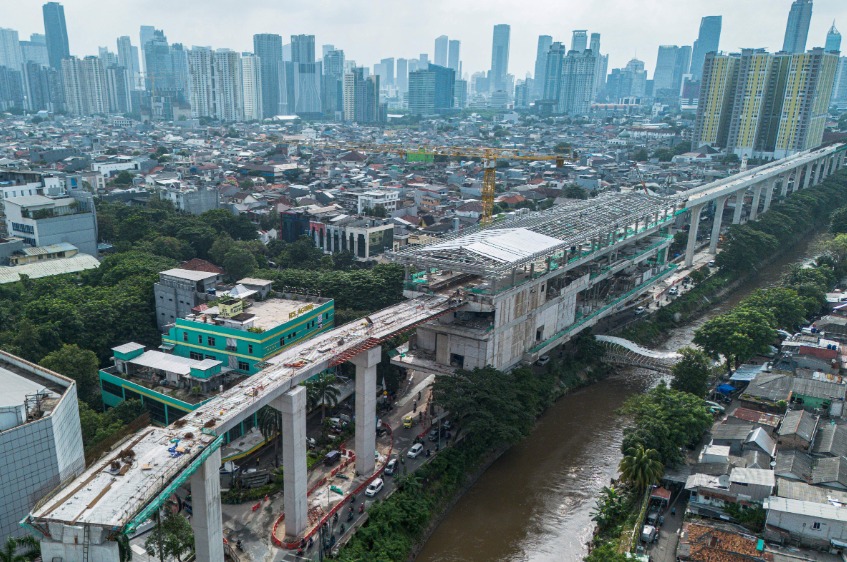
The Chairman of Commission B of the DKI Jakarta Regional House of Representatives (DPRD), Nova Harivan Paloh, commented on the Jakarta Provincial Government’s plan to continue the next phase of the Jakarta Integrated Rapid Transit (LRT) project, specifically the Velodrome to Dukuh Atas route. This strategic project will be pursued after the Velodrome–Manggarai route is completed and officially operational by August 2026.
Nova urged the Jakarta Provincial Government to refine operational integration strategies. A key focus is providing integrated parking facilities (park and ride) near major transit stations to encourage a shift from private vehicles to public transport.
“The LRT operating between Kelapa Gading and Velodrome currently serves around 3,000 passengers, with a target of 4,000 by year-end. Once the Velodrome to Manggarai section is operational, passenger numbers are expected to surge significantly to 8,000 per day—a doubling of current capacity,” Nova stated during a telephone interview on Wednesday (27 May 2026).
Nova explained that extending the route to Dukuh Atas, the city’s central hub, is expected to reduce traffic congestion. Dukuh Atas will serve as a central node connecting commuters from areas such as Tebet, Manggarai, Rawamangun, and Kelapa Gading.
“This is what we hope for: that the expanded transport route will ease congestion. At Dukuh Atas hub, those heading to Kelapa Gading can use it, as well as those going to Tebet and Manggarai, or Rawamangun to Kelapa Gading, and from Kelapa Gading to the city centre,” he added.
To anticipate the passenger surge, Nova called for adequate parking facilities through collaboration with the private sector.
“How we strategise creating parking points. During a recent meeting, I inquired about partnering with Pasaraya at Manggarai Station. Residents can park their vehicles in areas collaborating with private entities, such as Rawamangun. The key focus is establishing LRT park-and-ride facilities,” Nova stressed.
Regarding construction technicalities, Nova estimated the LRT project would maintain elevated tracks, a rational choice for Jakarta as it minimises land acquisition on ground level.
“Future route planning will undergo studies, but elevated tracks are preferred since the rails are above ground. Construction above ground requires less land, making elevated more feasible,” he said.
However, Nova warned the Jakarta Provincial Government and contractors to thoroughly prepare construction impact mitigation measures early. He cautioned against construction work causing new traffic paralysis and air pollution affecting nearby residents.
“The government must anticipate traffic issues, dust, and other concerns during construction,” Nova concluded.
Previously, the Jakarta Provincial Government decided to extend the LRT route from Velodrome–Manggarai to Dukuh Atas, with a total length of 14.2 kilometres.
Pramono explained the route would be extended by two kilometres with the Manggarai–Dukuh Atas section, up from the previous 12.2 km Velodrome–Manggarai route.
“Yesterday, I decided in a meeting after receiving inputs, suggestions, considerations, and the DKI Jakarta Government’s fiscal capacity, that the LRT decision was to extend from Manggarai to Dukuh Atas to complete a single route from Velodrome to Dukuh Atas,” Pramono explained. (H-2)