
DKI Jakarta Provincial Government Claims No More 'Severe' Slum Areas in Jakarta
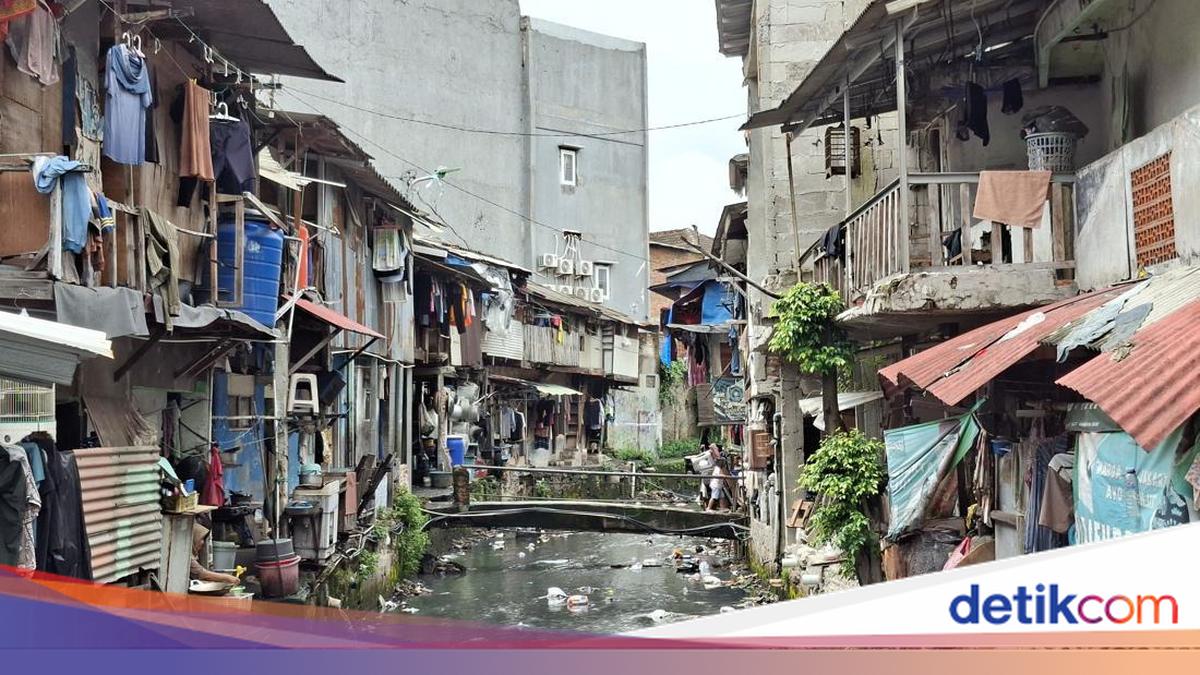
Thus, at present there has been a decline, from 445 to 421. And earlier, there were still slum areas in the two locations mentioned; those were the most numerous. And, Alhamdulillah, there are no longer any severe slums, which we are grateful for, said Kelik Indriyanto, head of the Jakarta DKI DPRKP, at the department’s office in Central Jakarta on Friday, 22 May 2026.
Kelik explained that the number of slum-affected RW in Jakarta had fallen from 445 RW to 421 RW. Nevertheless, slum areas were still found in several areas, especially West Jakarta and North Jakarta.
“So what remains are only light slums, very light slums, and moderate slums,” he added.
According to Kelik, the DKI Provincial Government will continue the programme to redevelop slum areas using the latest data from the Central Statistics Agency (BPS). The handling is said to be more focused on points that truly require intervention.
“We will continue the programme; with the results from BPS, we will truly address the problem according to the disease,” he said.
He explained that the agency would coordinate with BPS DKI to map the locations of slum areas down to RT level. Because, under BPS’s data collection method, one RT classified as slum can cause an RW to be classified as a slum area.
“According to BPS, if there is one RT that is slum, it is called a slum RW. So we will try to go straight to the RT that BPS identifies as slum,” he clarified.
Kelik said that the handling of slum areas would later be focused on the needs of the local community. Intervention programmes can come from the regional budget (APBD), Corporate Social Responsibility (CSR), or other funding sources.
“So we will really focus on the locations still identified by BPS DKI as slum; our programmes, whether APBD, CSR, or anything else, can be directed there. Thus, for the completion of slum RW in DKI Jakarta,” he said.
For next year, DPRKP targets handling around 50 slum RW spread across five administrative city regions of Jakarta.
“If next year we can handle 50 slum RW, spread across five regions,” he added.
Regarding the possibility of relocating residents to vertically-housing (rusun), Kelik confirmed that current handling does not aim at moving residents. The government’s focus remains on improving infrastructure and facilities, and on social and economic approaches for the community.
“There is no relocation in addressing housing quality; while there are still improvements to facilities, and given the needs of the community there, we will proceed first,” he concluded.
Source: jawawa.id (https://jawawa.id/newsitem/dki-jakarta-provincial-government-claims-no-more-severe-slum-areas-in-jakarta-1779542143)
Originally published by detikcom (https://news.detik.com/berita/d-8500048/pemprov-dki-klaim-tak-ada-lagi-kawasan-kumuh-berat-di-jakarta), translated from Indonesian