
DKI Jakarta Government: No More Heavy-Category Slum RW in Jakarta
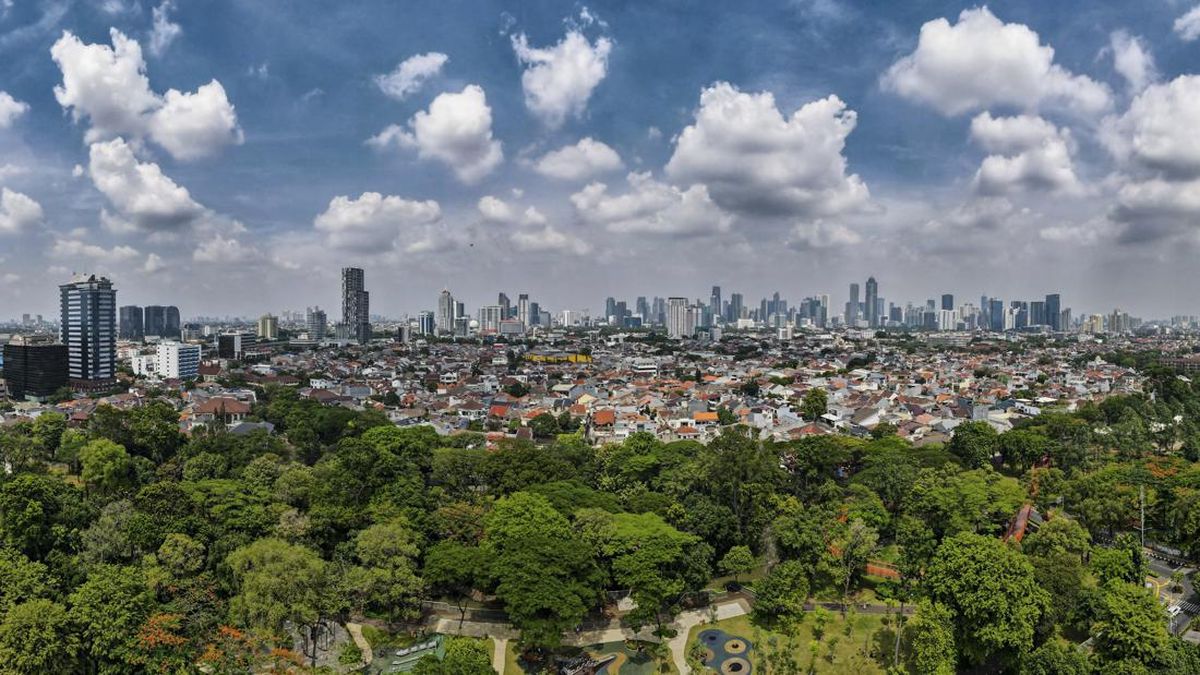
The DKI Jakarta Provincial Government says there are no longer RW kumuh berat (heavy-category slum RW) in Jakarta. Kelik Indriyanto, head of the Department of Public Housing and Settlement (DPRKP), said that while RW kumuh do still exist—most of them in West Jakarta and North Jakarta—there are none classified as heavy anymore. ‘There are still slums in West Jakarta and North Jakarta, the most numerous. But, Alhamdulillah, there are no heavy slums left; that is something we are grateful for,’ Kelik said in Central Jakarta on Friday (22/5), cited by Antara.
He said the remaining RW kumuh in Jakarta currently fall into the categories of moderate slum, light slum, and very light slum.
Kelik also confirmed that going forward, the programme to reduce RW kumuh in Jakarta will continue. He said the DKI Jakarta Provincial Government will collaborate with the Central Statistics Agency (BPS) of DKI Jakarta to handle RW kumuh. ‘The programme will continue, using the results from BPS. We will really target according to the central points that are indeed slum. So, we will work together with BPS DKI, alongside those who will down the details, the RTs, where the kumuh is, because according to BPS if there is one RT that is kumuh, then it is called RW kumuh,’ he said.
Earlier, Jakarta Governor Pramono Anung said that the handling of RW kumuh in the future would be prioritised in high-density areas, especially West and North Jakarta. Areas such as Tambora would be among the focus due to high settlement complexity and the need for measured intervention. He also targeted 50 RW kumuh to be addressed by next year.
50 RW kumuh priority handling 2027
In addition, Kelik said they would propose 50 points of RW kumuh to be prioritised for handling in 2027. ‘If next year there are 50 RW kumuh that can be handled, we’ll see the progress. We will propose again later which ones truly need to be prioritised,’ Kelik said. However, he did not detail which RW will be proposed for prioritisation in 2027. He confirmed the 50 RW are spread across all areas of DKI Jakarta.
Furthermore, he said that the handling of slum areas in Jakarta is carried out through several patterns: restoration, renewal, and resettlement, depending on the condition of each RW kumuh. He noted that most efforts are through upgrading and improving the quality of existing slum RW to become more habitable via restoration. For the renewal pattern, the DKI Jakarta government has implemented it in locations including Akuarium, Kunir, Palmerah, and Tanah Tinggi, where there has been comprehensive upgrading of houses, infrastructure, and utilities.
For the resettlement pattern, this is applied to areas that cannot be maintained due to spatial and safety factors, such as Kampung Bukit Duri, whose residents were relocated to Rusun Tumbuh Kembang Cakung and several other Rusunawa. Kelik explained that under the Regulation of the Minister of Public Works and Public Housing (PUPR) No. 14 of 2018, the identification of slum conditions is assessed based on seven aspects: building condition, neighbourhood road condition, drinking water provision, drainage condition, wastewater management, waste management, and fire protection. An RW is deemed to have exited the kumuh category when its kumuh score is below the threshold (the criteria for non-slum) according to these indicators.