
DKI Jakarta Bolsters Flood Control Infrastructure to Anticipate Heavy Rainfall
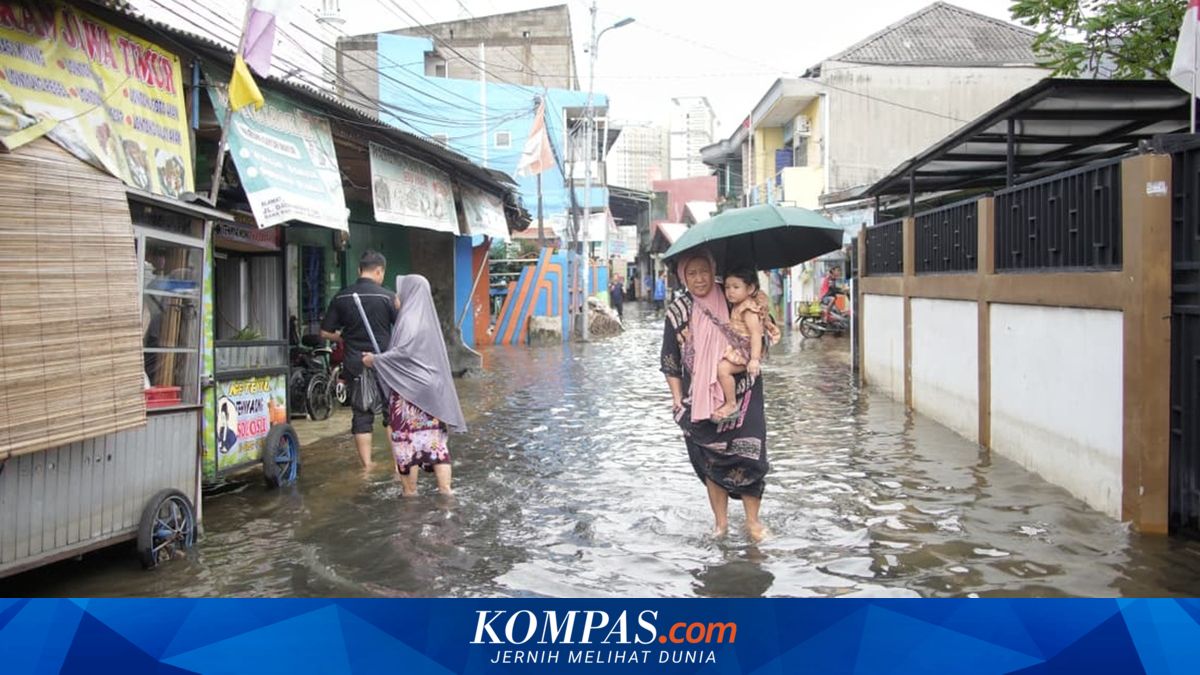
The intensity of rainfall in Jakarta has been increasing in recent years due to climate change. This has prompted the Jakarta provincial government to strengthen flood control infrastructure through enhanced pumping and polder systems, construction of reservoirs and ponds, improvement of drainage channels, and river normalization at key locations.
Head of DKI Jakarta’s Water Resources Agency, Ika Agustin, stated that all flood control facilities are designed with specific capacities to accommodate and channel surface runoff from rainfall of a certain intensity.
“Infrastructure such as pumps, river embankments, drainage channels, reservoirs, lakes, or ponds are built with design capacities to handle and discharge surface runoff from rainfall of a specific magnitude,” she told Kompas.com on Monday (25 May 2026).
Ika explained that most existing infrastructure is designed to cope with rainfall of around 100 to 150 millimetres. Meanwhile, recent rainfall intensity has reached 150 to 250 millimetres, creating a challenge as increasing system capacity requires substantial land and investment.
” Higher rainfall requires infrastructure with greater capacity, which directly corresponds to increased land and construction costs,” Ika said.
Ika noted that several upstream flood control facilities fall under the jurisdiction of central or local governments. “Dams and weirs in West Java (upstream) to reduce potential flooding in Jakarta (downstream) include Sukamahi Dam, constructed and operated by the Ministry of Public Works. Katulampa Weir is managed by West Java’s Water Resources Agency and South Jakarta’s Water Resources Subdepartment,” she added.
These infrastructure elements are crucial for reducing water volume entering Jakarta during heavy rains in upstream areas.
” The Ciliwung diversion channel in Jatinegara, East Jakarta, operates under the Ministry of Public Works,” Ika said.
Additionally, DKI Jakarta’s Water Resources Agency relies on reservoirs, lakes, and ponds as temporary storage during heavy rainfall. These structures temporarily hold runoff before gradually releasing it into main rivers, thereby reducing flow burden and mitigating potential overflow in residential areas.
In downstream areas, pumping systems are vital for addressing waterlogging, particularly in low-lying or below sea level zones.
Pumps facilitate the movement of water into major rivers or the sea when natural flow is not possible, including during heavy rain coinciding with high tides.