
DKI Jakarta allocates Rp90 billion for Integrated Utility Network development
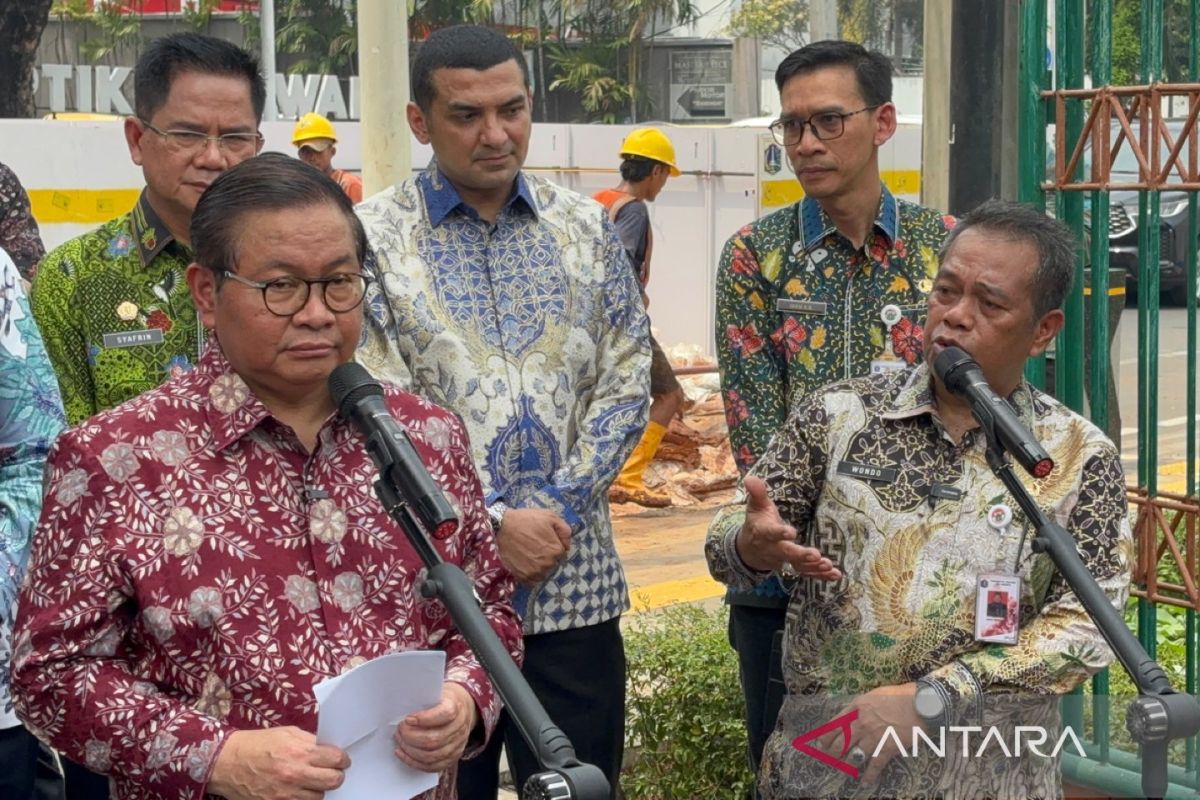
The Jakarta Provincial Government has released a budget of Rp90 billion for the construction of the Integrated Utility Network (SJUT) at several points across the capital.
“The budget for building this SJUT is Rp90 billion, covering a length of 16.9 kilometres,” said the Head of the Highways Agency, Heru Suwondo, following an inspection of the SJUT construction in the Tebet area, South Jakarta, on Thursday.
The SJUT construction will take place along MT Haryono, Gatot Subroto, Supomo, Abdullah Syafei, Saharjo, Pemuda, Otista, Tebet Barat Dalam Raya, Matraman, and Jatinegara.
Jakarta Governor Pramono Anung Wibowo aims for the SJUT construction to be completed within the next five years.
“To be honest, I am planning that within five years, all cables currently on the surface can be moved underground. Whether five years is sufficient remains to be seen, as there are approximately 6,500 kilometres to be handled. However, if this is addressed in its entirety—meaning it does not rely solely on the Highways Agency—I am confident it can be achieved,” said Pramono.
Pramono explained that the cables currently undergoing rearrangement are communication cables, as the relocation of electrical cables is a more time-consuming process.
“In principle, there are two types of cables: one for communication and one for electricity. Currently, the ones that can be moved underground are those related to communication. Meanwhile, cables related to electricity still require more time,” he explained.
He has requested the Head of the Highways Agency and relevant Regional Government-Owned Enterprises (BUMD) to develop long-term and strategic planning for the SJUT construction.
Pramono also requested that the rearrangement of cables in the capital involve the private sector to ensure targets are met.
“Therefore, private sector involvement is essential so that we can work together, as the legal framework is already in place. We believe this is also a commercially attractive business opportunity, so that the relocation of these cables can become a collective movement involving all stakeholders in Jakarta,” said Pramono.