
DKI Information Commission present not merely to assess but to ensure information governance
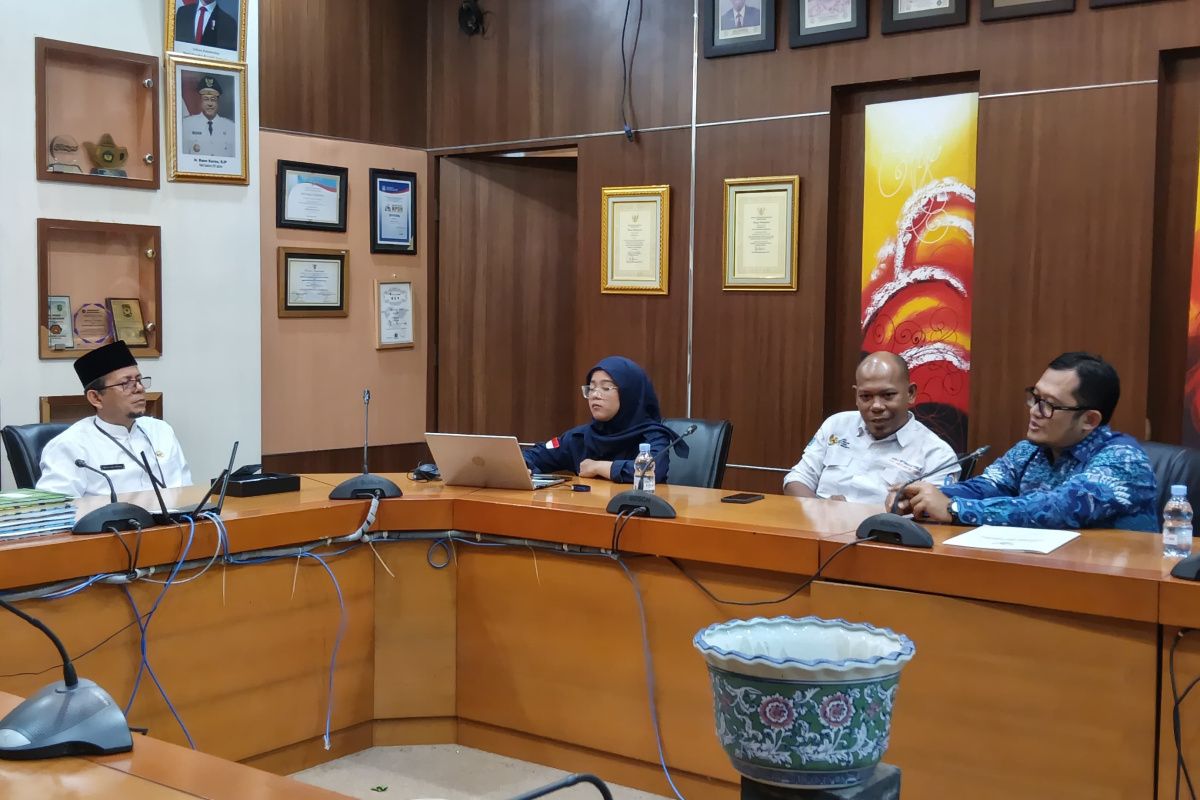
Jakarta (ANTARA) - Deputy Chair of the DKI Jakarta Information Commission, Luqman Hakim Arifin, stressed that the Information Commission is present not only to conduct administrative assessments but also to ensure that public information governance operates in accordance with regulations.
“Good data governance is key, so the Information Commission routinely conducts monitoring and evaluation,” said Luqman in Jakarta on Monday, during a visit to SMAN 78 Jakarta.
Luqman explained that the visit aimed to convey the results of recommendations from the Self Assessment Questionnaire (SAQ) monitoring while directly absorbing input and challenges faced by public bodies, particularly schools.
The field findings, said Luqman, will be summarised and conveyed to the Governor of DKI Jakarta to encourage improvements in public information governance.
“The Information Commission is present not only to conduct administrative assessments but also to ensure that public information governance runs in accordance with regulations. This becomes a momentum for future improvements as well as a space for us to directly hear the challenges faced by public bodies,” he stated.
He emphasised that public information openness has a strong legal foundation, one of which is Article 28F of the 1945 Constitution, which guarantees every citizen’s right to obtain information.
In that context, there are three main actors: the public as requesters, public bodies as information providers, and the Information Commission as a dispute resolution institution.
“This law is highly relevant in the current era, where data has become an important asset,” said Luqman.
Luqman also revealed that the recommendation results for SMAN 78 show that most aspects have been fulfilled, but there are still shortcomings in compiling the Public Information List (DIP) and the Excluded Information List (DIK).
He also emphasised that both documents are mandatory for every public body, including schools that receive funding from the regional or national budget.
“Without DIP and DIK, information will be scattered and unstructured. All data must be clearly categorised, from periodic information, urgent information, on-demand information, to excluded information in accordance with provisions,” he said.
Furthermore, Luqman encouraged the public information service system at SMAN 78 to be improved in line with the Public Information Disclosure Law mechanism and understood by all stakeholders in the school.
This is important to anticipate information requests that lack clear interest or have potential for misuse.
“Information requests must go through the official PPID channel with clear administration. This is important to prevent pressure or misuse by irresponsible parties,” he stated.
In addition, he highlighted the importance of consistent and integrated management of social media and the PPID website, so that information conveyed to the public remains accurate, up-to-date, and easily accessible.
Meanwhile, the Principal of SMAN 78 Jakarta, Marzuki Miad, expressed appreciation for the visit by the DKI Jakarta Information Commission. He said the presence of the Information Commission is an honour as well as a momentum for evaluation for the school.
“The Information Commission has come to provide enlightenment. Indeed, in the last two weeks, our website has experienced issues, but going forward, we will complete all data and upload it maximally,” he said.
Marzuki also expressed optimism that SMAN 78 can achieve the status of an informative public body this year.