
DKI Food Security Agency Highlights Findings of Harmful Bacteria in Plecostomus Fish
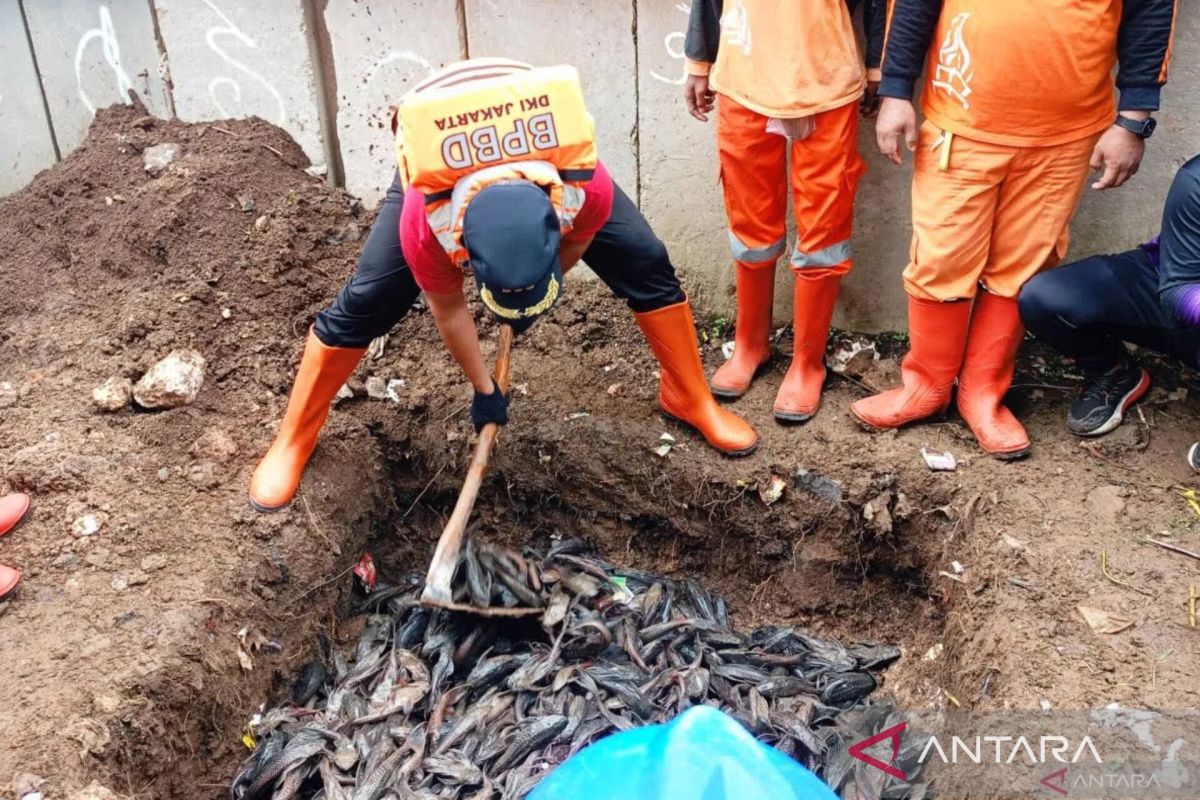
Jakarta - The DKI Jakarta Food Security, Maritime, and Agriculture Agency (KPKP) has highlighted findings from laboratory research on plecostomus fish in several Jakarta waterways, which contain harmful bacteria posing risks to health.
“Based on laboratory results, plecostomus fish contain pathogens and heavy metal residues that are dangerous to health,” said Head of DKI KPKP Hasudungan A Sidabalok during a webinar themed “From River to Literacy” discussing the phenomenon of plecostomus fish in Jakarta’s waters, in Jakarta on Thursday.
He stated that the examination was conducted by taking samples from four points in Jakarta.
“There are two points in South Jakarta, one in Central Jakarta, and one in West Jakarta,” Hasudungan said.
From those laboratory tests, he said, residues of microbes were found exceeding the thresholds set by the National Agency of Drug and Food Control (BPOM).
According to him, plecostomus fish contain several dangerous pathogenic bacteria, including E. coli and Salmonella.
“It turns out that the microbial residues are also above the thresholds set by BPOM,” Hasudungan said.
In addition to bacterial content, the DKI KPKP Agency also found other threats in the form of heavy metal residues in plecostomus fish living in polluted waters.
Hasudungan mentioned that these findings are a strong reason why plecostomus fish are not suitable for public consumption.
Therefore, he continued, the government continues to educate the public not to consume the invasive fish, even though various trends for processing plecostomus fish into food have emerged.
Hasudungan added that the plecostomus fish issue is not only an environmental concern but also relates to public health and the sustainability of river ecosystems.
The DKI KPKP Agency continues to strengthen public education and cross-regional collaboration in controlling plecostomus fish in Jakarta and surrounding areas.
Previously, the DKI KPKP Agency recorded 68,880 plecostomus fish caught in a simultaneous operation in five regions carried out on 17 April 2026. The total catch of plecostomus fish reached 6,979.5 kilograms (kg), or equivalent to 6.98 tonnes.
Based on DKI KPKP data, the largest catch came from South Jakarta with 63,600 fish or equivalent to 5,300 kg from the Setu Babakan area, while East Jakarta produced 4,128 fish with a total weight of 825.5 kg from 10 sub-district points.