
DJP to Waive Up to 100% of Tax Penalties: How the Rules Work
Jakarta, CNBC Indonesia — The Directorate General of Taxes (DJP) is offering facilities to reduce or waive administrative tax penalties by up to 100% under Director General of Taxes Decree No. KEP-239/PJ/2026, which implements Finance Minister Regulation No. 71 of 2026. The policy takes effect on 8 October 2026.
The regulation, signed by Director General of Taxes Bimo Wijayanto, is intended to improve taxpayer compliance and support the national economy. It implements Article 27A of Finance Minister Regulation No. 118 of 2024, as amended by Finance Minister Regulation No. 71 of 2026.
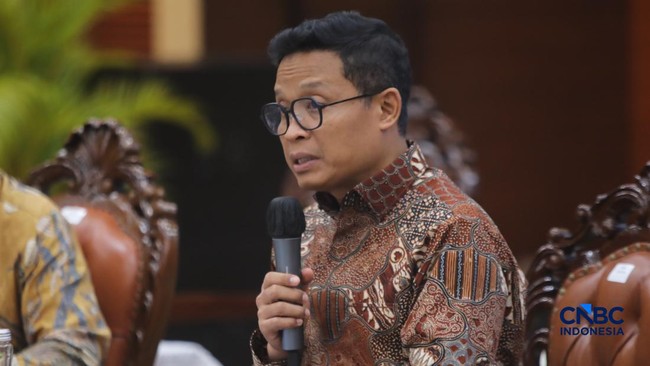
“This decree provides for a 100% reduction or waiver of administrative penalties, subject to several requirements. It therefore covers not only deadlines but also the types of administrative penalties imposed under the General Provisions and Tax Procedures Law,” said Inge Diana Rismawati, Director of Tax Education, Services and Public Relations, on Wednesday (14 October 2026.
According to the decree, eligible penalties include those for late filing of annual income tax returns (SPT) through the 2025 tax year and periodic tax returns through the September 2026 tax period, where tax is due.
The facility also covers penalties for voluntary amendments to tax returns, late payment or remittance of tax, and penalties stated in tax assessment notices and tax collection letters (STP), including administrative land and building tax (PBB) fines.
The sooner taxpayers act, the greater the relief
The amount of relief depends on when taxpayers take action. For late tax returns, amendments and late payments, the reductions are:
100% for action taken from 8 October to 31 December 2026;
50% from 1 January to 31 March 2027;
25% from 1 April to 30 June 2027.
For example, the decree says PT ABC, which faces a Rp1 million penalty for filing its 2025 annual tax return late, can have the full Rp1 million waived if it files on 25 October 2026. If it files on 2 January 2027, the penalty is reduced by 50% (Rp500,000). If it files on 4 May 2027, the reduction is 25% (Rp250,000). No reduction is available if it files on 1 July 2027.
A similar scheme applies to penalties in STPs and tax assessment notices issued following an audit. The penalty is reduced by 100% if the principal tax is paid by 31 December 2026 or within one month of the notice being issued; by 50% if payment is made within one to two months; and by 25% if payment is made after two months, subject to a final deadline of 30 June 2027.
For penalties for late issuance of tax invoices under Article 14(4) of the General Provisions and Tax Procedures Law, the reduction is 90% if taxpayers pay 10% of the penalty by 31 December 2026. A 75% reduction applies if they pay 25% of the penalty during the subsequent period, ending on 30 June 2027.
New taxpayers and the voluntary disclosure programme
Taxpayers who have recently obtained a tax identification number (NPWP) or been registered as a taxable entrepreneur (PKP) can also receive reductions of 100% from 8 October to 31 December 2026, 50% from 1 January to 31 March 2027, or 25% from 1 April to 30 June 2027. They must file returns for the 2025 tax year and earlier, or for tax periods up to September 2026.
The facility also covers penalties in tax assessment notices issued following audits of assets that were not disclosed, or were under-disclosed, under the Voluntary Disclosure Programme. For notices issued from 8 October 2026 to 31 December 2027, the penalty can be waived by 100% if the principal tax is paid within one month, reduced by 50% if paid within one to two months, and reduced by 25% if paid after two months, with a final deadline of 31 December 2027.
Application requirements and deadline
Taxpayers must apply to the Director General of Taxes no later than 1 October 2028. They must:
Not have filed a lawsuit or other legal challenge, as confirmed by a stamped declaration; or, if one has been filed, have withdrawn it;
Submit a stamped declaration stating that the penalty arose from an oversight rather than an error;
Seek relief only for penalties that have not yet been paid or settled; and
Meet the requirements of Articles 23 and 24 of Finance Minister Regulation No. 118/2024, as amended by Finance Minister Regulation No. 71/2026.
Applications to reduce or waive penalties may be submitted no more than twice. An application to reduce an administrative PBB fine may be submitted only once.
Source: jawawa.id (https://jawawa.id/newsitem/djp-to-waive-up-to-100-of-tax-penalties-how-the-rules-work-1791949832)
Originally published by CNBC Indonesia (https://www.cnbcindonesia.com/news/20261014091611-4-775961/djp-hapus-sanksi-pajak-hingga-100-ini-aturan-mainnya), translated from Indonesian