
DJP Secures Rp326.60 Billion from Audit of 38 Steel Companies
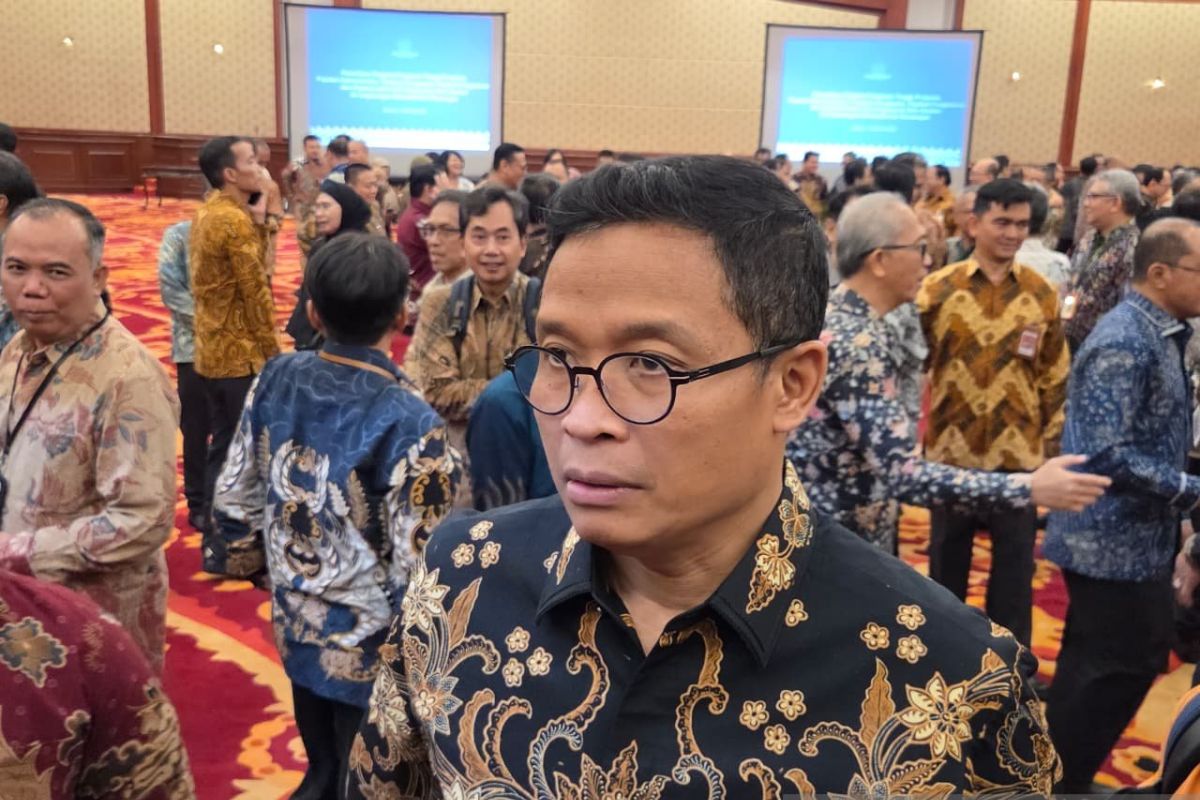
The Directorate General of Taxes (DJP) of the Ministry of Finance has stated that audits of 38 steel and iron companies have resulted in tax revenues of Rp326.60 billion.
Specifically, the revenue consists of Rp224.19 billion from the disclosure of inaccuracies during the Preliminary Evidence Examination process, Rp96.08 billion through supervisory functions, and Rp6.33 billion through audit functions.
Director General of Taxes Bimo Wijayanto, in a statement in Jakarta on Wednesday, explained that the authorities are expanding investigations to related parties or counterparties of the 38 taxpayers. This expansion includes the handling of 485 taxpayers for the 2021–2026 tax years, generating tax revenue of Rp380.50 billion.
Furthermore, Preliminary Evidence Examinations of 20 other taxpayers in the iron and steel sector have yielded Rp118.18 billion in tax revenue. Consequently, revenue from expanded handling outside of the initial 38 taxpayers has reached Rp498.68 billion.
“When combined with the revenue from the handling of the 38 taxpayers amounting to Rp326.60 billion, the total tax revenue obtained from the series of actions in the iron and steel sector has reached Rp825.28 billion,” he explained.
However, Bimo noted that this figure does not yet reflect the full potential of revenue, as the DJP is still conducting supervision, audits, in-depth investigations, and law enforcement against taxpayers in the steel and iron sector.
As of data recorded up to 26 August 2026, 8 taxpayers are currently undergoing Preliminary Evidence Examinations. Meanwhile, 12 taxpayers have completed the process, with 11 taxpayers seeing proceedings halted after disclosing inaccuracies in accordance with Article 8 Paragraph (3) of the KUP Law, and 1 taxpayer being proposed for investigation.
Additionally, 14 taxpayers are in the case-building stage, 1 taxpayer has had a proposal for Preliminary Evidence Examination approved, and 3 taxpayers are under supervision.
According to Bimo, some of the 38 taxpayers are being handled through overlapping supervisory, audit, and law enforcement functions across different tax years. “Through the supervisory function, 16 taxpayers have made payments, while through the audit function, 13 taxpayers have made payments,” he said.
Common patterns used by companies evading their tax obligations include sales that are not properly reported and are not accompanied by the issuance of Tax Invoices, resulting in unadministered VAT.
Other methods include the use of third-party or nominee accounts, which prevents payment flows from being fully reflected in the taxpayer’s books, and direct payments from customers to suppliers where the taxpayer acts merely as an intermediary.
Lastly, the issuance or use of Tax Invoices that are not based on actual transactions to create or credit undue Input Tax.
“Every taxpayer is handled based on their specific data, facts, and evidence. The discovery of these patterns of non-compliance does not mean that all businesses in the iron and steel sector are committing violations,” Bimo stated.
The Director General of Taxes ensured that the actions in the steel and iron sector are not solely aimed at increasing state revenue. The steps are also part of an effort to build sustainable compliance and create fair treatment for all business actors.
“In principle, compliant taxpayers must receive service and certainty. We are encouraging non-compliant taxpayers to improve their compliance. However, if evidence is found of violations that meet the elements of a tax crime, the DJP will enforce the law strictly in accordance with applicable regulations,” he concluded.
Source: jawawa.id (https://jawawa.id/newsitem/djp-secures-rp326-60-billion-from-audit-of-38-steel-companies-1788329555)
Originally published by Antara (Indonesian) (https://www.antaranews.com/berita/5722059/djp-kantongi-rp32660-miliar-dari-pemeriksaan-38-perusahaan-baja), translated from Indonesian