
DJP Provides Full Clarification Responding to Viral Claims that CV and PT are Now Subject to 22% Tax
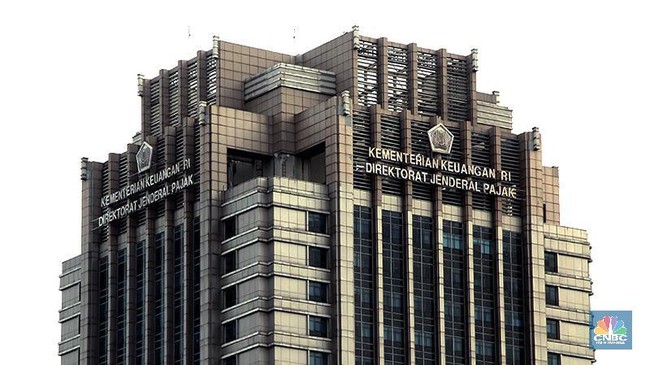
Limited Liability Companies (PT) and Limited Partnerships (CV) will no longer be able to utilise the 0.5% final income tax rate for Micro, Small, and Medium Enterprises (MSMEs) following the implementation of Government Regulation (PP) Number 20 of 2026 on 22 April 2026. This provision has caused significant stir on social media, with narratives suggesting that PT and CV entities are now subject to the standard 22% corporate income tax rate due to PP 20/2026, which revises PP 55/2022.
Responding to the issue, the Directorate General of Taxes (DJP) confirmed that, moving forward, CV and PT entities will indeed no longer be recipients of the 0.5% MSME Final Income Tax facility. The Director of Extension, Service, and Public Relations of the DJP, Inge Diana Rismawanti, explained that the MSME Final Income Tax facility is specifically focused on individual taxpayers, sole proprietorships established by a single person, and cooperatives. Meanwhile, business entities such as CV and PT are generally directed to follow the general taxation mechanism in accordance with regulations.
“The consideration is that the MSME Final Income Tax facility was originally intended as an administrative simplification for business actors who most need ease in calculating and fulfilling their tax obligations,” Inge told CNBC Indonesia. However, Inge emphasised that this regulation does not mean that CV and PT entities currently using the facility will have it revoked abruptly. For CV and PTs that previously utilised the facility under PP 5 ent 55/2022, transitional provisions remain in place. They may continue to use the facility until their previously granted period expires, provided they still meet the criteria. Thus, there is a transition period to ensure legal certainty for existing taxpayers.
Regarding the issue of PT and CV being subject to a 22% tax rate, Inge clarified that there has been an error in the narratives circulating in the public over recent days. She asserted that the rate applies generally to companies whose fiscal profit meets the taxable income provisions, rather than being based on turnover like the 0.5% MSME Final Tax, which has a limit of Rp 4.8 billion per year.
“Regarding the issue of now being subject to 22%, this needs to be corrected. If a corporate taxpayer enters the general mechanism, the tax is not 22% of turnover. The corporate income tax rate is applied to taxable income or fiscal profit, after accounting for expenses that meet the requirements as deductible from gross income,” she stated firmly. “So it is true that the 0.5% Final Tax is calculated from turnover. Whereas in the general mechanism, tax is calculated from profit.”
Therefore, she emphasised that it is inaccurate to say that the tax has increased from 0.5% to 22%. More accurately, some corporate taxpayers will follow the normal mechanism, which involves calculating tax based on business profit and deductible expenses. Regarding whether this tax arrangement will disadvantage the business sector, Inge maintained that it is not always the case. “Will this disadvantage the business sector? Not always. For businesses with thin margins and tidy bookkeeping, the general mechanism can reflect the true business condition, because tax is calculated from profit, not turnover. The important thing is that taxpayers begin to organise their bookkeeping, separate business and personal expenses, and maintain expense evidence properly,” she concluded.