
DJP Explains Tax Rules for Barbers and Massage Therapists
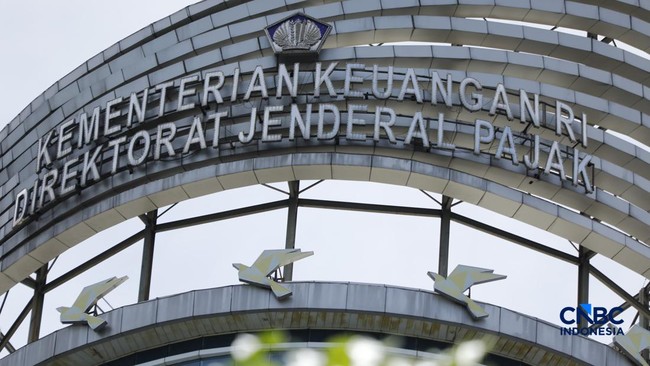
Jakarta, CNBC Indonesia — The Directorate General of Taxes (DJP) at the Ministry of Finance has clarified reports circulating on social media that the government will tax all economic transactions, including those conducted by small businesses.
DJP Director of Outreach, Services and Public Relations Inge Diana Rismawanti said that, in principle, any individual earning income in Indonesia has tax obligations if they meet the subjective and objective requirements set out in tax legislation.
“Regarding taxation of barbers and massage therapists, we can say that, in principle, every individual who earns income in Indonesia has tax obligations,” Inge told CNBC Indonesia, as quoted on Tuesday (10 November 2026.
Inge stressed that an individual taxpayer’s income-tax payment obligation arises when their net income exceeds the Non-Taxable Income threshold (PTKP), subject to the applicable tax rules.
She said the tax treatment of barbers and massage therapists should be assessed according to the nature of their activities. If the activity constitutes a business and meets the criteria for a taxpayer with a certain level of gross turnover, the individual may use the 0.5% final income-tax facility for micro, small and medium-sized enterprises (MSMEs), in accordance with the rules.
However, if the income is categorised as fees for independent professional services, tax is calculated under the general rules for individual income tax, and the 0.5% MSME final income-tax scheme does not apply.
Tax treatment is therefore determined not merely by the type of service provided, but also by the nature of the activity, the employment relationship and the source of the income.
“The government continues to provide administrative tax facilities for the public and to ensure that tax obligations are implemented proportionately, taking taxpayers’ economic capacity into account,” she said.
The issue came to prominence after remarks by President’s Special Envoy for Climate and Energy Hashim Djojohadikusumo went viral on social media. President Prabowo Subianto’s younger brother said that a large volume of Indonesia’s economic activity was not recorded in gross domestic product (GDP), and estimated its value at Rp10,000 trillion. He attributed this to the many economic transactions that are not included in official records.
Hashim said that, according to World Bank data, around 35%–40% of Indonesia’s economic activity is unrecorded. As a result, he said, official GDP figures may not fully reflect the country’s actual economic activity.
He explained that unrecorded economic activity does not necessarily involve illegal transactions. Some takes place in people’s everyday lives without receipts or tax records.
He cited haircuts and massage services provided at customers’ homes as examples. Payments are made directly without receipts, meaning the transactions are not recorded and value-added tax (VAT) is not collected.
“I usually have a barber come to my flat once a month. He charges a fee, a wage. I pay that wage without a receipt. And because there is no receipt, 11% VAT is not collected,” Hashim said.
Source: jawawa.id (https://jawawa.id/newsitem/djp-explains-tax-rules-for-barbers-and-massage-therapists-1794275437)
Originally published by CNBC Indonesia (https://www.cnbcindonesia.com/news/20261110064728-4-783720/penjelasan-lengkap-djp-soal-pajak-tukang-cukur-pijat), translated from Indonesian