
DJP Collects Rp74.8 T from Tax Intensification, Surging 33%
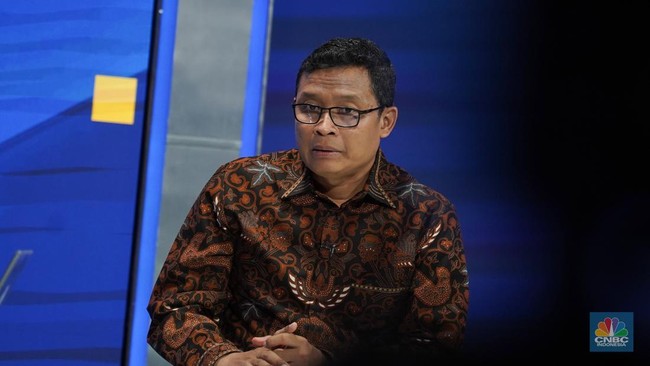
The Directorate General of Taxes (DJP) at the Ministry of Finance recorded that the realisation of the tax revenue intensification programme reached Rp74.8 trillion as of 30 June 2026, representing 33% year-on-year growth. This was presented by Director General of Taxes Bimo Wijayanto at the 2026 Tax Forum in Jakarta on Monday. According to Bimo, this growth is in line with tax supervision activities. “Activity grew 33.3%, and quality also grew 33.3%. This certainly accelerates the achievement of revenue targets,” Bimo said. Bimo revealed that of the Rp74.8 trillion total, the largest contribution came from supervision activities, which generated Rp34.7 trillion in revenue, a 42.8% increase compared to the same period last year. The DJP also recorded revenue from audit activities reaching Rp30.4 trillion, up 31.2%. Meanwhile, revenue from law enforcement was recorded at Rp1.4 trillion, growing 56.8%, while revenue from billing reached Rp8.2 trillion, an increase of 5.5%. In line with this achievement, Bimo noted that the tax buoyancy indicator, which measures the sensitivity of tax revenue to economic growth, improved compared to the same period last year. He stated that tax buoyancy in the first semester of 2026 reached 2.25%, up from -0.1 in the same period of 2025. This means that for every 1% of economic growth, the government can generate approximately 2.25% in additional tax revenue. This signals that the government’s ability to collect tax revenue is no longer overly dependent on fluctuations in global commodity prices. Bimo explained that this improvement occurred while prices of several Indonesian export commodities were undergoing normalisation. For instance, coal prices are currently around US$134 per tonne, while crude oil, nickel, and iron ore prices have also moderated by around 21% to 34%. “This means our taxing capacity at the DJP today has started to detach itself from the fragility of dependence on commodity prices and commodity price spikes,” Bimo explained. Bimo stressed that the current increase in tax revenue does not stem from incidental or extraordinary policies, such as the voluntary disclosure programme previously implemented by the government. According to him, revenue growth is more supported by improvements in the DJP’s internal capacity, ranging from strengthened supervision and digitalisation of tax administration to the expansion of the tax base. “So this is purely from our internal engine working faster, with more integrity, and reaching those previously unreachable,” Bimo concluded.