
DJP Clarifies GOTO-Lazada Tax Arrangements Starting on 9 November 2026
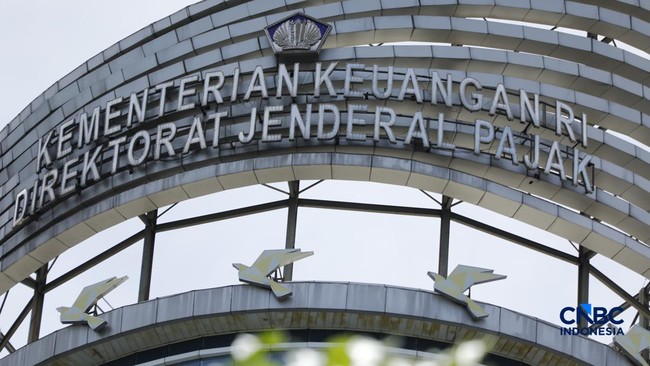
Jakarta, CNBC Indonesia – The Directorate General of Taxes (DJP) at the Ministry of Finance has issued a clarification after Hashim Djojohadikusumo, chairman of the Indonesian Chamber of Commerce and Industry’s (Kadin) advisory board, said banks and other financial technology (fintech) companies would collect digital taxes from 9 November 2026.
DJP Director of Outreach, Services and Public Relations Inge Diana Rismawanti said the collection in question refers to the Digital Foreign Transaction Tax Collection System (SPP-TDLN). The policy is not a new tax, does not change the value added tax (VAT) rate and is not intended to cover all foreign transactions.
“SPP-TDLN is a government measure to organise VAT collection on foreign digital transactions more fairly, systematically and with the support of technology,” Inge told reporters on Monday (2 October 2026).
However, Inge did not confirm Hashim’s statement that all state-owned and private banks, as well as fintech companies including Shopee, Lazada and GOTO, would become tax collectors, or issuers.
“Other prospective issuers are currently in a stabilisation period. We will provide information about the appointment of new issuers through DJP’s official channels once all the preparatory stages have been completed,” she said.
She stressed that not all foreign transactions are subject to VAT. Under SPP-TDLN, collection applies only to foreign digital transactions that meet the criteria for VAT-taxable objects under the relevant rules.
Funds transfers and remittances are not automatically subject to VAT. The system is not intended to impose VAT on personal transfers or money sent by members of the public.
Inge said SPP-TDLN was designed to provide certainty, ensure equal treatment for domestic and foreign businesses, and ensure that data is used securely, on a limited basis and in accordance with applicable regulations.
The system is also designed to prevent double collection. If VAT on a foreign digital transaction has already been collected by an appointed e-commerce operator (PMSE), it will not be collected again through SPP-TDLN.
For consumers, the system is intended to make the process simpler and more certain. They will not need to handle the payment and reporting of VAT themselves for foreign digital services on which tax is due. The mechanism is intended to make the process more practical and orderly, while providing certainty for all parties.
Before full implementation, SPP-TDLN underwent testing in a sandbox environment and a stabilisation period. These stages were intended to ensure the readiness of the system, business processes, data exchanges and integration with the parties involved in collection.
On 25 September 2026, Director General of Taxes Bimo Wijyanto appointed six institutions to collect VAT under SPP-TDLN, in a role known as issuers. They comprise five state-owned banks: PT Bank Rakyat Indonesia (Persero) Tbk, PT Bank Mandiri (Persero) Tbk, PT Bank Negara Indonesia (Persero), PT Bank Tabungan Negara (Persero) and PT Bank Syariah Indonesia. The sixth is PT Fintek Karya Nusantara (LinkAja).
Hashim had earlier said President Prabowo Subianto’s administration was committed to expanding the scope of tax collection in Indonesia.
One measure, he said, would be to broaden the digital tax collection scheme. He said banks, fintech firms and e-commerce companies would all begin collecting digital taxes from 9 November 2026.
“Digital taxation, digital tax, will soon be implemented, on 9 November. All state-owned banks, private banks and all fintech companies, including Shopee, Lazada, GOTO and others, must collect and remit taxes that have not been collected so far,” Hashim said at the opening of Kadin’s 2026 National Leadership Meeting in Jakarta on Thursday (29 October 2026).
Hashim said the measure was part of the first steps by President Prabowo’s administration to strengthen the state’s fiscal capacity. He claimed that nearly Rp10,000 trillion of Indonesian wealth was circulating in the informal economy, beyond the reach of the tax authorities.
He said this helped leave Indonesia with the lowest government revenue-to-GDP ratio among ASEAN countries, at around 12% of GDP.
“Recorded state revenue is 12% of GDP. Compare us with our neighbours and countries further afield: we are at 12%, our neighbour Cambodia is at 18%, and India is at 20%. A country far away in Africa is at 16%; countries like these all have state revenues well above ours,” said Hashim, President Prabowo’s younger brother.
Source: jawawa.id (https://jawawa.id/newsitem/djp-clarifies-goto-lazada-tax-arrangements-starting-on-9-november-2026-1793609506)
Originally published by CNBC Indonesia (https://www.cnbcindonesia.com/news/20261102150230-4-781560/djp-beri-klarifikasi-soal-pajak-goto-lazada-mulai-9-november-2026), translated from Indonesian