
DJKI of the Indonesian Ministry of Law and Human Rights Prioritises Kintamani Bali Arabica Coffee Geographical Indication Registration in Europe
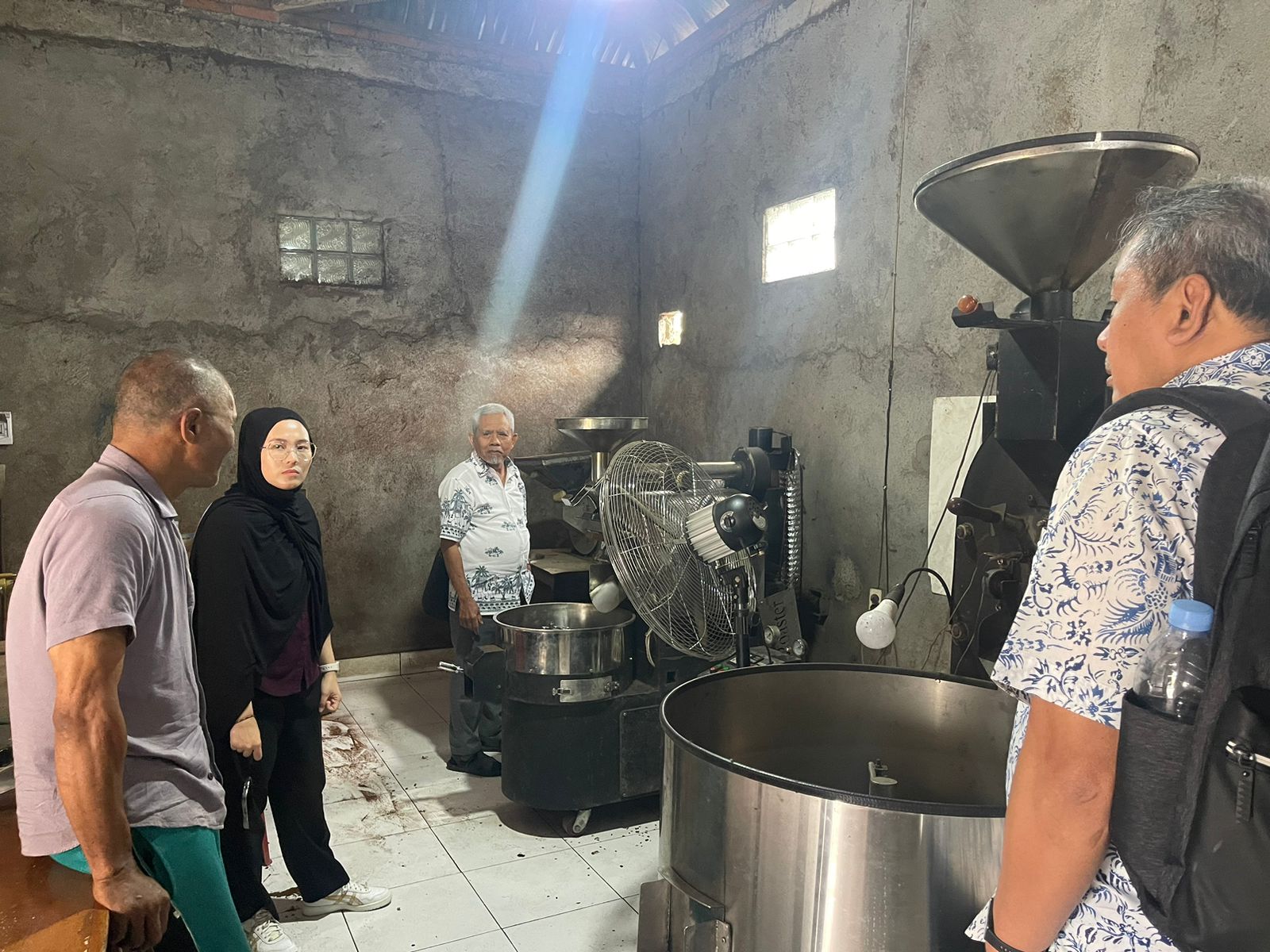
Kopi Arabika Kintamani Bali has been registered as the Geographical Indication (GI) for an agricultural commodity—the first GI in Indonesia. This marks a milestone in the implementation of the GI system for agricultural commodities in Indonesia. As a gesture of gratitude to the farmers of Kintamani, the Directorate General of Intellectual Property (DJKI) of the Ministry of Law and Human Rights (Kemenkum RI) prioritised the GI Kopi Arabika Kintamani Bali for registration in the European Union. This was disclosed by the GI Supervisory Team Chair Prof. Surip Mawardi during oversight of registered GIs in Bali, specifically GI No. 000000001 Kopi Arabika Kintamani Bali, since Wednesday, 20 May 2026.
Prof. Surip Mawardi, who was a central figure in managing the Kopi Arabika Kintamani GI while he was an active researcher at the Pusat Penelitian Kopi dan Kakao (Cocoa and Coffee Research Center) in Jember, said: “I studied Kopi Arabika Kintamani from 1999 to 2007, so I accompanied the farmers here in Kintamani from not understanding GI to obtaining the first GI in Indonesia.” He spoke with passion.
Prof. Surip Mawardi attended in Kintamani accompanied by MPIG oversight team members Vera (DJKI) and Abdul Rachman (Indication Geographical GI Oversight Team from the Ministry of Maritime Affairs and Fisheries). They were received by the Kintamani Kopi Arabika GI Protection Society (MPIG Kopi Arabika Kintamani) leaders: I Ketut Jati (Chair), Dr. I Made Sarjana, SP., M.Sc. (Vice Chair), Komang Eka Wisata (Vice Secretary), and Kopi Arabika Entrepreneur I Nyoman Astika, who were accompanied by Brida Bangli District, the Bangli Regency Agriculture and Food Security Service, and the Bali regional Office of the Ministry of Law and Human Rights.
It was explained that GI oversight is not merely about seeking the faults of MPIG management but to observe how far the organization’s dynamics can sustain the GI itself. Mawardi said: “I am proud that the MPIG Kopi Arabika Kintamani includes academics who are willing to get involved; this is a fresh wind to improve the organization’s performance. Coincidentally, DJKI Kemenkum is in the process of registering the Kopi Arabika Kintamani GI in Europe. So please support the MPIG management, especially Mr. Made Sarjana.” He spoke to Dr. I Made Sarjana, a lecturer at the Faculty of Agriculture, Udayana University (Unud) recorded as the Deputy Chair of MPIG Kopi Arabika Kintamani.
Mawardi urged the MPIG Kopi Arabika Kintamani to improve the GI description documentation and to actively promote downstream GI by developing an Agrotourism project based on Kopi Arabika Kintamani GI. “Kemenkum is drafting a MoU with the Ministry of Tourism to develop GI-based Agrotourism in Indonesia; hopefully the Kopi Arabika Kintamani GI can be a pioneer,” he asserted.
Vera and Abdul Rachman supported the statements. Abdul Rachman stressed that developing GI-based Agrotourism is vital for international outreach and for fostering local pride. “We hope there will be additional income from tourism activities with GI storytelling as one of its attractions,” he said. Vera asked Kintamani’s coffee entrepreneurs to be ready to market their coffee to Europe. “DJKI is seeking to open Kopi Arabika Kintamani’s market more broadly to European countries—are you ready?” she asked I Ketut Jati, I Nyoman Astika, and Komang Eka Wisata. The three coffee entrepreneurs expressed their readiness with enthusiasm, answering “Yes, ready.”
Dr. I Made Sarjana outlined various issues related to managing MPIG Kopi Arabika Kintamani. He admitted the organisation has not yet operated optimally due to limited operational funds. “For example, we cannot hold regular monthly or quarterly meetings or issue MPIG membership cards because it would require substantial funds we do not have,” the tourism and environment tourism lecturer explained. Nevertheless, the academic, who holds a master’s degree from Wageningen University in the Netherlands, stressed that management meetings are held incidentally when there are university or private sector community service activities or when visitors from agencies arrive.
Dr. Made Sarjana, known as an Agrowisata researcher, emphasised that he and the MPIG Kopi Arabika Kintamani are ready to rewrite the GI description to align with current conditions, including varietal changes, cultivation techniques, and post-harvest handling. “We will prepare a draft of the description of the potential for GI-based agrotourism with the other managers as soon as possible,” he concluded.
Source: jawawa.id (https://jawawa.id/newsitem/djki-of-the-indonesian-ministry-of-law-and-human-rights-prioritises-kintamani-bali-arabica-coffee-1779542682)
Originally published by Media Indonesia (https://mediaindonesia.com/nusantara/892444/djki-kemenkum-perioritaskan-indikasi-geografis-kopi-arabika-kintamani-terdaftar-di-eropa), translated from Indonesian