
DIY University Consortium Encouraged to Address Regional Issues
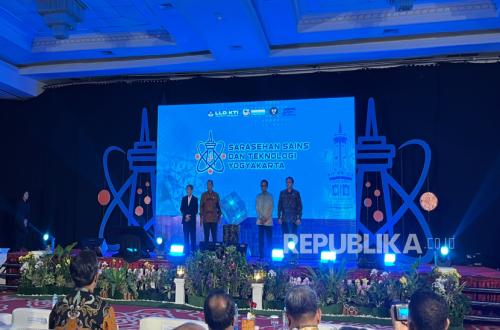
A consortium of universities in the Special Region of Yogyakarta (DIY) has been formed to strengthen cooperation between higher education institutions, the government, the business sector, and industry to address various regional issues.
The Deputy Minister of Higher Education, Science, and Technology of the Republic of Indonesia, Professor Fauzan, stated that the consortium is intended to enable universities to work collectively with various stakeholders to tackle problems within their respective regions.
“Previously, the work carried out by universities may have been individual or partial. If it is partial, the results are less effective,” Fau него said during the Yogyakarta Science and Technology Symposium (SSTY) 2026 at The Rich Jogja Hotel on Wednesday (9/9/2026).
He emphasised that universities are essentially social entities and should not exist in an “ivory tower.” He expressed his hope that universities in DIY could contribute significantly and act as problem solvers for the challenges faced by the region.
“We truly hope that the universities in DIY can contribute or act as problem solvers for the issues previously presented by the Governor. I believe that is the spirit,” he said.
Fauzan added that universities possess students and lecturers with diverse areas of expertise. This potential needs to be mobilised to face various challenges, including natural disasters and poisoning incidents. He cited the eruption of Anak Krakatau as an example, noting that universities were called upon to identify disaster-related experts to collaborate with relevant agencies.
Meanwhile, the Governor of DIY, Sri Sultan Hamengku Buwono X, stated that the implementation of the consortium in DIY would not be an issue. He noted that the regional government has long maintained cooperation with both public and private universities through Memorandums of Understanding (MoUs).
“Since we have many MoUs with both public and private universities, this national-scale policy will simply make the patterns of dialogue and approach more effective. In terms of application, there is no problem,” said the Sultan.
The Head of the Higher Education Service Institution (LLDIKTI) Region V Yogyakarta, Professor Setyabudi Indartono, stated that the consortium is an effort to formalise and maximise the existing potential within universities. His office has previously inventoried several issues that could be addressed with academic assistance.
“In the final week, we brought together all regional and city governments to communicate with all universities regarding what can be worked on together,” he said.
Setyabudi mentioned that 22 clusters have been identified, aligning the needs of regional and city governments with the capacities available in universities. Each team will subsequently discuss specific focus areas to determine which tasks can be agreed upon and executed collectively.