
DIY Regional Government to Implement Full Pedestrianisation of Malioboro Starting November
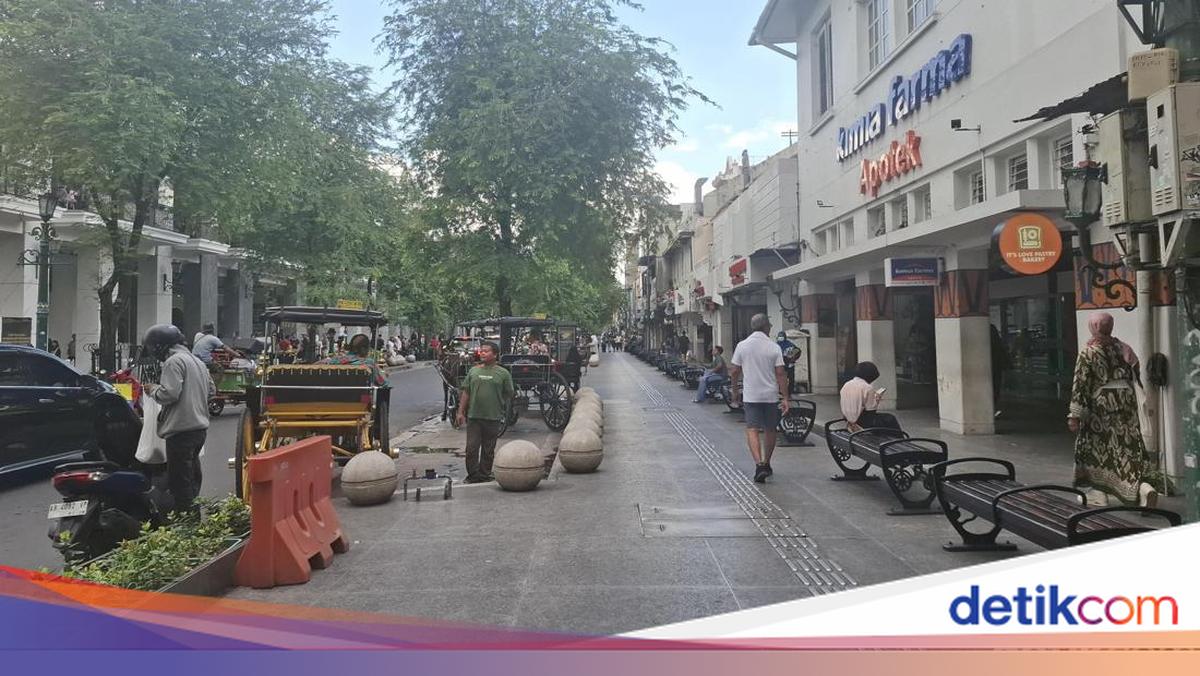
The government plans to implement full pedestrianisation of the Malioboro area in Jogja starting November 2026. Currently, all technical matters are being refined based on evaluations of several previous trials.
The Regional Secretary of the Special Region of Yogyakarta (DIY), Ni Made Dwi Panti Indrayanti, stated that the remaining task from the evaluations is the arrangement of the side streets branching off Malioboro.
"Yes, (full pedestrianisation starting November), we are considering it, because if we delay full pedestrianisation, until when will we postpone it?" Made said when met at the Kepatihan Complex in Jogja on Wednesday (1/7/2026).
"However, it is necessary, as this collaboration is not solely with the DIY Regional Government; the Jogja City Government is also involved. One of the issues that remains a challenge is the arrangement of the side streets," she continued.
Made explained that during previous full pedestrianisation trials, such as during this year’s Jogja City Anniversary, the evaluation results highlighted the need to manage the side streets and regulate traditional vehicles.
"Yes, we are trying, we are trying. Starting in June, the design involves installing portals at each of those side streets," Made revealed.
"We will also monitor the situation. Full pedestrianisation does not mean the area becomes completely deserted with no one able to pass through; there are exceptions, such as for certain special vehicles, ambulances, fire engines in emergencies, or state guests," she added.
Furthermore, Made noted that her team is also developing a drop-off scheme for tourists using tour buses.
"Yes, we are currently designing that as well. So, we actually need to conduct a simulation for these tour buses, for drop-offs. Our hope is that there will be a designated place or location, but there will also be a study from the city government regarding that," she said.
Made expressed hope that the public would understand this policy in the future. Beyond making Malioboro a low-emission zone, the vehicle load in Malioboro is considered too heavy, often leading to traffic build-ups.
"What are we actually doing this arrangement for? It is not that we dislike visitors, but we want to create comfort. Because the sustainability of an area depends on it being properly managed," Made explained.
"If the vehicle volume is large, it will eventually have a negative impact on the area. The carrying capacity will be greatly affected if we do not regulate it. Moreover, there are many heritage buildings that may gradually be disturbed by external disruptions, such as vibrations and other factors," she concluded.