
DIY Regional Government Supports Gunungkidul as National Transparency Role Model for Free Meal Programme Management
YOGYAKARTA – The Free Nutritious Meal (MBG) programme, a national strategic initiative aimed at improving the nutritional status of the public, from toddlers and school-age children to the elderly, continues to be refined through strengthening local food supply chains.
One of the strategic steps being pushed is integrating the Lumbung Mataraman programme as the main supplier for the Nutrition Fulfilment Service Units (SPPG) with the Simetris IT application. This was the main highlight of a cross-sectoral coordination meeting discussing the synergy between regional food security programmes and national policy.
Kartika Megawardhani, Daily Executive Chair of the Bijana Paksi Sitengsu Foundation, said the free nutritious meal programme is being continuously refined across various cross-sectoral lines to ensure the quality, sterilisation and hygiene of food distributed to the public and key target groups.
“The Bijana Paksi Sitengsu Foundation, together with its management team, held coordination of the Lumbung Mataraman Simetris programme in Yogyakarta. Strengthening this productive economic ecosystem through Lumbung Mataraman-Simetris prioritises transparency as well as efforts to anticipate cases of food poisoning,” she said.
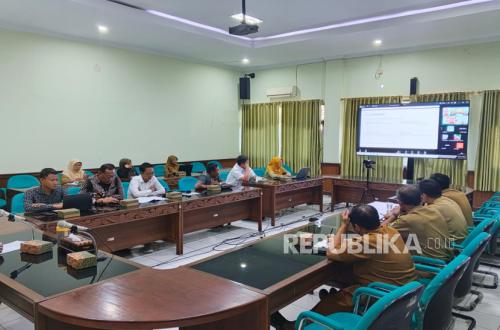
In the programme discussion and evaluation forum, attended by regional leadership, representatives of the Bijana Paksi Sitengsu Foundation and various stakeholders, the importance of linking the economic ecosystem from the grassroots to the top level was emphasised. The programme focuses not only on nutrition fulfilment but also on mobilising people-centred sectors such as local farmers and Micro, Small and Medium Enterprises (MSMEs).
“The goal is for the free nutritious meal programme going forward to improve further and become more complete, so that the benefits are truly felt by the public, target groups, farmers, MSMEs and so on,” Kartika explained.
This synergy at the regional level is in line with the firm instruction of the DIY Governor, Sri Sultan Hamengku Buwono X, who asked all those responsible for the MBG programme to prioritise budget transparency and reasonable cost breakdowns. Sri Sultan HB X underlined that menus must not be prepared carelessly and budget management must be carried out accountably so that the quality of food reaching the public is maintained at a premium standard.
In line with this, the Gunungkidul Regency Government in Yogyakarta has committed to preventing supplier monopolies in the procurement of food raw materials. Sri Suhartanta, Regional Secretary of Gunungkidul Regency, who attended on behalf of the regional leadership, affirmed the importance of this collaboration in strengthening the foundations of the people’s economy at the local level.
“By involving many parties, from farmers to MSMEs in the surrounding areas, the distribution of economic benefits can be felt evenly and fairly,” he said.
In addition, the oversight and monitoring system was another key focus of the meeting, with aspects of quality, hygiene, cleanliness and especially food sterilisation treated as absolute priorities before food products are handed over to beneficiaries.
As presented, the free nutritious meal programme is designed to strengthen the domestic food supply chain through synergy with farmer groups, combined farmer groups (Gapoktan) and local MSME actors. This integration covers the agriculture, livestock and fisheries sectors to ensure the availability of raw materials in a sustainable and timely manner.
This approach is expected to overcome various distribution obstacles and maintain food price stability at the consumer level. With the digitisation of the command centre, monitoring of supply and food product quality can be carried out in real time, so that synergy between Lumbung Mataraman, MSMEs and the national nutrition programme can run optimally.
There are currently 76 SPPG units operating under direct central government policy through the Task Force. Given that SPPG kitchens cook every day, the availability of fresh food ingredients such as agricultural produce, livestock products (eggs and meat) and fisheries products from local farmers and MSMEs is a top priority.
As part of the Internal Control System (SPI), the importance of strict quality control, timely supply, adequate quantities and the prevention of food poisoning risks was emphasised to ensure there are no bottlenecks in the distribution of goods to SPPG units.
Wahyu Edi Nugroho, Coordinating Chair of Lumbung Mataram Area 1 Yogyakarta, affirmed that the synergy between Lumbung Mataraman and Lumbung Mataraman Simetris is conceived as an integrated food production movement managed by farmer groups or combined farmer groups (Gapoktan). The programme combines gardens, livestock pens and ponds into a single unit to ensure the continuity of production of agricultural crops, food crops, vegetables, fruits and livestock.
“We hope this integration model in Gunungkidul can become a national role model and be replicated in various other regions to realise inclusive and fair food self-sufficiency,” Wahyu said.
Based on regional data, several Lumbung Mataraman development sites include Semin: the pioneering area and earliest to be developed, as well as one of the regions with supplier readiness fully supported by funding;
Kedungpoh (Nglipar) and Ngijan: areas that began the process earlier; and Piyaman and Balong: the newest development areas (starting in 2025).
The success of this programme has also been supported by intensive coordination with the Regional Inflation Control Team (TPID), the Agriculture and Food Security Office, the Industry Office and the Cooperatives and SMEs Office of DIY. Beyond nutrition fulfilment, this synergy is expected to maintain the balance between supply and demand to control inflation rates, particularly from the agricultural sector, so that market supplies remain stable.
As a national policy note, from October 2026, all food products absorbed in this programme must be halal-certified and hold valid distribution permits for the safety and nutritional quality of the public.
The meeting closed with high hopes that the programme’s implementation going forward will be increasingly integrated, bring blessings, and receive the full blessing and support of all elements of society.
Source: jawawa.id (https://jawawa.id/newsitem/diy-regional-government-supports-gunungkidul-as-national-transparency-role-model-for-free-meal-programme-1784771510)
Originally published by Republika (https://rejogja.republika.co.id/berita/tilrbk291/pemda-diy-dukung-gunungkidul-jadi-role-model-nasional-transparansi-pengelolaan-mbg), translated from Indonesian