
DIY Regional Government Guarantees It Will Not Ignore Residents Whose Decile Data Misses Out on Social Assistance
The Provincial Government of the Special Region of Yogyakarta (DIY) has assured that it will not ignore residents whose decile data turns out to be inconsistent with their actual conditions and who should be entitled to receive social assistance (bansos). This was emphasised by the DIY Provincial Government in response to the phenomenon of residents whose real conditions qualify them for social assistance, but who face obstacles because their decile data states otherwise. The provincial government stated that it will continue to strive for its residents who fall outside the social assistance recipient decile to obtain their rights to government aid.
Head of the DIY Social Affairs Office, Suyarno, confirmed the existence of residents who are placed in a high decile in the National Socio-Economic Single Data (DTSEN), while their actual level of welfare is relatively low. “[Changes in decile] under normal circumstances are not too many. In this case [the phenomenon currently occurring], in my view it is not normal, because a great many [decile data] have changed,” said Suyarno at the DIY BPS office in Bantul on Monday (24/8).
His office cannot deny that this phenomenon has also affected the receipt of social assistance by those who should receive it, but who do not get their rights due to a decile jump. In accordance with Minister of Social Affairs Decree Number 22/HUK/2026 concerning welfare rankings in DTSEN, Deciles 1-4, the low welfare category, are the government’s priority for providing social assistance through the Family Hope Programme (PKH) and National Health Insurance (JKN) contribution assistance.
“The Social Affairs Office must respond wisely and not immediately stop assistance for families whose decile has risen. Internally, a scheme is being discussed so that families whose decile has risen, but whose actual conditions have not changed, can continue to receive social assistance,” said Suyarno.
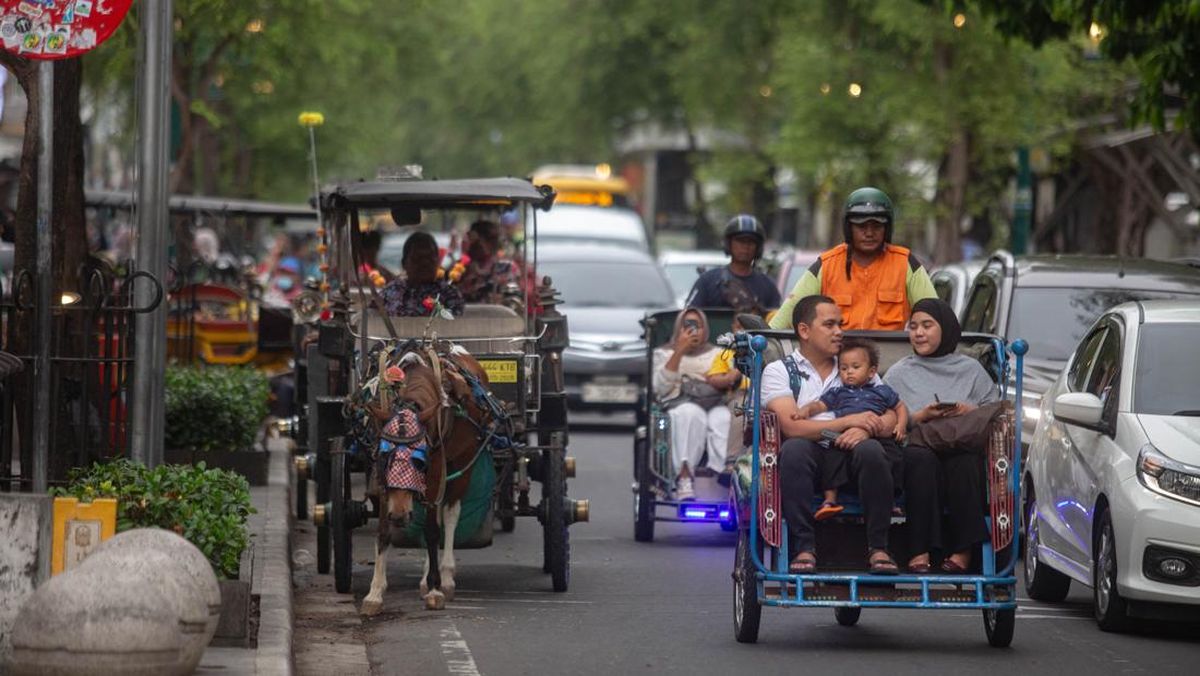
Suyarno cited the case of Timbul, a motorised pedicab driver in the Malioboro area of Yogyakarta City. He is a resident of Ngentakrejo, Lendah, Kulon Progo, DIY. Timbul was confused when he learned he was placed in decile 9, whereas he was previously in decile 1, meaning the extremely poor group or the 10 percent of the population with the lowest welfare level. Decile 9, meanwhile, places Timbul in the group of people with a high welfare level, so he is no longer a priority for social assistance.
Suyarno continued that the Social Affairs Office is still considering a mechanism so that residents whose decile ranking is inaccurate can continue to receive government assistance. At the same time, Family Hope Programme (PKH) officers or facilitators will be deployed to carry out factual verification. “That is what we are still working on; there may be another formulation,” said Suyarno.
Suyarno added that the public can also independently seek changes to their decile ranking in accordance with their actual conditions. Residents can first check their eligibility for social assistance through the official website https://cekbansos.kemensos.go.id. In addition to relying on the website, checks can also be accessed through the Cek Bansos application, which is available and can be downloaded from the Play Store or App Store. If they successfully register an account, users can submit an appeal directly if they feel entitled to receive social assistance but are listed as ineligible. “Or come to the kelurahan and meet the SIKS-NG operator officer; every kelurahan has one. The officer will then assist,” concluded Suyarno.
Source: jawawa.id (https://jawawa.id/newsitem/diy-regional-government-guarantees-it-will-not-ignore-residents-whose-decile-data-misses-out-on-social-1787640787)
Originally published by CNN Indonesia (https://www.cnnindonesia.com/nasional/20260825120153-20-1396099/pemda-diy-jamin-tak-abaikan-warga-yang-data-desil-meleset-dari-bansos), translated from Indonesian