
DIY Provincial Government Pledges to Maintain and Develop Assets Donated by the Corruption Eradication Commission
Discussing the Corruption Eradication Commission (KPK) does not mean talking only about its sting operations or investigations and prosecutions of alleged corruption cases.
The KPK’s work also encompasses anti-corruption education and prevention, as well as what happens to assets seized once a case has received a final and binding court ruling.
Once a case is final, the fate of assets that become state confiscations depends on their form. Confiscated money is paid into the state treasury.
Movable and immovable assets, such as vehicles, land and buildings, are first put up for auction. Other options include assigning their use to a ministry or government agency, or donating them to a regional government.
One example of assets donated by the KPK is property in Yogyakarta, Special Region of Yogyakarta (DIY), confiscated from Djoko Susilo, who was convicted of money laundering in connection with the 2011 driving-licence simulator procurement case.
The assets became subject to a final and binding ruling under Supreme Court Decision No. 537K, dated 4 June 2014.
On 4 September 2019, the KPK donated two assets linked to Djoko Susilo to the DIY Provincial Government.
The provincial government says it has worked to maintain and develop the properties, and will continue to do so. The commitment was reiterated by DIY Culture Agency head Dian Lakshmi Pratiwi and Industry and Trade Agency head Anton Raharja after the government accepted the donation.
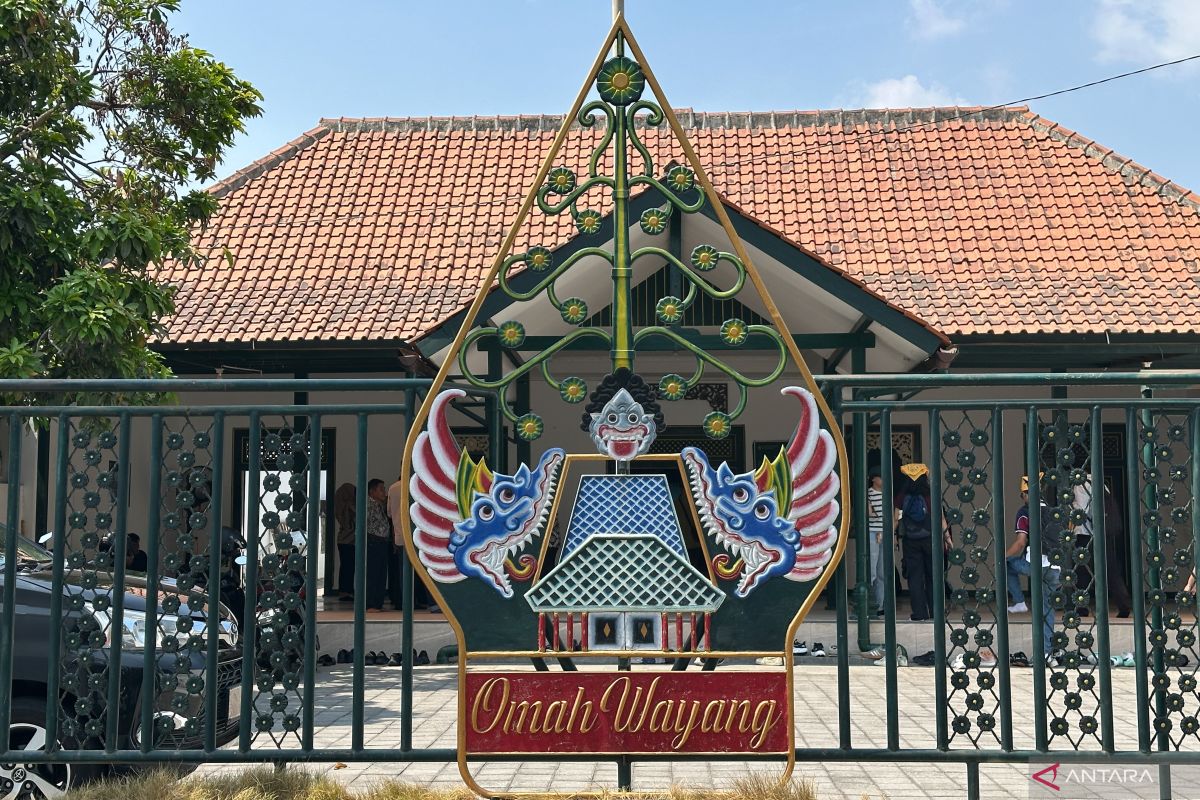
The two properties have since been renamed Omah Wayang Yogyakarta and Griya Batik.
Under the provincial government’s care
KPK prosecutor Suryo Sularso spoke at Omah Wayang Yogyakarta to a group of journalists from Jakarta, Yogyakarta and surrounding areas on 13 October 2026, under the midday sun.
He said the KPK had once tried to auction the property, which is now a venue for wayang performances.
“We tried to auction it, but there was no interest. In other words, no one bid and it did not sell,” he said.
The KPK then approached the DIY Provincial Government and offered it two assets belonging to convicted defendant Djoko Susilo to manage through a donation. The provincial government welcomed the offer and applied to receive the properties.
The KPK team assessed the application and submitted its recommendation to the commission’s leadership.
After the leadership approved it, the KPK put the proposal to the Finance Ministry’s Directorate General of State Assets (DJKN). A ministerial decree was issued in 2019, approving the donation of the two state-confiscated assets to the DIY Provincial Government.
The properties were formally handed over by then KPK deputy chairman Saut Situmorang to DIY Governor Sri Sultan Hamengku Buwono X at Kepatihan Yogyakarta on 4 September 2019.
Sri Sultan said at the time that the transfer from the KPK was an important event. The two properties, valued at Rp19.5 billion at the time, also had considerable historical significance because they are in the Patehan and Langenastran areas.
Both areas lie within the walls of the Yogyakarta Palace. They were once home to palace retainers responsible for providing food, as well as palace soldiers.
Sri Sultan therefore said the provincial government would put the properties to appropriate use.
Seven years later, that commitment appears to have been more than a promise.
DIY Culture Agency head Dian Lakshmi said that from 2019 to 2021 her agency renovated and rehabilitated the property at 7 Jalan Langenastran Kidul, which comprises 573 square metres of land and a 226-square-metre building. The work was carried out without significant alterations.
Given the property’s spacious courtyard, and following consideration by the Yogyakarta Cultural Council, the agency designated it Omah Wayang Yogyakarta.
The provincial government wanted the wayang arts community in DIY to have a base where people could meet. The venue provides space for dialogue, socialising, and the exchange of knowledge and skills.
It was also intended to become a regular performance venue for wayang in Yogyakarta.
That goal was realised in 2022, after repairs and adjustments to create a home for the city’s wayang arts community.
The building was officially opened by the DIY governor on 22 August 2022 and began hosting activities for artists in the wayang community.
A vertical banner at one corner of Omah Wayang now attests to its active use as a performance venue.
Peduli Pedalangan Ngayogyakarta (Pepadang) was the most recent group to perform there, on 10 October 2026. Dalang Ki Kasidi Hadi Prayitno presented the story Wahyu Mustika Aji.
Two more performances are scheduled for next month. The DIY branch of the Indonesian Association of Puppeteers (Pepadi) is due to perform on 19 November 2026, with dalang Ki Naung Sunu Prasetyo. The Yogyakarta Young Puppeteers Association, Sukrakasih, will stage a performance on 20 November, featuring dalang Ki Hendy Prasetya and pepucuk Elia Jalu Langit Biru.
Dian said the provincial government plans to develop the property further so visitors can better understand wayang and learn about it more easily.
One proposal is to work with Pepadang, Pepadi and Sukrakasih to give visitors the chance to experience puppeteering and learn about related aspects of the art.
Around 550 metres from Omah Wayang, Griya Batik stands on Jalan Patehan Lor. The property comprises 2,057 square metres of land and an 887-square-metre building, and was valued at around Rp15 billion in 2019.
DIY Industry and Trade Agency head Anton Raharja said the property was initially managed by the Culture Agency, which sought to establish a batik museum there.
Further assessment and research found that the building would be difficult to operate as a batik museum. Its management was therefore transferred to the DIY Industry and Trade Agency around 4 July 2022, so the property could be put to more effective use.
The agency then committed to repairing the property and providing facilities and equipment. It has also worked with the DIY chapter of the National Crafts Council to optimise the site.
Like Omah Wayang, the property—now called Griya Batik—is being developed as an educational tourism destination.
The aim is for visitors who know little about batik to leave with new knowledge and, potentially, experience making batik themselves.
“By the time they leave, they should be able to tell genuine batik from cloth that merely has a batik-style pattern,” Anton said.
The DIY Provincial Government’s commitment to maintaining and developing the assets donated by the KPK offers hope that the benefits of anti-corruption efforts will be felt by the public.
The KPK is also expected to remain committed to fighting corruption and to monitor confiscated assets transferred to ministries, government agencies and regional administrations.