
Divergent Fates for Asian Foreign Exchange Reserves: Indonesia Suffers While China and Singapore Thrive
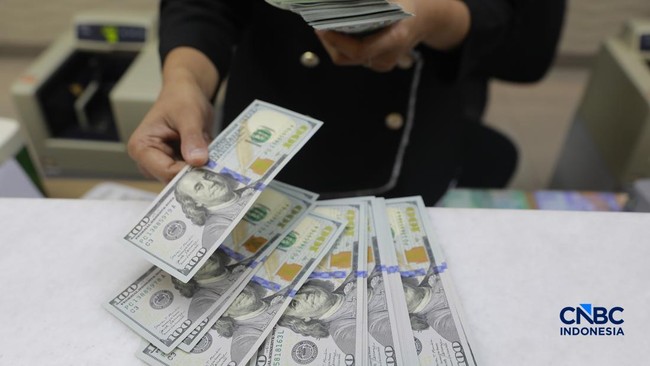
The escalating conflict in the Middle East has placed significant pressure on global financial markets. Investors are once again seeking refuge in the US dollar, causing volatility in many emerging market currencies. In such conditions, foreign exchange reserves serve as a vital buffer, providing the ammunition necessary to maintain exchange rate stability, meet foreign currency requirements, and settle overseas obligations.
However, global pressures have caused foreign exchange reserves in several Asian nations to shrink, with Indonesia being among them. Bank Indonesia (BI) recently reported that foreign exchange reserves at the end of May 2026 stood at US$144.9 billion, a decrease of US$1.3 billion from the US$146.2 billion recorded at the end of April 2026. BI explained that while the issuance of government global bonds and tax and service revenues influenced the reserves, they were also utilised for government foreign debt payments and policies to stabilise the rupiah.
The rupiah exchange rate remains under pressure. At the close of trading on Monday (8/6/2026), the rupiah weakened by 0.89% against the US dollar to a level of Rp18,180/US$, marking its weakest position on record. This ongoing pressure aligns with the decline in reserves, as BI must continue to intervene to maintain stability amidst global market volatility. Despite the decline, BI considers Indonesia’s reserve position to be strong, equivalent to 5.6 months of imports (or 5.5 months of imports plus government foreign debt payments), which remains above the international adequacy standard of approximately 3 months of imports.
Indonesia is not alone in this decline. Several other Asian nations recorded shrinking reserves during the same period. Japan experienced a significant drop of US$77.1 billion in a single month, with reserves falling from US$1,383 billion to US$1,305.9 billion. South Korea and the Philippines also saw slight decreases, with South Korea dropping by US$0.9 billion to US$427 billion, and the Philippines by US$0.3 billion to US$104 billion.
Conversely, some nations have managed to bolster their reserves. China stands out as a notable example, with its foreign exchange reserves increasing by US$31 billion in one month, rising from US$3,411 billion to US$3,442 billion in May. Increases were also observed in Hong Kong, Taiwan, and India, albeit on a smaller scale. Hong Kong recorded an additional US$4.4 billion, reaching US$446.5 billion, while Taiwan strengthened its reserves by US$2.6 billion to US$605.1 billion. India saw a slight increase of US$0.9 billion, ending at US$682.3 billion. This indicates that global pressures are not affecting all Asian reserves uniformly; while some nations are depleting their buffers, others are successfully expanding them to face market turbulence.