
Distance Learning Extended in Palangka Raya Due to Forest Fire Smoke
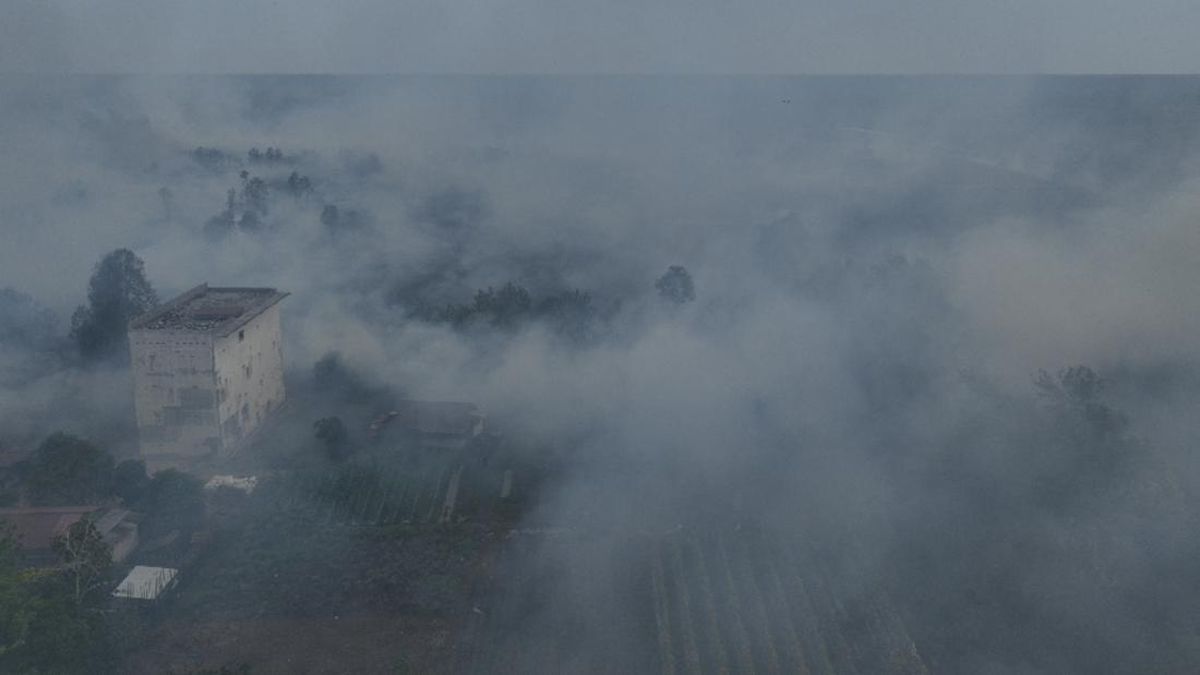
Haze caused by forest and land fires (karhutla) continues to plague the city of Palangka Raya, Central Kalimantan. Consequently, distance learning (PJJ) in the provincial capital has been extended for the eighth time.
Most recently, the Palangka Raya City Education Office extended distance learning until 7 October 2026. This policy marks the eighth extension since distance learning was first implemented due to poor air quality resulting from forest fire smoke in early September. Residents, particularly parents and guardians, are hoping for improved air quality so that their children’s school activities can return to normal.
The Acting Head of the Palangka Raya City Education Office, Jayani, stated that the decision regarding distance learning is evaluated every three days by monitoring air quality developments and haze conditions. “The determination of distance learning is made every three days, considering air quality and the thickness of the haze. Decisions regarding extensions are communicated before the previous distance learning period ends,” Jayani said on Tuesday (6/10).
Distance learning was first implemented from 7–9 September 2026. The policy was subsequently extended for the periods of 14–16 September, 17–19 September, 21–23 September, 24–26 September, 28–30 September, 1–3 October, and finally 5–7 October 2026.
“This policy applies to all educational units for early childhood, primary, and junior high schools, both public and private, in Palangka Raya City,” said Jayani. She emphasised that the city government places the health and safety of students as the primary consideration. Face-to-face learning activities are deemed non-ideal as long as air quality and haze thickness remain risky for children.
“However, repeated distance learning is also beginning to present challenges for families. Parents must once again allocate time to assist their children with learning, while some students face obstacles such as internet connectivity issues or limited access to devices,” Jay/ani added.
The Palangka Raya Education Office has requested that parents continue to supervise their children during distance learning by organising regular study schedules. Outdoor activities are also advised to be limited when air quality worsens. Furthermore, the nutritional needs and hydration of children must be monitored. If health complaints arise that are suspected to be related to smoke exposure, parents are urged to take their children to health service facilities immediately.
Meanwhile, schools have been reminded not to impose excessive workloads. Learning materials must still be delivered proportionally, with active communication between teachers and parents.
“The hope is that air conditions improve quickly so that children can return to normal learning. The most important thing is that the health and safety of students remain the main priority,” said Jayani.
Now, after nearly a month of disrupted face-to-face learning, students must continue to wait. The certainty of returning to the classroom is no longer determined by the school calendar, but by how quickly the haze in Palangka Raya truly dissipates.
Ika Rustanti, a parent of a primary school student in Palangka Raya, admitted she supports the policy because the risk of smoke exposure is considered more concerning. However, she acknowledged that children are starting to feel bored due to prolonged learning from home, as opportunities to play and interact directly with peers are limited.
“I hope the forest fires and haze end soon so that learning activities can return to normal. It is hoped that children can return to studying at school, playing, and interacting with friends in a safe and comfortable condition,” she said.