
Dissecting the Transformation of Subsidised Fertiliser to Support Food Self-Sufficiency
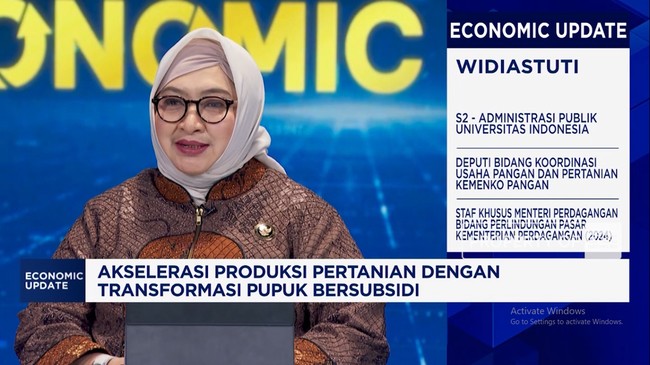
The Coordinating Ministry for Food has affirmed the government’s commitment to sustainable food self-sufficiency as a strategic response to global uncertainty. A key pillar of this strategy is the reform of subsidised fertiliser distribution, enacted through Presidential Regulation (Perpres) No. 6/2025. The regulation simplifies the previous 145 rules into just three, aiming to ease access for farmers. Widastuti, Deputy for Food and Agriculture Business Coordination at the ministry, stated that the regulation also mandates a 20 per cent reduction in the Cost of Goods Sold (HPP) for fertiliser. Meanwhile, Robby Setiabudi Madjid, Supply Chain Director of PT Pupuk Indonesia, explained that the company’s transformation ensures fertiliser reaches farmers based on the ‘7T’ principle: right quantity, right dosage, right time, right place, right quality, right price, and right target. This principle is critical as proper and balanced fertilisation contributes over 60 per cent to agricultural productivity. Under the new framework, PT Pupuk Indonesia is responsible for distributing subsidised fertiliser to over 26,000 official distribution points nationwide. The reforms have accelerated distribution, with fertiliser absorption rising 13 per cent year-on-year in 2025, leading to a corresponding 13 per cent increase in corn and rice production. By June 2026, fertiliser distribution had already reached 30 per cent of the annual target.