
Displaced Residents Endure Darkness and Lack of Sanitation Facilities After Nagekeo Earthquake
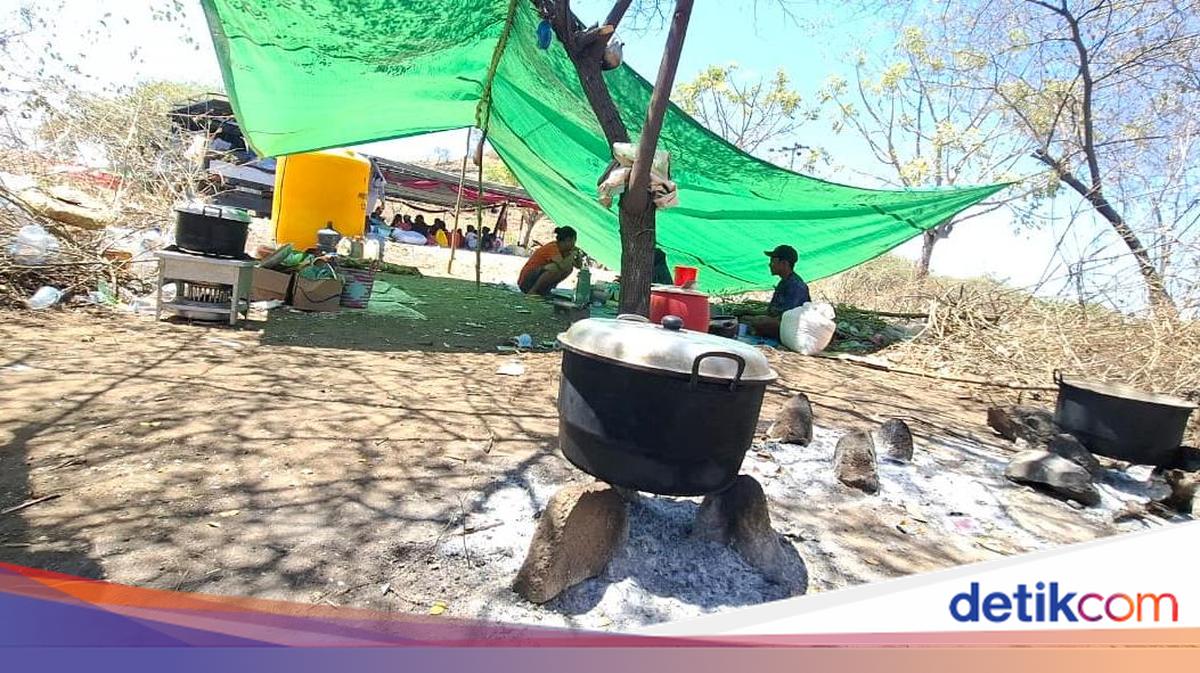
Around 100 residents affected by the 7.7 magnitude earthquake are still sheltering at the Mbay 2 evacuation post in Aesesa District, Nagekeo, East Nusa Tenggara. They have remained there since the earthquake struck on Saturday, 15 August 2026, despite severe limitations and a lack of adequate facilities such as toilets, tents, blankets, and sufficient basic food supplies.
The evacuation post is located on the outskirts of Mbay, the capital of Nagekeo, about 12 kilometres away with a travel time of around 20 minutes. Even so, the distribution of aid for primary and secondary needs has not been evenly distributed. At night, residents rely solely on torchlight for illumination. Children are forced to sleep on tarpaulins spread over dry ground without pillows, and they suffer from the cold.
To charge their mobile phones, residents must return to their homes, which are about 3 kilometres away, despite the threat of aftershocks. The displaced residents are spread across five evacuation posts situated beneath a hill. The location is extremely arid and very hot, adding to their distress as urgent basic needs remain unaddressed.
Even for defecation and urination, they are forced to go into the bushes because no bathing, washing, and toilet facilities have been provided at the emergency post. One evacuee, Maria Gresiana Tima, said that government assistance at the post had only been provided once. The aid consisted of 50 kilograms of rice, one box of noodles, and two trays of chicken eggs, delivered by the Nagekeo Agriculture Office.
Other assistance has come only from private parties and donors in the form of basic foodstuffs. The 51-year-old woman said that logistical stocks were still sufficient for the next few days. “We have only received aid from the Nagekeo Agriculture Office, such as rice, one box of noodles, and two trays of chicken eggs. Other donations came from private parties and donors,” Maria said when met at the location on Saturday, 22 August 2026.
According to Maria, the items they have not received at all include blankets, mats, mattresses, and proper tents. So far, some evacuees are still relying on private tents belonging to residents from Waekokak Village, Aesesa District. Maria is worried that the tents could be damaged at any time by the scorching sun and strong winds, as they have been erected for a week.
Despite this, Maria remains patient because her tent is mostly occupied by many people, dominated by children and the elderly. “I am afraid it will tear. If possible, please give us plastic tarpaulins as well; that would be fine, as long as there is something,” Maria explained.
One thing that makes Maria and other evacuees uncomfortable is surviving in darkness. They rely on torches for lighting, but the batteries do not last until morning. The location is not the reason Maria, her husband, and other evacuees remain there; rather, their homes were destroyed by the 7.7 magnitude earthquake. The site is also considered safe in the event of a tsunami.
“From the beginning, my husband and I chose to come here because it is on high ground. When we arrived, it turned out other residents had also come here, so they joined us because we brought a tent,” Maria said.
Another evacuee, Elisaberth Sengsara, 57, expressed similar concerns. She hopes these needs will receive serious attention because her husband is suffering from a lung infection. “We have only just started sleeping like this, and I am worried. We can only make do in the midst of this earthquake. Whether we are healthy or not, we are holding on just to survive,” Elisabeth added.
“So our conditions are still lacking in many ways. Drinking water is available at all times. We buy it from a water tanker,” Elisabeth explained.