
Dismantling Wildlife Trade Chains: Ministry of Forestry Arrests Pangolin Scale Trafficker in Padang
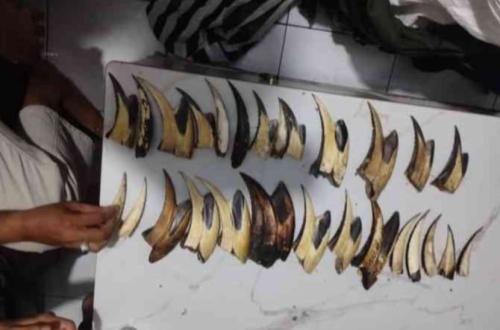
The Ministry of Forestry (Kemenhut) has arrested a man suspected of trafficking protected wildlife body parts in Padang, West Sumatra. During the arrest, officers seized one sack of pangolin scales and 16 hornbill beaks intended for illegal trade.
The Sumatra Regional Forestry Law Enforcement Agency (Gakkum) has named the suspect, identified as RPS (23), following a community report regarding the suspected trade of protected species. The arrest took place in the Pauh District of Padang.
Dwi Januanto Nugroho, Director General of Forestry Law Enforcement at the Ministry of Forestry, stated that the crackdown on wildlife trafficking must not stop at those caught with physical evidence. He emphasised that authorities are committed to hunting down the entire criminal network.
“Wildlife trafficking must be addressed as a single criminal chain, from upstream to downstream,” Dwi said in a statement on Friday.
He revealed that the Directorate General of Forestry Law Enforcement had previously uncovered the smuggling of 3,053 kilograms of pangolin scales suspected of being destined for Cambodia. Additionally, officers intercepted the smuggling of 796.34 kilograms of pangolin scales from a Vietnamese-flagged vessel at Merak Port.
According to Dwi, the Padang case highlights the necessity of breaking the trade chain at the hunting and collection stages before these parts enter larger distribution networks. “Every pangolin scale and hornbill beak traded signifies the loss of wildlife from its natural habitat. Therefore, dismantling the trade network is a vital part of protecting Indonesia’s biodiversity and forest ecosystems,” he added.
Hari Novianto, Head of the Sumatra Regional Forestry Law Enforcement Agency, stated that they will strengthen field patrols and wildlife trade monitoring, including via social media. “We will continue to enhance the use of technology, such as Cyber Patrol and the Intelligence Centre, to monitor the trade of protected wildlife,” said Hari.
The suspect faces charges under Article 40A paragraph (1) letter f in conjunction with Article 21 paragraph (2) letter c of Law Number 32 of 2024, which amends Law Number 5 of 1990 concerning the Conservation of Biological Natural Resources and their Ecosystems. The suspect faces a maximum prison sentence of 15 years and a fine of up to Rp5 billion.