
Disease-Resistant Chilli Seed Innovation to Tackle Extreme Weather
Climate change, marked by extreme weather and prolonged drought caused by the El Niño phenomenon, poses a serious challenge to Indonesia’s horticulture sector. As well as limiting water supplies, extreme heat is driving up populations of virus-carrying pests such as aphids, thrips and whiteflies (Bemisia tabaci), threatening chilli production.
The surge in pest populations is accelerating the spread of plant virus infections, particularly Geminivirus, and increasing the threat of bacterial wilt in chilli-growing areas. Plants stressed by drought also have weaker defences, leaving them more vulnerable to disease.
Farmers are feeling the impact directly. Chilli harvests can fall by more than 50 per cent, and some farmers have suffered total crop failures due to the combined effects of drought and disease.
Sawal, a chilli farmer from Central Java, said most of his plants had died during the prolonged dry season. The remaining crop had not produced the harvest he had hoped for.
“With no rain, we suffered a crop failure. A small number of plants could still be harvested, but even their yield was poor,” Sawal said.
As climate change becomes increasingly difficult to predict, the use of agricultural technologies based on plant breeding is emerging as a strategic mitigation measure. High-quality seed varieties with disease resistance are considered an effective way to reduce the risk of farmers’ losses while limiting excessive reliance on chemical pesticides.
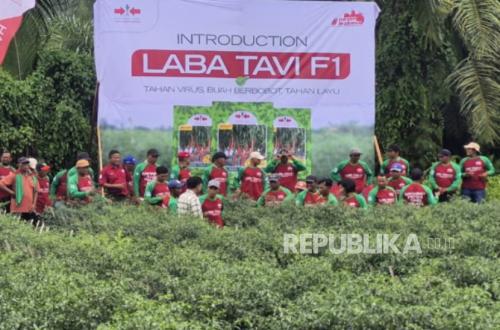
One seed innovation developed to address dry-season challenges is the Laba TAVI F1 variety. This hybrid curly chilli is designed to offer strong resistance to several major diseases that often cause crop failures, particularly during the dry season.
Its resistance includes bacterial wilt caused by Ralstonia solanacearum, stem or root rot caused by Phytophthora capsici, and complex virus infections. The virus-resistance technology is known as TAVI, meaning “Virus-Resistant Plants”.
Laba TAVI F1 has also been developed for high productivity. The variety produces curly chillies weighing an average of eight grammes each, with a potential yield of 18 to 23 tonnes per hectare.
This productivity is expected to improve farming efficiency, particularly as farmers face pressure on production costs due to changing weather conditions. The variety’s genetic resistance is also designed to support plant growth, fruit formation and crop quality amid high temperatures and limited water supplies.
Budi Hariyono, commercial general manager of PT East West Seed Indonesia (EWINDO), said the development of adaptive varieties represented a contribution by agricultural research and technology to national food security. The innovation resulted from a consistent plant-breeding process that took account of Indonesia’s local agroclimatic conditions.
Budi said the development of improved varieties was focused on helping farmers address extreme weather threats, which were increasingly affecting the sustainability of farming. Plant disease resistance and the ability to adapt to dry weather were key priorities in the research.
“Laba TAVI F1 is the result of in-depth research that we have dedicated as a practical solution for farmers facing the challenges of a prolonged dry season such as the one occurring now,” Budi said in a statement in Jakarta on Thursday, 15 October 2026.
Source: jawawa.id (https://jawawa.id/newsitem/disease-resistant-chilli-seed-innovation-to-tackle-extreme-weather-1792151573)
Originally published by Republika (https://ekonomi.republika.co.id/berita/tmzc60451/inovasi-benih-cabai-tahan-penyakit-untuk-menghadapi-iklim-ekstrem), translated from Indonesian