
Discussions on Legalising Illegal Cigarette Producers Seen as Potentially Opening New Corruption Opportunities
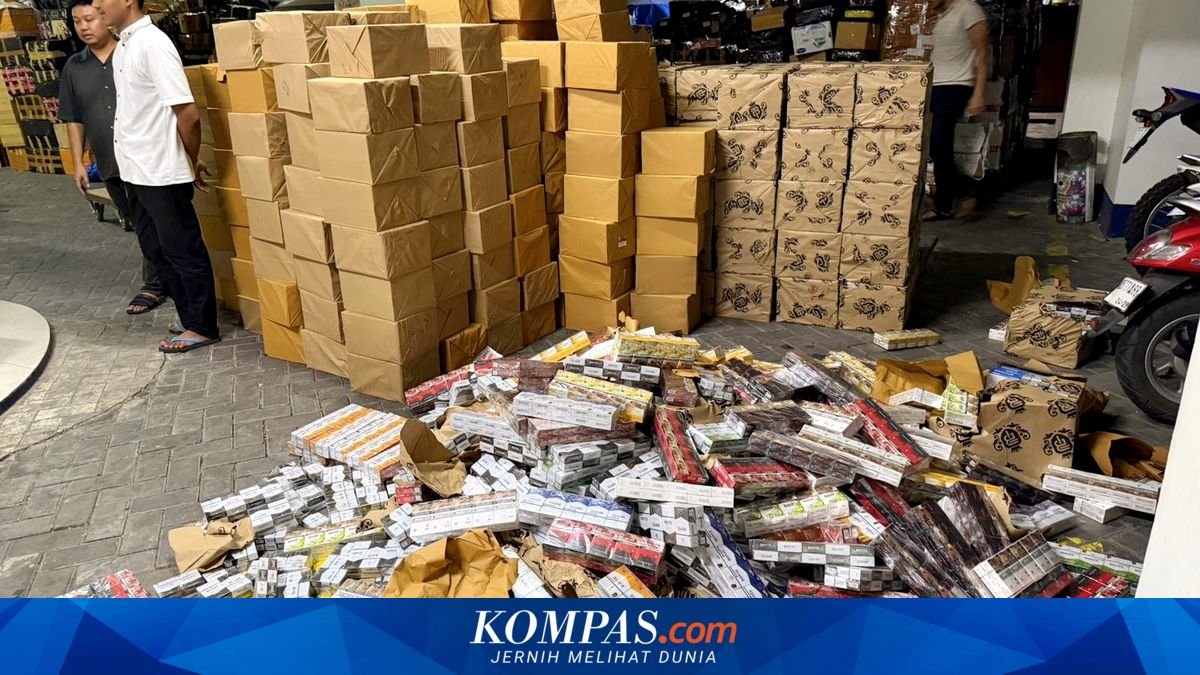
JAKARTA - Discussions on legalising illegal cigarette producers through the addition of a new layer of tobacco excise duty (CHT) are not merely about state revenue but also potentially opening new avenues for corruption practices and abuse of authority.
Indonesia Corruption Watch (ICW) assesses that this policy could alter the direction of law enforcement against excise violations, from a criminal approach to an administrative compromise. On the other hand, the policy is also feared to create grey areas in state revenue governance.
The proposal for adding a new layer of tobacco excise was previously mentioned as a way to bring illegal cigarette producers into the legal scheme. However, several anti-corruption activists view this step as potentially causing serious issues in terms of law enforcement.
Moreover, the policy is seen as not aligning with the government’s spirit in eradicating corruption and closing loopholes for state losses. In particular, the potential for new corrupt practices and criminalisation in the future is said to be increasingly open if this regulation is implemented.
ICW researcher Seira Tamara stated that the spirit of bureaucratic reform so far has been directed towards simplifying rules and public service processes. According to her, complex structures often become fields for compromise and dark transactions.
“The addition of a new layer in the excise structure risks creating additional complexity that opens up negotiation spaces and corruption practices,” said Seira in an official statement on Wednesday (6/5/2026).
Furthermore, she warned that the proposal for a new excise layer could very likely become a container for new corrupt practices if implemented without thorough study.
“When there is a new layer (excise) proposed, it is very likely that it will instead accommodate corrupt practices,” she said.
Therefore, if the state opens legalisation options through adjustments to the excise layer, there emerges an impression that criminal instruments are no longer a priority in addressing excise violations.
She also questioned the logic of the policy, which is seen as giving more room first to illegal cigarette actors, but only closing loopholes when violations occur again in the future.
“If there is indeed a violation and the legal instruments are already available, why not enforce them now? Why wait?” she said.