
Discussions on 'Hajj Ticket Auction': Prioritising Queues to Subsidy-Free Schemes
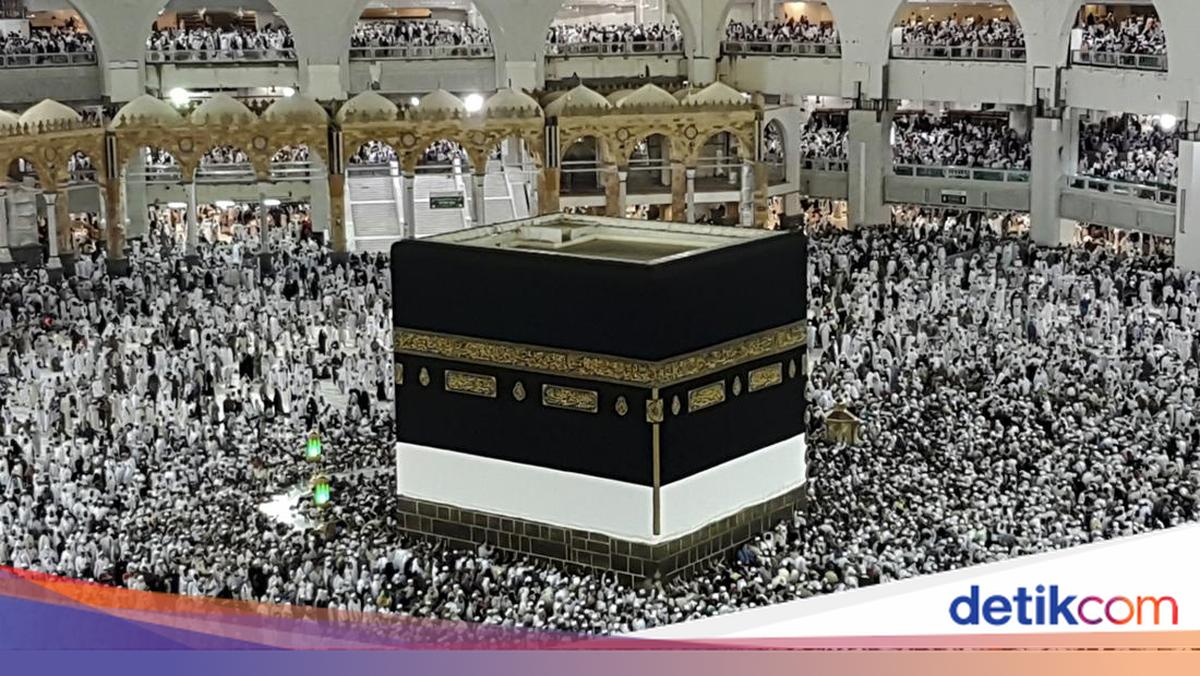
The Ministry of Hajj and Umrah (Kemenhaj) is examining the implementation of a ‘ticket auction’ system for Hajj departures without long queues. However, Deputy Minister of Hajj and Umrah, Dahnil Azhar Prabowo, emphasised that prospective pilgrims already on the waiting list remain the top priority. “The priority is first for those who have already queued. Those who have queued remain the first and primary,” said Dahnil on Sunday (12/4/2026), as reported by detikNews. He explained that this discourse emerged as an effort to find a solution to the Hajj queue issue that has persisted for years. The government, he said, is committed to resolving this problem while improving Hajj management governance. When asked about the potential for insider dealings (ordal) if the ‘ticket auction’ system is implemented, Dahnil stated that they are still focused on clearing the existing queue of prospective pilgrims first. “This discourse is an effort to solve the queue problem, meaning the focus is on clearing it until there are no more queues and improving the Hajj financial governance at the BPKH (Hajj Financial Management Agency),” said Dahnil. “The potential for moral hazard and manipulation practices is what Kemenhaj is continuously cleaning up at present,” he added. Hajj Ticket Auction Scheme Dahnil explained that this discourse arises as a follow-up to President Prabowo Subianto’s directive to shorten Hajj waiting times. On the other hand, this is done in response to Saudi Arabia’s Vision 2030, which plans to increase pilgrim capacity to 5 million people. If realised, Indonesia’s Hajj quota is predicted to surge to 500,000 pilgrims. “For example, with Saudi Arabia 2030, they might accommodate more than 5 million pilgrims. That means our quota will definitely be increased too. Currently, we have 221,000; if they reach 5 million pilgrims, ours could be nearly 500,000. That’s more than 150%. Is that amount feasible to cover with the current Hajj finances? It turns out it’s not possible,” revealed Dahnil. “Why? Because the number is quite large. Now, for example, with 203 regular pilgrims, the total organisation fund is Rp 18.2 trillion. So if it rises to 500,000 pilgrims, it could be more than Rp 40 trillion, and Hajj finances might not be able to cover it, and it might not reduce the queue either. Because the president’s instruction is for the Ministry of Hajj to shorten the queue,” he explained. So, what is the intended ‘ticket auction’ scheme? Here is a summary of the explanation points: 1. Exclusive to Additional Quota Dahnil emphasised that the current regular queue scheme will continue to clear the 5.7 million registered pilgrims. The ‘ticket auction’ scheme will only be applied if there is a large additional quota from Saudi Arabia beyond the regular quota. 2. Without Subsidy (Real Price) Unlike regular Hajj, which receives subsidies from Hajj fund benefits, the ‘ticket auction’ scheme will use market or real prices. “That means the government with the DPR will determine it. For example, this year’s Hajj cost without subsidy, unlike those queuing, might be Rp 200 million, then those who can afford it can buy directly. Meaning, buying the available quota, which can be decided together with the DPR,” clarified Dahnil. 3. Price Still Set by the State Although using market prices, Dahnil dismissed notions of liberalisation or free market in Hajj organisation. Ticket prices remain tightly controlled by the government. “It will be regulated by the state, and the determined price is still set by the state, right? The Bipih will be determined by the government and DPR together, so there’s no liberalisation, no free market; the price is still determined by the state,” said Dahnil. “But the difference is it’s not subsidised by Hajj finances, so everything is fully from the pilgrims. Currently, there’s an initial deposit of Rp 25 million, which becomes an account in the bank, then when departing, they get the benefit value from the initial deposit. Then plus the final deposit from the pilgrims,” he continued. 4. Prioritising Material Istitaah This discourse is aimed at pilgrims with greater financial capability to depart for Hajj faster without disrupting the regular queue. “So this is true istitaah. So those with material istitaah, physical istitaah, mental istitaah, done, buy this,” explained Dahnil. Still Just Transformation Discourse Dahnil stressed that the ‘ticket auction’ is still just discourse. It has not become official policy for this year or next, but rather a long-term idea to transform Indonesia’s Hajj system. Dahnil asked the public not to misunderstand. “Once again, this is discourse in the context of solving the very long queue problem as per the president’s mandate. This is not policy; this is an effort we are seeking to transform our Hajj system so we can shorten the queue or even eliminate it,” said Dahnil. “Then secondly, to save Hajj finances or save our community’s finances, and this will impact the position of the Hajj Financial Management Agency (BPKH),” he concluded.