
Discussing the State Finance Bill, Senior Economists Provide Key Recommendations
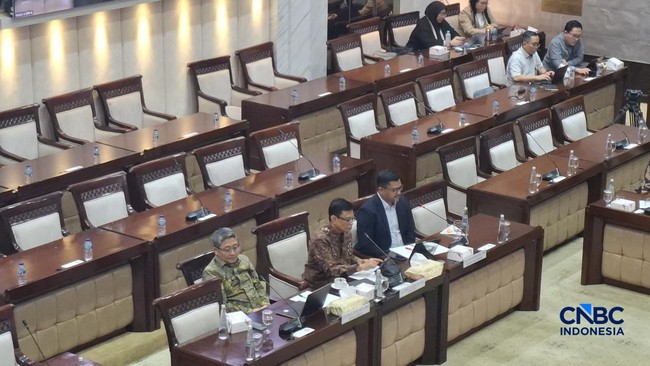
Commission XI of the Indonesian House of Representatives (DPR RI) recently held a public hearing with three economic experts to discuss the State Finance Bill (RUU Keuangan Negara).
The three experts in attendance were Didik J. Rachbini, Senior Economist at the Institute for Development of Economics and Finance (INDEF); Chaikal Nuryakin, Head of the Institute for Economic and Social Research at the Faculty of Economics and Business, University of Indonesia (LPEM FEB UI); and Dipo Satria Ramli, Economist at the Centre of Reform on Economics (CORE) Indonesia.
Didik J. Rachbini highlighted that the substance of the State Finance Bill remains too focused on administrative matters, whereas it should encompass political dimensions. “This State Finance Law only regulates things like the accounting system, information flow, the implementation of information systems, accounting standards, auditing, and so on. In my view, this is purely technical; it should have transitioned into political economy,” Didik stated during the hearing on Thursday (17/09/2026).
He explained that a political economy approach does not merely look at profit and loss but also considers public value. “In political economy, when a policy is implemented by the bureaucracy, we must see who benefits and who loses, as everyone feels the implications of the policy. Therefore, this must change from positive legislation to normative legislation,” he elaborated.
Meanwhile, Chaikal Nuryakin pointed out a weakness in the bill, noting that it does not maximally translate the state’s objectives in meeting economic and social values, often leaving policymakers trapped in an orientation of merely covering state financial losses. “Policymakers must align with the state’s objectives based on economic and social values. However, in reality, they do not perform their functions or maximise the state’s objectives,” said Chaikal.
Furthermore, he proposed that the state budget deficit limit should be formulated more flexibly to handle specific situations. “The state must possess flexibility, especially regarding the 3% deficit limit, for certain years. This 3% limit should not be calculated annually, but rather over a specific mid-term. For example, it could be 3% over 10 years, providing flexibility within each individual year while still meeting the overall target,” he explained.
From a different perspective, Dipo Satria Ramli highlighted the tendency of ministries and agencies (K/L) to focus solely on budget absorption. “This State Finance Law is very administrative. Consequently, ministries or agencies focus only on exhausting their budget ceilings. If problems arise, the Audit Board (BPK) might also only focus on administrative aspects, without much connection to the expected outcomes,” Dipo criticised.
As a solution, he recommended two main strategies to ensure the State Finance Bill can deliver a real impact on public welfare across various regions. “I believe there are two primary strategies. First, boosting purchasing power, and second, selecting programmes that have a high multiplier effect. If these two strategies can be integrated into the State Finance Law, I believe it would be immensely helpful,” he concluded.
Source: jawawa.id (https://jawawa.id/newsitem/discussing-the-state-finance-bill-senior-economists-provide-key-recommendations-1789665355)
Originally published by CNBC Indonesia (https://www.cnbcindonesia.com/news/20260917175208-4-768823/bahas-ruu-keuangan-negara-ekonom-ekonom-senior-kasih-masukan-ini), translated from Indonesian