
Discussing the Population Administration Bill, House Flags Continued Requests for Residents’ ID Card Photocopies
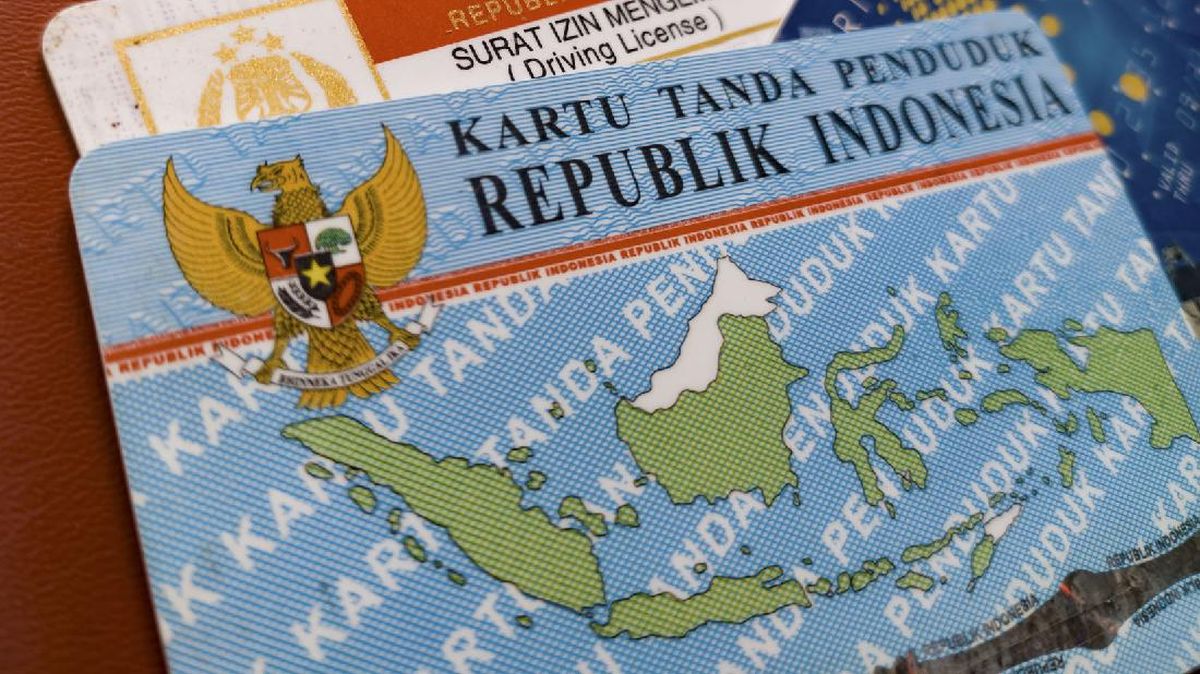
House Commission II has highlighted administrative procedures, including at banks, that continue to request or even require residents to attach copies or photocopies of their electronic identity cards (e-KTPs).
Since the system was rolled out nationally in the early 2010s, identity data has been recorded using facial recognition and fingerprints, with the aim of simplifying population administration.
Commission II chairman Rifqinizamy Karsayuda said every resident has a Population Identification Number (NIK), which should be usable for facial recognition or fingerprint systems that can then be integrated with various public services.
“Yesterday, a member told us internally that they already had data from the Population and Civil Registration Directorate General, but when they went to a bank they were still asked for a photocopy of their identity card. The facial recognition and fingerprint data recorded by the Directorate General for citizens with an NIK should already be integrated with various public services,” Rifqi said at a Commission II working meeting at the parliamentary complex in Jakarta on Monday (16 November).
Facial and fingerprint recording is one feature arising from the Single Identity Number (SIN) concept, or the introduction of a single identification number.
Aria Bima, chair of the working committee on the Population Administration Bill, said the NIK held by every resident could serve as the basis for an SIN.
Commission II and the government are discussing the SIN concept for inclusion in the draft amendment to the Population Administration Bill.
Aria Bima said that once the SIN policy took effect, neither public nor private institutions would be allowed to request photocopies of personal documents for administrative processes. Instead, these processes would have to be carried out through digital systems.
“The ban on requesting photocopies and screenshots must be accompanied by the availability of digital reading devices across all service providers, including private businesses and small enterprises,” Aria Bima said.
Aria Bima also outlined several key provisions under discussion in the revision of the Population Administration Bill:
An active-service model, requiring the government to provide services rather than wait for residents to come forward.
The Population Identification Number (NIK) as a single identity number for all public services.
Integration of the NIK through interoperability, with rules governing access rights and obligations to return data.
Integrated use of population data, including electronic identity cards (e-KTPs) and Digital Population Identity (IKD).
Protection of data and documents, including a ban on requests for photocopies or screenshots, to be replaced by verification using digital reading devices.
Non-population identification numbers for Indonesian citizens living overseas.
An official identity document for children under 17 who are unmarried.
The IKD as a digital representation of the e-KTP and other documents.
Internal and external oversight, including data security.
Direct complaints and complaints through the national complaints system.
Funding from the state budget (APBN), regional budgets (APBD), non-tax state revenue (PNBP) and grants for service development.
Administrative sanctions for service providers and users who breach obligations to integrate data with the Population Administration Information System (SIAK).
Source: jawawa.id (https://jawawa.id/newsitem/discussing-the-population-administration-bill-house-flags-continued-requests-for-residents-id-card-photocopies-1794869479)
Originally published by CNN Indonesia (https://www.cnnindonesia.com/nasional/20261116213136-32-1427882/bahas-ruu-adminduk-dpr-soroti-warga-masih-harus-serahkan-fotokopi-ktp), translated from Indonesian