
Discussing Energy Security at Unmul, Eddy Emphasises Equitable Access
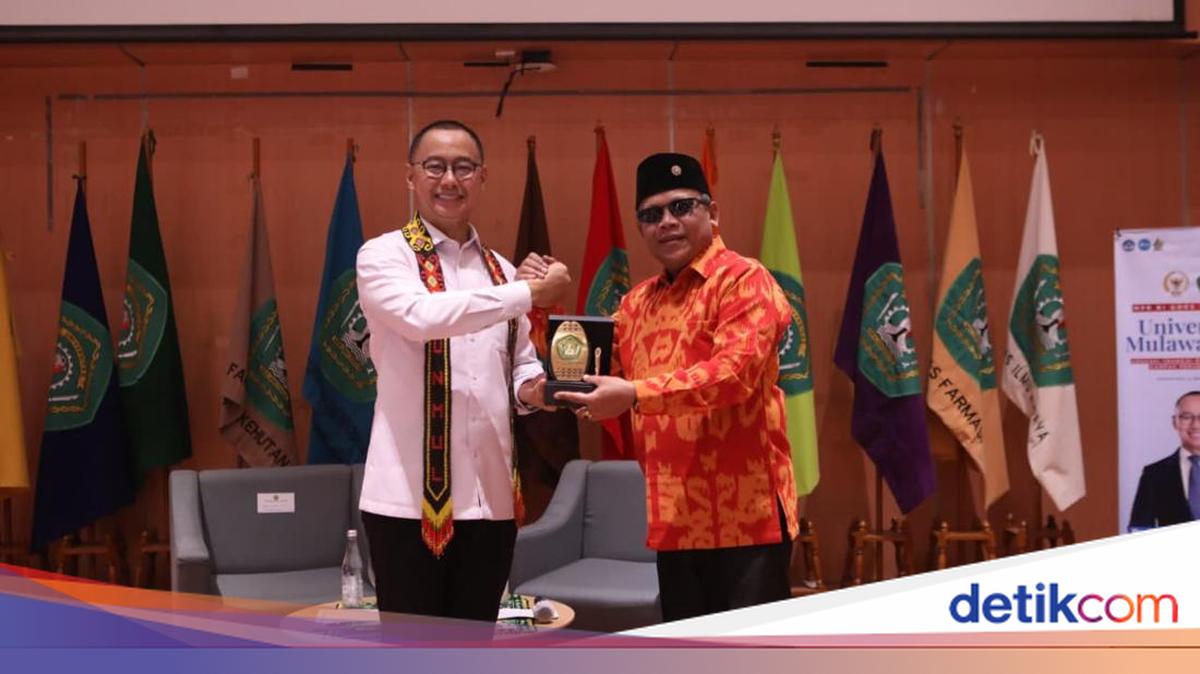
The Deputy Speaker of the MPR RI, Eddy Soeparno, believes that national energy security is not enough to merely guarantee the availability of supply. According to him, energy must also be accessible to the public at affordable prices and through even distribution.
This was stated by Eddy while attending the 52nd ‘MPR Goes to Campus’ at Mulawarman University (Unmul) in Samarinda, East Kalimantan. The event was attended by the Rector of Unmul, Prof. Dr. Ir. H. Abdunnable, alongside the Vice Rector for Student Affairs, Prof. Dr. Bahzar, as well as members of the Unmul academic community.
“The meaning of energy security is not just the state’s ability to provide energy supply, but also ensuring that energy can be accessed by the community at affordable prices and with even distribution for all people,” Eddy stated in a written release on Thursday (3/9/2026).
According to Eddy, energy is a fundamental necessity for the community and a key determinant of economic competitiveness. When energy prices rise or supplies are disrupted, the impact is felt widely by the public through increased costs in transport, logistics, production, and even the price of basic necessities.
“Energy security must ultimately lead to the welfare of the people. Energy must be available when needed, its price must be affordable, and access must be equitable. We must ensure there is no segment of society that can obtain energy easily while people in other regions have to pay much more,” said Eddy.
Eddy assessed that energy security issues are becoming increasingly important amidst rising national energy demands. Economic growth, industrialisation, urbanisation, and technological developments will drive even greater energy requirements.
Therefore, Indonesia must possess an energy system that is not only capable of meeting current needs but is also resilient to global volatility, supply chain disruptions, commodity price fluctuations, and changes in global geopolitics.
“We are experiencing energy disruption today as conflicts in the Strait of Hormuz have yet to subside. Oil supplies are disrupted, and nations are competing for supplies due to limited quantities. Consequently, energy prices rise, leading to inflation,” revealed Eddy.
Furthermore, Eddy reminded that Indonesia’s energy security challenges are not just about availability, but also about the equality of access. Energy infrastructure and distribution must continue to be strengthened so that communities across all regions of Indonesia receive equal energy access.
Eddy believes that Indonesia needs to build energy security by strengthening domestic energy sources while accelerating energy diversification. The development of renewable energy is a vital part of ensuring Indonesia has more diverse, sustainable energy sources and is not overly dependent on fossil fuels or imports.
“We must build Indonesia’s energy based on the principle of diversification. We will continue to manage fossil energy to meet transition needs, but we must also accelerate renewable energy. The more diverse our energy sources, the stronger our energy security will be,” he explained.
According to Eddy, the management of the energy sector plays a crucial role in the direction of national development. Strengthening this field is seen as the primary key to maintaining national independence.
“Energy is the lifeblood of the economy. If our energy is strong, our economy is strong. If our energy is sovereign, we have greater space to determine the future of our own nation,” he concluded.