
Discrepancy of IDR 5.2 Trillion in Ibam's Verdict and Nadiem's Demand to Pay IDR 5.6 Trillion
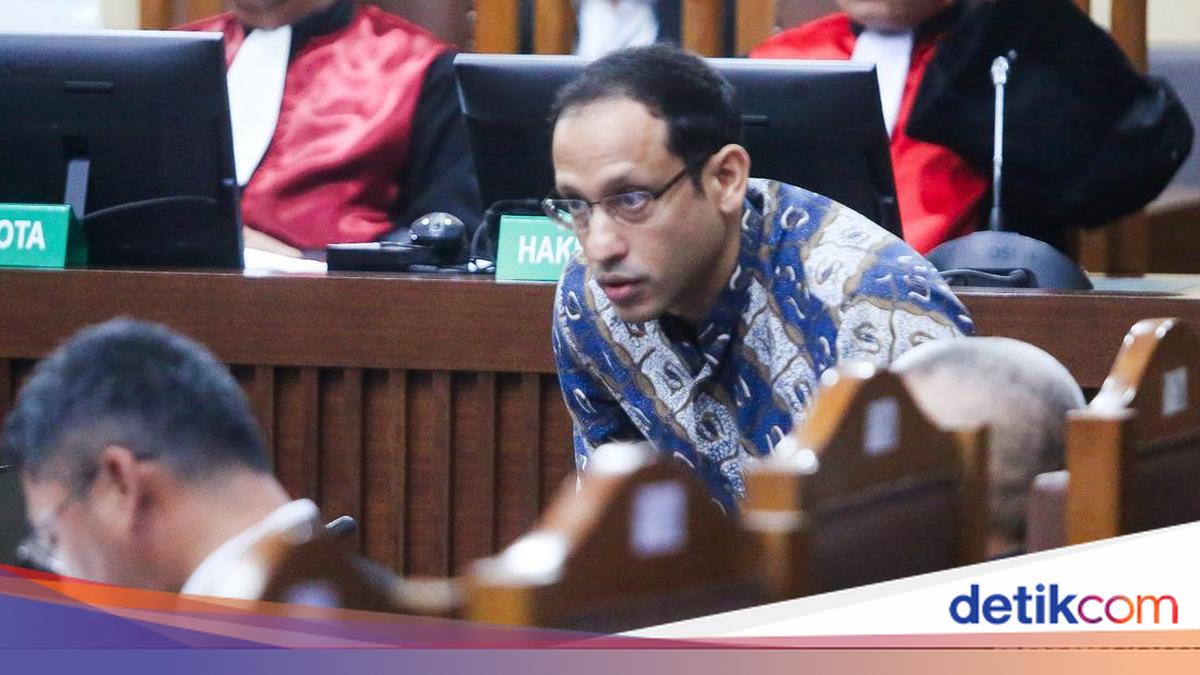
Prosecutors sought an 18-year prison sentence, a fine of IDR 1 billion, and IDR 5.6 trillion in restitution for former Minister of Education and Culture, Nadiem Makarim. This amount exceeds the state loss figure of IDR 5.2 trillion in the Chromebook corruption case, as stated in the verdict against defendant Ibrahim Arief (Ibam).
As of Friday, May 15, 2026, there are four defendants in this case:
Nadiem Makarim
Former consultant at the Ministry of Education and Culture during Nadiem’s tenure, Ibam
Former official at the Ministry of Education and Culture during Nadiem’s tenure, Sri Wahyuningsih
Former official at the Ministry of Education and Culture during Nadiem’s tenure, Mulyatsyah
Ibam, Sri, and Mulyatsyah have been found guilty and sentenced to prison. Sri and Ibam received 4-year sentences, while Mulyatsyah received a 4.5-year sentence.
In Ibam’s verdict, read on Tuesday, May 12, the judge stated that the procurement of Chromebooks and Chrome Device Management (CDM) at the Ministry of Education and Culture during Nadiem Makarim’s tenure resulted in financial losses for the state. The details of the state losses in the Chromebook case are as follows:
Procurement of CDM: IDR 621,387,678,730 (621 billion)
Overpricing of Chromebooks: IDR 4 million multiplied by 1,159,327 units, totaling IDR 4,637,308,000,000 (4.6 trillion)
The total state losses in the judge’s decision amount to IDR 5,258,695,678,730 (5.2 trillion). This figure is higher than the prosecutor’s initial claim of IDR 2.1 trillion.
“When multiplied by the number of Chromebooks procured, which is 1,159,327 units, the loss amounts to more than IDR 4 trillion, which is significantly higher than the BPKP’s calculation of IDR 1,567,888,602,716.74. This proves that the calculation of state losses used by the prosecutor is conservative and benefits the defendant, rather than the opposite, as argued by the defense counsel,” the judge stated.
Although Ibam’s actions were deemed to have caused state losses, he was not required to pay restitution. The judge stated that Ibam did not receive any funds directly from the project’s losses.
“The defendant was not proven to have received direct funds from the procurement of ICT to his personal account,” the judge said.
On Wednesday, May 13, the prosecutor read out the charges against Nadiem. One of the charges was that Nadiem should pay IDR 5.6 trillion in restitution.
“There is factual evidence in the description of the elements of enriching oneself, the defendant, other parties, or corporations, which has been fully explained, so that the defendant in this case must be required to pay restitution in the amount he enjoyed, namely IDR 809,596,125,000 (809 billion) and IDR 4,871,469,603,758 (4.8 trillion),” the prosecutor said while reading Nadiem’s indictment.
The prosecutor said that Nadiem should have proven the source of his assets during the examination in this case. According to the prosecutor, this is important to prove that the assets came from legitimate income.
“However, during the examination, the defendant should have exercised his right to prove that the assets that do not match his income are not the result of corruption, by providing truthful information about his legitimate income, such as salary or other income that can be accounted for,” he said.
The prosecutor said that Nadiem instead chose to provide information that lacked substance to explain the acquisition of the assets. The prosecutor believes that Nadiem cannot prove the source of the assets.
“Therefore, during the trial, the defendant was unable to prove that the IDR 809,596,125,000 and IDR 4,871,469,603,758 are assets that do not match his income or the source of the increase in his assets,” the prosecutor said.
“Therefore, this information can be used to strengthen the existing evidence that the defendant has committed corruption, so that the defendant should be required to pay restitution of IDR 809,596,125,000 and IDR 4,871,469,603,758,” he added.
The prosecutor mentioned the scheme of white-collar crime in the procurement of Chromebooks. The prosecutor believes that this scheme was used to conceal or enrich Nadiem.