
Discovery of Thousands of Artefacts in the Holy Land Unveils Early Islamic History
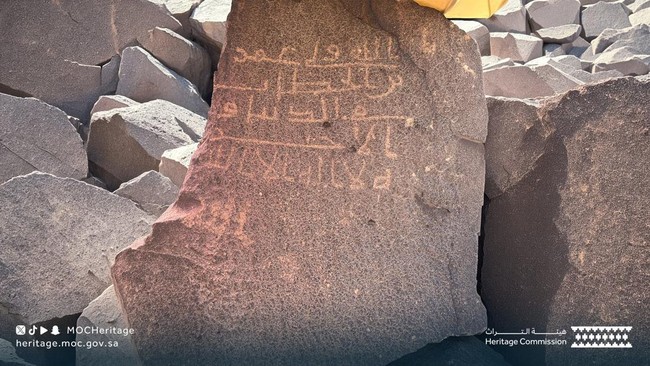
Thousands of historical objects have been successfully excavated in the Madinah region, Saudi Arabia, revealing traces of civilisation and the long journey of pilgrims since the early days of Islam. This announcement was made by the Saudi Arabian Heritage Commission as a result of the second season of archaeological research conducted in the area on Tuesday (29/09/2026).
The excavations focused on the Al-Mahd Province, located within the Madinah region. A total of 1,774 archaeological finds were collected from three main locations: Al-Suwayriqiyah, Al-Muwayhiyah, and Hadhah. The research also successfully identified 156 previously unrecorded archaeological sites.
The collection consists of 461 inscriptions featuring Islamic calligraphy, 34 inscriptions in the Thamudic script, 1,259 carved art panels on stone walls, 11 stone buildings, three palace ruins, two caravan stop routes, and four ancient wells. One of the most notable discoveries is a stone inscription mentioning the name of Caliph Umar bin Khattab, complete with a piece of poetry written during that era.
Elsewhere, the research team has also completed excavations at the ancient site of Al-Juhfah, known as one of the miqat—the designated boundaries for beginning the intention for Hajj or Umrah pilgrimage.
A miqat is a designated area where pilgrims must declare their intention and don the ihram clothing. Passing through a miqat without this intention renders the pilgrimage invalid, requiring the pilgrim to repeat the process or pay a penalty according to religious regulations.
Al-Juhfah is located approximately 187 kilometres northwest of Makkah and has since ancient times served as a miqat for residents of Egypt, North Africa, and other western regions travelling to the Holy Land.
Research conducted in collaboration with the University of Exeter found that Al-Juhfah flourished during the second century of the Hijri calendar. The site once featured irrigation structures to provide water for pilgrims, as well as rows of shops to serve their needs during stops. More than 1,700 artefacts were collected from this site, confirming Al-Juhfah’s vital role as a crossroads for pilgrimage routes connecting various regions.
The discovered items include fragments of household utensils likely used in daily life, six stoves used for heating water, remains of water drainage channels, and 13 tombstones dating from the Umayyad and Abbasid eras.
Many of these items are known to have originated from distant regions, such as the Levant, Egypt, and Ethiopia. This proves that centuries ago, the routes to the Holy Land were already traversed by pilgrims arriving from various nations and continents.
This implies that the lands surrounding Madinah and the routes to Makkah still hold thousands of untold stories. Every inscription, ancient well, or pottery shard discovered serves as tangible evidence that the Holy Land is not merely a destination for worship, but also a centre of civilisation that has united humanity from all corners of the world for many centuries.
Source: jawawa.id (https://jawawa.id/newsitem/discovery-of-thousands-of-artefacts-in-the-holy-land-unveils-early-islamic-history-1790733227)
Originally published by CNBC Indonesia (https://www.cnbcindonesia.com/tech/20260929124948-37-771754/temuan-ribuan-artefak-di-tanah-suci-ungkap-sejarah-islam-zaman-dulu), translated from Indonesian