
Discovery of the Rusty Lark, the Rare Bird Missing for 94 Years
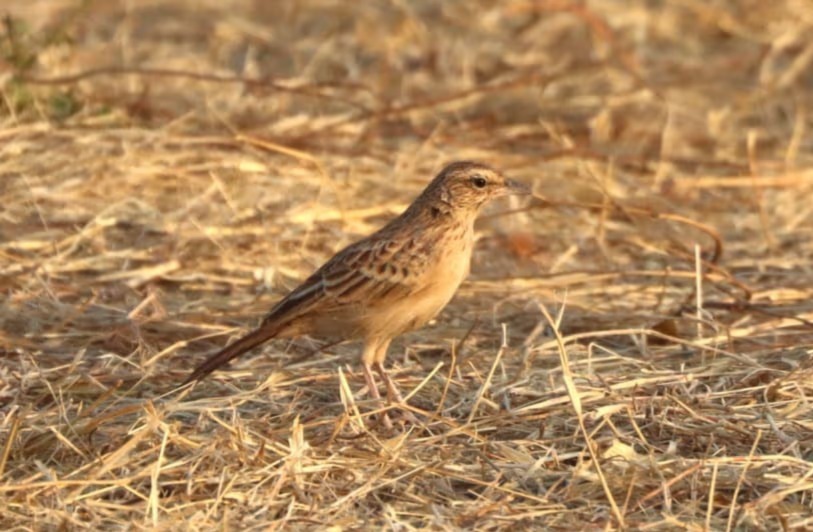
The international ornithology community was startled by extraordinary news from the heart of Africa. A small reddish-brown bird once thought extinct and off the radar for 94 years has been photographed alive in central Chad. This discovery ends almost a century of silence and brings new hope for the conservation of a species suspected to have vanished.
Documentation of the bird named Rusty Lark or Calendulauda rufa was obtained inadvertently by a team of researchers conducting a United Nations-backed wetland project. An official report on the bird’s return has been published in the scientific journal Tour du Valat.
The historic moment began on 2 February 2026 when Pierre Defos du Rau, an ornithologist from the French Office for Biodiversity (OFB), conducted a survey in the Abou Telfane Reserve, about six miles east of Mongo, Chad. Together with colleagues Julien Birard and Idriss Dapsia, they were initially focusing on documenting the wetland ecosystem.
However, while directing the camera toward the open grassland, Pierre spotted a small bird perched calmly on the savannah. He spent hours photographing and recording video of the animal. Validation grew stronger when on 15 February 2026, another team member sighted the same bird in the area.
To confirm the finding, the research team sent visual evidence to four leading ornithologists worldwide, including Per Alström from Uppsala University, Sweden. The experts compared the physical details of the latest photo with museum specimens from 1931.
Based on the current contextual analysis, the bird was confirmed as the Rusty Lark with the following characteristics:
The main factor behind the loss of documentation since 1931 is its extreme habitat location. The Rusty Lark inhabits the Sahel zone, a dry savannah and semi-desert scrub beneath the Sahara, spanning about 116 million hectares.
This region is known to be extremely remote, rarely visited by researchers, and often hit by political instability and security problems. This has caused many aspects of the Rusty Lark’s life to remain a mystery to science, including its unique mating rituals last recorded almost a century ago.
The return of the Rusty Lark has a major impact on the future of wildlife protection. The species is now officially removed from the global list of missing birds. This discovery proves that in hard-to-reach areas, nature still holds life secrets that must be protected with more targeted conservation policies.