
Discourse on Widening the Budget Deficit: Debt Risks and Spending Quality
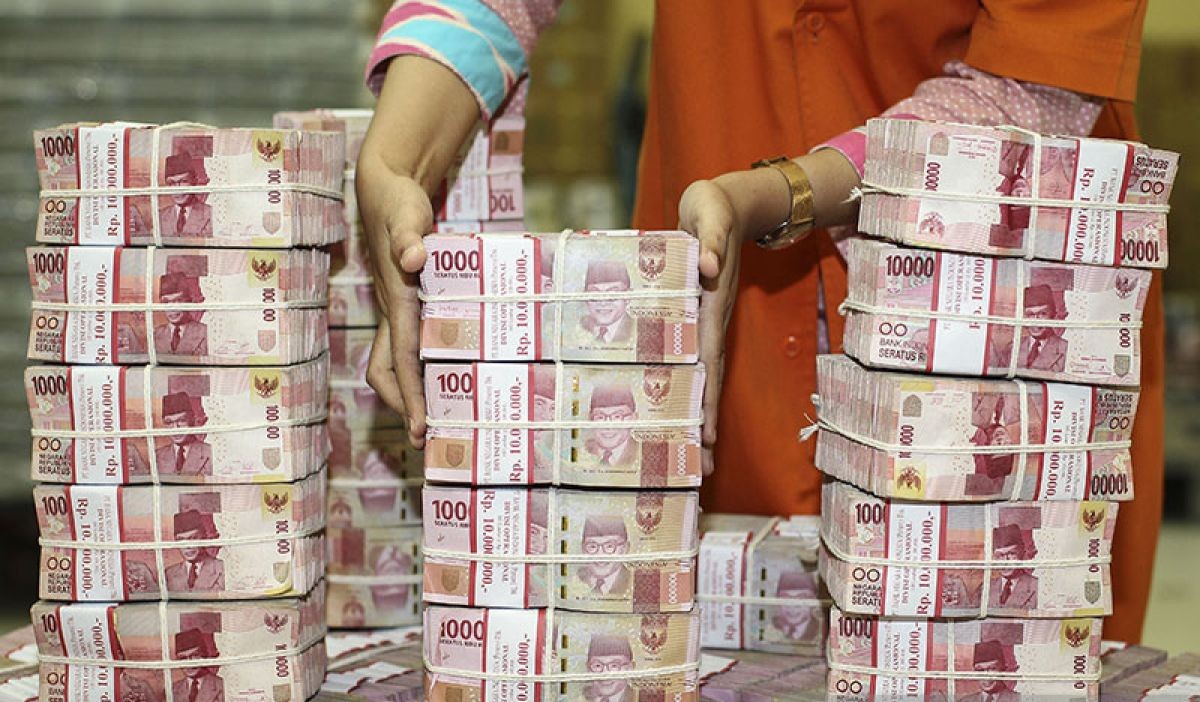
The discourse regarding widening the budget deficit space above the 3% limit of Gross Domestic Product (GDP) requires high vigilance against the risk of increasing the government’s debt burden. Widening the deficit will certainly increase financing needs, primarily through the issuance of Government Securities (SBN), which risks driving up yields and debt costs if not managed carefully.
Professor Rahma Gafmi, an Economics Professor at Airlangga University, emphasised that continuous widening of the deficit could increase the debt-to-GDP ratio. This has the potential to narrow the government’s future fiscal space if not accompanied by an increase in economic capacity and state revenue.
“A continuously growing deficit will increase the debt-to-GDP ratio,” Rahma told Media Indonesia on Thursday (17/9).
Rahma explained that the 3% deficit limit is not theoretically a sacred number, but rather an adoption of the Maastricht criteria from the European Union in the 1990s. Although evaluating this limit is possible according to domestic needs, loosening it brings macroeconomic risks that must be strictly anticipated.
One of the main risks is the increasing supply of SBN in the market. If the market’s ability to absorb this additional issuance is low, pressure on SBN yields will increase. This rise in yield will make government financing costs more expensive and burden interest payments within the State Budget (APBN).
Furthermore, widening the deficit can trigger a crowding-out effect. This condition occurs when government financing needs drive up domestic interest rates, thereby increasing borrowing costs for the private sector, which ultimately pressures national investment and economic activity.
Rahma believes that the quality of spending is the key. Additional fiscal space must be directed towards sectors with a high multiplier effect, such as education, health, research and development (R&D), and public investment.
“The issue is not just the size of the deficit, but the quality of spending,” she asserted. Using debt for productive spending is crucial so that additional financing can increase production capacity and state revenue in the future.
Without strengthening productivity, the debt-to-GDP ratio will rise without being balanced by adequate fiscal capacity. Consequently, the government’s flexibility in financing priority programmes in subsequent years will become increasingly limited as the budget portion is absorbed by interest and principal debt payments.
As a solution, Rahma suggested implementing conditional flexibility if the 3% limit is evaluated. Widening the deficit must have a clear and temporary upper limit (ceiling rule).
“There must be a mechanism to return to reducing the deficit when economic conditions improve,” she said. This step needs to be supported by tax reforms to expand the state revenue base so that development does not continue to rely on debt.
In the long term, fiscal expansion must be directed towards bringing Indonesia out of the middle-income trap through structural transformation, improving the quality of human capital, and strengthening regional connectivity. Downstreaming must also be further developed across longer value chains and technology transfers.
In conclusion, widening the deficit space will only be beneficial if followed by fiscal discipline, high spending quality, and increased national productivity. Without these elements, an increase in the deficit will instead become a burden that narrows economic movement in the future.
Fauzo revealed that last year’s tax revenue realisation, which only reached 86.7 per cent, serves as a red note for the government. The policy to increase spending in 2025 is already on the right track. However, the great challenge ahead is ensuring its effectiveness.
The MSME sector, numbering approximately 57 million units, serves as the backbone of the economy, contributing 60.5 per cent to the Gross Domestic Product.
Indonesia’s Gross Domestic Product (GDP) growth also recorded positive sentiment throughout the full year of the Prabowo administration in 2025. Details show that ministry/agency (K/L) spending reached Rp658.9 trillion, a 40% increase, while non-K/L spending reached Rp639.7 trillion, a 20% increase.
Purbaya stated that the government will keep the 2026 State Budget healthy through efficient budget financing and controlling the deficit so that it does not exceed the limit. The discussion of the Macroeconomic Economic Framework and Main Points of Fiscal Policy (KEM-PPKF) for 2027 must be directed towards maintaining domestic economic strength.