
Discourse on Presidential Candidates Requiring Support from Two Parliamentary Fractions: Does it Align with the Constitutional Court Ruling?
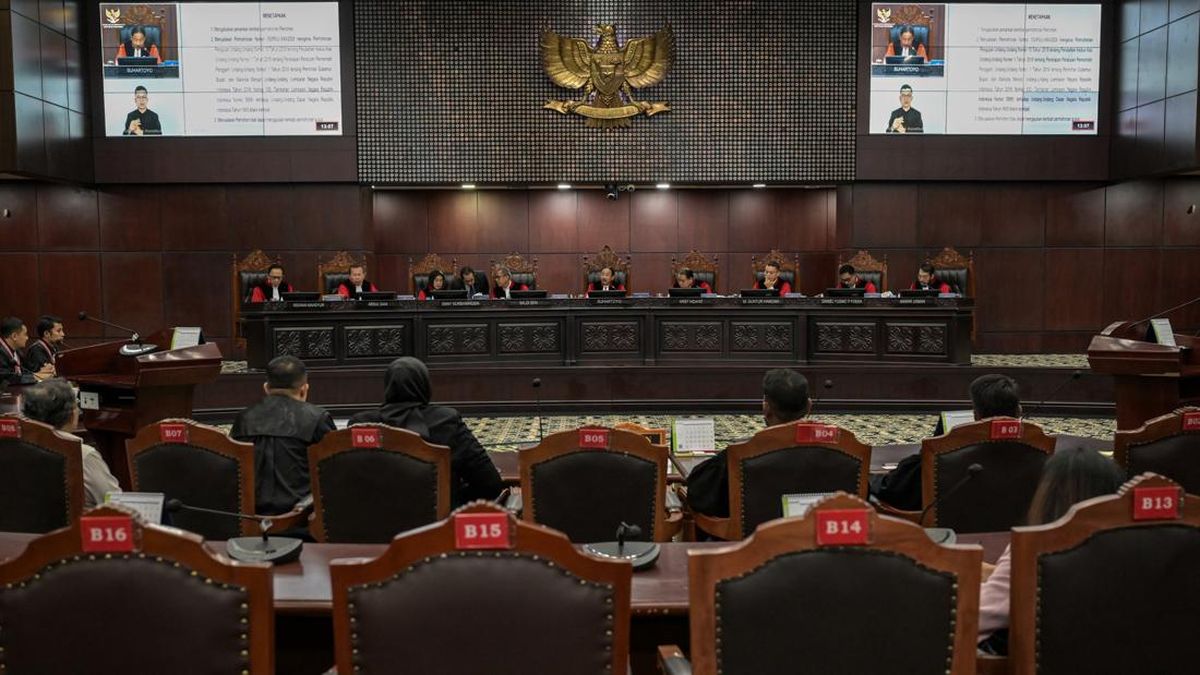
The discourse regarding a minimum requirement for presidential candidates to be supported by at least two parliamentary fractions in the DPR has recently resurfaced. This discussion emerges amidst the Constitutional Court’s decision to abolish the presidential nomination threshold of at least 20 per cent of DPR seats or 25 per cent of the national valid votes from the previous election, as regulated under Article 222 of Law No. 7/2017 on Elections.
The Constitutional Court judges declared that Article 222 contradicts the 194 ‘Constitution’ and holds no binding legal force. This ruling is contained within Case Number 62/PUU-XXII/2024, filed by four students from the Faculty of Sharia and Law at UIN Sunan Kalijaga: Enika Maya Oktavia, Rizki Maulana Syafei, Faisal Nasirul Haq, and Tsalis Khoirul Fatna.
In their petition, the applicants argued that the presidential threshold violates the principle of ‘one man, one vote, one value’. The applicants stated that, ideally, the value of votes should correspond to the relevant election period. However, in the case of the presidential threshold, vote counts from one period are used for two election cycles, as the results of the previous legislative election serve as the benchmark for presidential nominations in the subsequent election.
The applicants argued that this practice could lead to a distortion of representation within the democratic system. While acknowledging that Article 222 contradicts the Constitution, the Constitutional Court, in its legal considerations, did not ignore the realities of Indonesia’s multi-party system.
The Court stated that the potential number of presidential and vice-presidential candidate pairs must be balanced against the number of political parties participating in the election. Consequently, the Court provided guidelines for legislators to undertake ‘constitutional engineering’ to prevent an excessive number of candidate pairs from emerging.
First, the Court stated that all political parties participating in the election have the right to propose presidential and vice-presidential candidates. Second, the nomination of candidates by political parties or coalitions shall not be based on the percentage of seats in the DPR or the national valid vote count.
Third, in proposing candidates, participating political parties may form coalitions, provided that such alliances do not lead to the dominance of certain parties or groups that would restrict the number of candidate pairs and limit voter choice. Fourth, political parties participating in the election that fail to propose a presidential or vice-presidential candidate will face sanctions, including a ban from participating in the next election.
Finally, the Court also stated that the formulation of this constitutional engineering, including amendments to the Election Law, must implement the principle of meaningful public participation.