
Disasters Won’t Wait Until We’re Ready
Preparedness is not a sign of fear, but an expression of awareness and responsibility for the safety of oneself, one’s family and one’s community.
Jakarta (ANTARA) – Rising calls for disaster preparedness in various countries serve as a reminder that the world is facing increasingly complex crisis risks.
A survey published on 2 November said authorities in 33 countries had advised the public to keep emergency supplies at home.
Most of the recommendations urge residents to maintain enough essential supplies to last at least 72 hours. They cover threats ranging from natural disasters and conflict to infrastructure disruption and cyberattacks that could cripple public services.
The measures are not a call to stockpile food or fill homes with emergency equipment. Governments in various countries are beginning to raise awareness that people need the ability to get by independently when public services and the distribution of basic necessities are disrupted.
On 3 November, the European Commission also reinforced its public preparedness guidance for the first 72 hours of an emergency. The message is clear: public safety does not depend solely on how quickly the government provides assistance; each family’s readiness to face the initial emergency also matters.
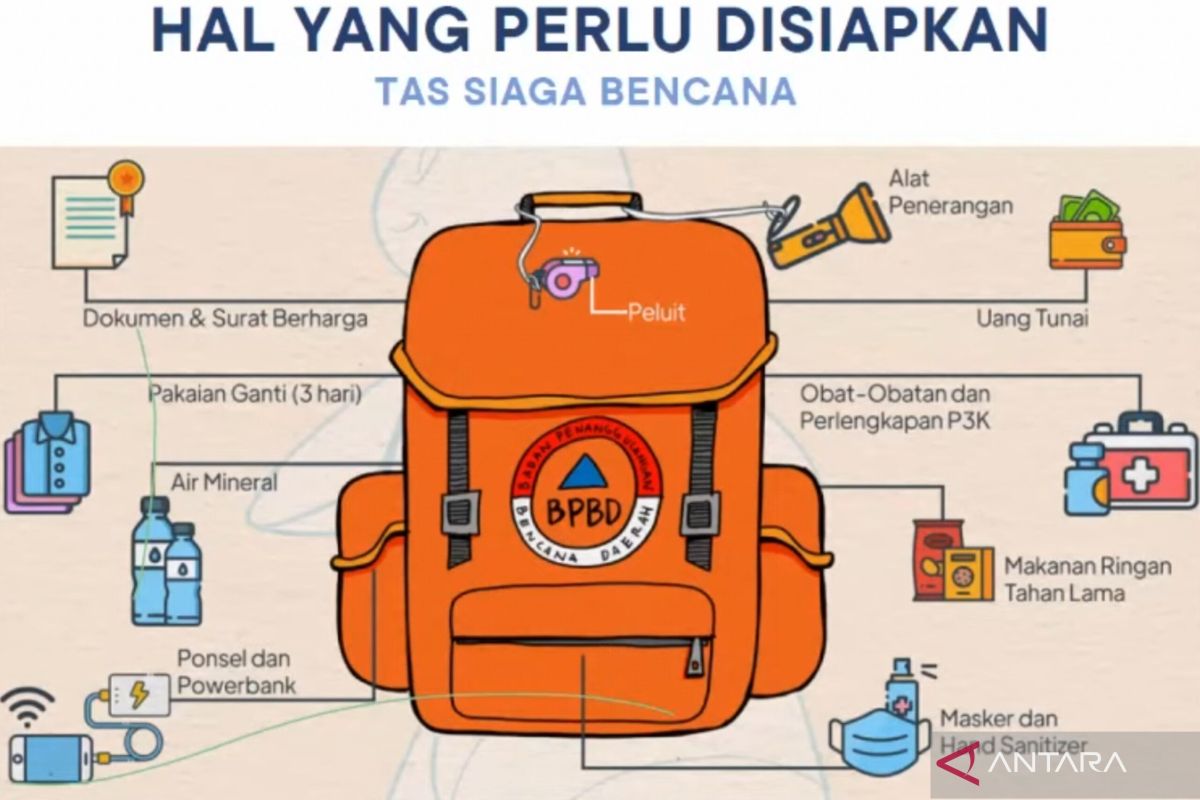
Indonesia is already familiar with this approach. The National Disaster Mitigation Agency (BNPB) has long encouraged the public to prepare a Disaster Preparedness Bag (TSB) containing basic necessities for the first three days, or 72 hours, after a disaster.
The bag should contain important documents, clothing, long-lasting food, drinking water, medicines, first-aid supplies, lighting equipment, cash, masks, a whistle, and communication devices with spare batteries.
These supplies are especially important when roads are cut off, communications disrupted, electricity fails or assistance cannot yet reach affected areas. In such circumstances, a family’s ability to meet its basic needs can determine the safety of its members and help reduce panic.
The Disaster Preparedness Bag should therefore not be seen as an extra item to prepare only during the rainy season or when disaster dominates the news. People should make it part of everyday life.
The problem is that public awareness of disaster risks often emerges only after an event has occurred.
When floods strike, people only then think about evacuation routes. When an earthquake hits, many realise only then how important it is to know where to take safe shelter. When a landslide blocks a road, residents begin thinking about food supplies and their families’ needs.
This pattern shows that our response is still often reactive rather than preventive.
Yet disaster mitigation prioritises prevention and risk reduction before hazards result in casualties and losses. These efforts can begin with simple steps: identifying potential dangers near one’s home, checking building conditions, clearing drains, protecting water catchment areas, learning evacuation routes and drawing up a family emergency plan.
Local governments also have an important role in strengthening early-warning systems, planning land use according to disaster risks, monitoring construction in hazard-prone areas and ensuring vulnerable groups are protected.