
Disasters Must Not Sever the State
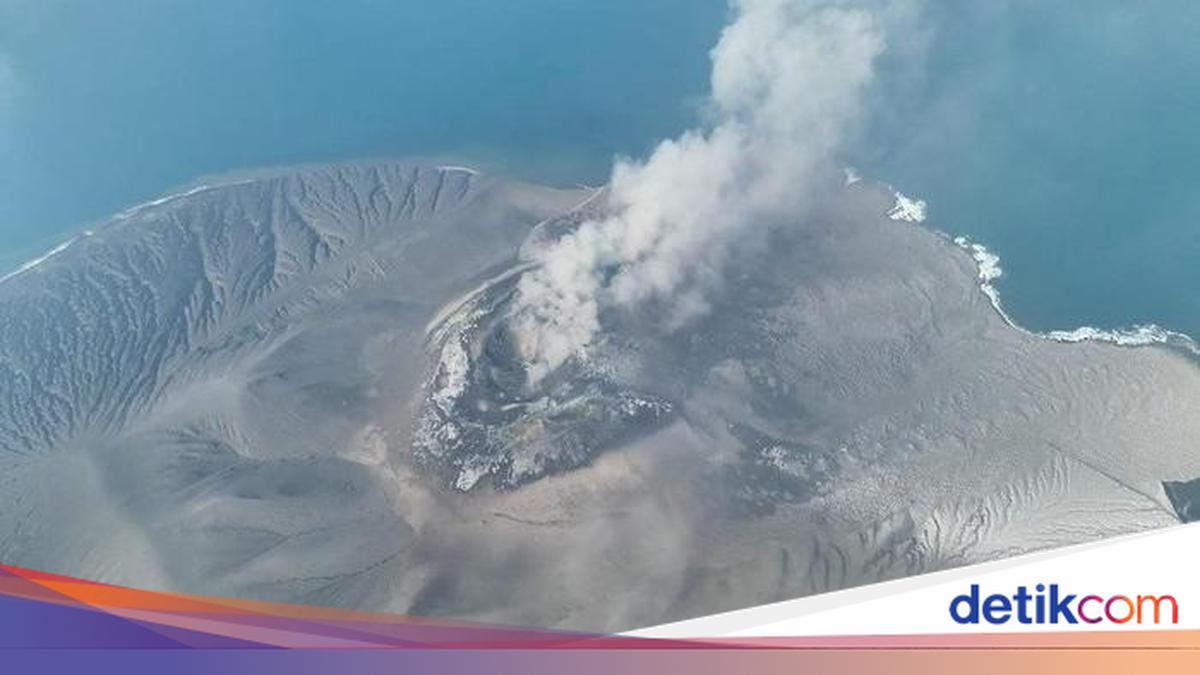
The recent eruptions of Anak Krakatau have sent more than just ash into the sky; the impacts are widespread. As of 7 September, 2,961 flights have been affected, forcing approximately 341,000 passengers to adjust their travel plans. Several schools have transitioned to remote learning, and in areas implementing distance learning, the Free Nutritious Meal programme has been temporarily suspended. Safety is, of course, an indisputable reason.
However, safety should not mark the end of service, but rather the beginning of other obligations. When a service is forced to stop, the state must ensure that citizens are immediately informed of what is happening, what options are available, what rights they possess, and when services are expected to recover.
Administrative Disaster
Every disaster can strike twice. The first blow comes from ash, earthquakes, floods, or fire. The second blow emerges when citizens are forced to seek information themselves, repeat data, move from one complaint channel to another, queue to obtain their rights, and ultimately bear the costs of decisions they never made. The first blow may not always be preventable. The second blow is born from how administration is designed.
Indonesia cannot continue to treat disasters as extraordinary events. Official government documents record at least 42,397 disaster incidents between 2015 and 2025. The 2025 BNPB (National Disaster Management Agency) Performance Report also calculates direct economic losses reaching Rp51.3 trillion, even without including the full impact of Tropical Cyclone Senyar in Sumatra. Within such a vast landscape of risk, crisis is not a deviation from the norm, but a part of the environment in which public services operate.
Donald Moynihan, Pamela Herd, and Hope Harvey (2015) demonstrate that citizens bear three types of costs when facing administration: they must expend effort to understand information, fulfil various procedures, and endure the psychological pressure of uncertainty. This idea was further deepened by Pamela Herd and Donald Moynihan (2018) in Administrative Burden: Policymaking by Other Means. They warn that administrative burden is not always a byproduct of bureaucracy; it can arise from political choices regarding whether the complexity of service is borne by the state or shifted onto the citizens.
On ordinary days, such complexity is already difficult. During a disaster, the consequences can multiply and become dangerous.
This is where the legitimacy of the state is at stake. Public trust during a crisis is built not primarily through press conferences, but through small experiences at the frontline of service. Does the message arrive before citizens depart? Do the sick know which health facilities are still operating? Do affected families receive aid without having to repeatedly prove they are victims?
Law Number 25 of 2009 concerning Public Services actually provides a foundation. Article 20 requires service standards to consider environmental conditions, while Article 25 demands the sustainable management of facilities. The problem is that most service standards only explain what citizens should do when offices, staff, networks, and transport are functioning normally. Very few address what happens when all those prerequisites collapse simultaneously.
Furthermore, the Sendai Framework for Disaster Risk Reduction 2015–2030, adopted by UN member states, places the reduction of damage to critical infrastructure and the disruption of basic services as one of seven global targets. This means the measure of success should not stop at the number of lives saved or aid sent. The state must also calculate how long schools, hospitals, transport, electricity, water, and civil administration services are disconnected.
A State That Remains Lit
President Prabowo Subianto’s call to increase mitigation budgets deserves support. However, the budget debate should not stop at the size of the BNPB’s ceiling. The 2026 State Budget allocates the basic BNPB budget at approximately Rp491 billion, while the disaster reserve fund of Rp5 trillion sits in a separate post. Both serve different functions. Accumulating rupiahs in a single agency does not automatically make services more resilient.
When an airport closes, the matter is not solely in the hands of the BNPB. It involves PVMBG, BMKG, the Ministry of Transportation, AirNav, airport operators, airlines, local governments, schools, and health services. The strength of the system is determined by the connections between these institutions, not merely by the strength of any single one.
Therefore, there are three improvements that need to be integrated into public service policies and the 2027 budget:
Dual Service Standards: Every provider of essential services must have two service standards: a standard for normal conditions and a standard for crisis situations. The second standard should include activation triggers, the minimum capacity that remains available, deadlines for information delivery, alternative channels, treatment for vulnerable groups, and recovery targets. If a flight is cancelled, options for rescheduling, refunds, and alternative routes should be sent automatically to passengers. Citizens should not have to arrive at an airport only to obtain information that the system should already possess.
A Single Crisis Information Architecture: The government needs a single, trustworthy crisis information architecture. This is not about a new application that adds to the clutter, but rather the data connections behind the scenes. Information from technical agencies must immediately trigger actions in the transport, education, health, and local government sectors. Citizens should not be forced to piece together five different press releases just to understand a single decision they must make.
Service Resilience Stress Testing: Service resilience must be tested and measured. The government needs to calculate the time from a warning until the notification is received by citizens, the duration of service interruptions, and the number of users affected…