
Disaster Strikes South Korea, Claiming Lives
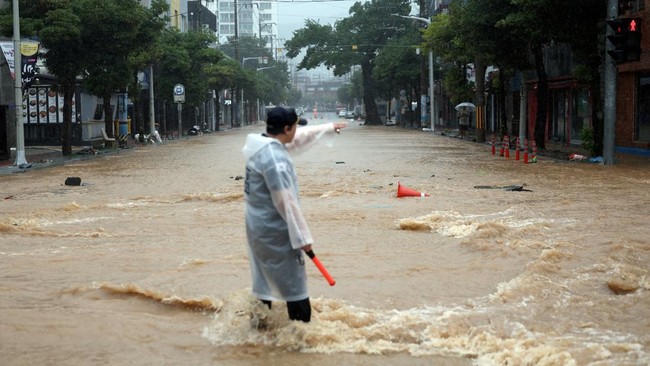
Extreme rain has battered the southern region of South Korea with nearly one metre of precipitation since Saturday (16/8/2026). The conditions triggered a landslide in Geoje City, South Gyeongsang Province, killing one person and injuring four others.
The South Korean Ministry of the Interior and Safety said rainfall in Geoje reached around 800 millimetres over the weekend. By Monday at 6 p.m. local time, total accumulated rainfall had reached 912 millimetres.
Meanwhile, a landslide was reported to have struck an apartment building in Geoje. Police and firefighters evacuated three residents, but one of them was found in cardiac arrest and later pronounced dead at hospital, according to Yonhap reports.
Two other people were injured in Geoje, while two further victims sustained injuries in nearby cities. Yonhap reported that Geoje recorded 805.7 millimetres of rainfall from Saturday to Monday at 8 a.m., while Tongyeong City reached 671.9 millimetres.
The heavy rain also forced around 390 residents to evacuate and caused power outages affecting approximately 3,580 homes. A total of 12 schools and kindergartens were also reported to be flooded.
Weather officials quoted by the Korea Herald said South Gyeongsang Province received rainfall equivalent to its entire summer total in just two days. Geoje and Tongyeong also recorded their highest daily rainfall on record.
Prime Minister Han Seong-sook instructed police, firefighters, and relevant authorities to deploy all capabilities to evacuate trapped residents and those in at-risk areas. Officials also received dozens of calls regarding damage and accidents caused by the extreme rain.
Monsoon rains also triggered flooding in the Philippines, with at least 23 people dead and around 5 million residents affected. Nearly 25,000 people remain in evacuation centres, while in Baguio City, at least 10 people including children died after their homes were buried by a landslide on 9 August.