
Disaster Response Seminar: Culture Minister Emphasises Practical Solutions to Protect Cultural Heritage
Indonesia’s geographical position on the Ring of Fire makes it the second-highest risk country for disasters globally. Recently, 43 cultural heritage sites suffered damage from hydrometeorological disasters that struck three provinces on Sumatra at the end of November 2025.
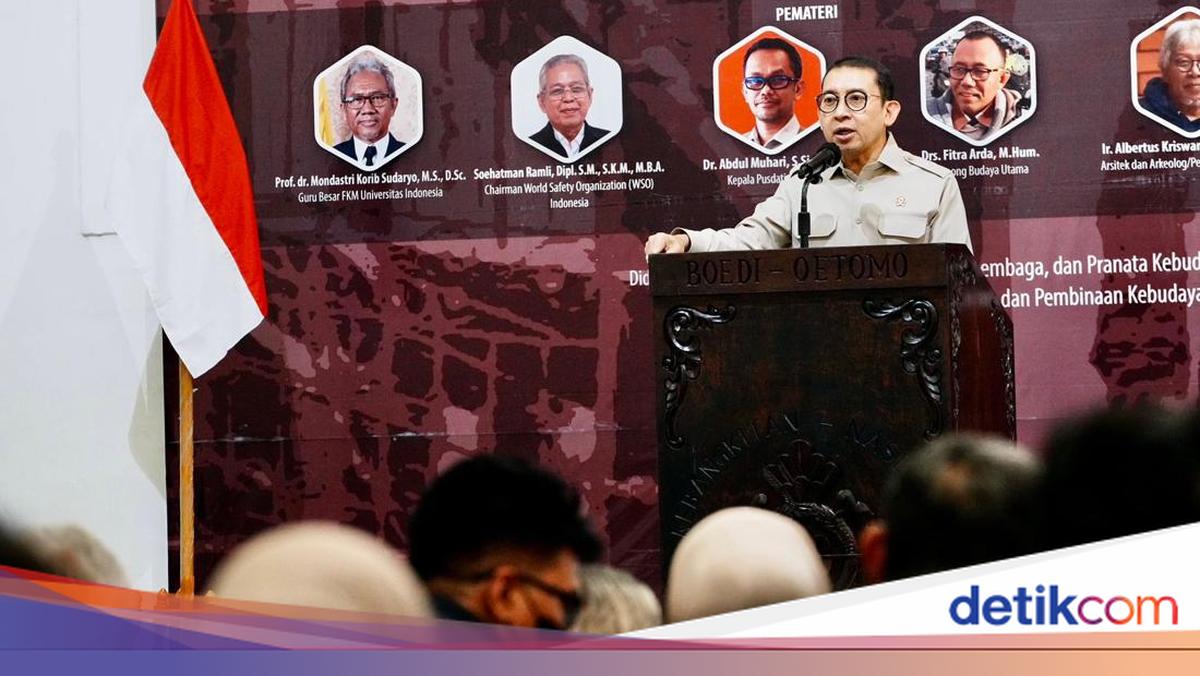
Therefore, educational efforts are needed to raise awareness among the public and all cultural stakeholders regarding disaster management. As part of sustainable cultural heritage protection, the Indonesian Ministry of Culture (Kemenbud) organised a seminar and exhibition titled ‘Resilient and Sustainable Disaster-Proof Cultural Heritage’ at the National Awakening Museum in Jakarta.
Culture Minister Fadli Zon, in his remarks, emphasised that disaster mitigation is one of the main focuses at present. This is due to Indonesia being part of the Pacific Ring of Fire.
He noted that for hundreds or even thousands of years, various disasters have occurred as a consequence and potential of Indonesia’s geographical position.
Threats to cultural heritage are considered very real, as seen in various disasters throughout 2025. Fadli revealed that many cultural heritage sites were affected, ranging from minor to severe damage, both to buildings, sites, and other elements.
“Disasters are not only natural issues but also non-natural ones, including human factors. Therefore, it is important to build awareness and love for culture and nature to create harmony and reduce disaster impacts,” Fadli stated in a written remark on Wednesday (15/4/2026).
Additionally, Fadli highlighted the number of National Cultural Heritage (CBN) sites recorded by Kemenbud. He urged significant acceleration in designating cultural heritage so that protection efforts can be promptly implemented.
“We must accelerate so that protection can be carried out immediately. Many cultural assets have not yet been designated as cultural heritage, even though they hold very important value, including palaces, historical sites, and others. Besides being cultural heritage, these also have great potential as tourism objects, cultural economy, and cultural industry,” he explained.
Fadli also expressed his hope that in the future, the protection system will improve, so that when disasters occur, the public already knows the steps to take, including mitigation for affected cultural heritage.
“Through seminars and discussions like this, it is hoped that concrete ideas and solutions will emerge, as well as real collaborations in efforts to protect and advance culture,” he clarified.
Meanwhile, Syukur Asih Suprojo, Director of Human Resources Development, Institutions, and Cultural Practices at the Ministry of Culture, attended representing the Director General of Culture Development, Utilisation, and Guidance.
On that occasion, he conveyed that strengthening institutional capacity is key to implementing disaster mitigation in the cultural sector.
“Preservation efforts are not sufficient with just maintenance aspects but must be accompanied by cultural institutions’ readiness to face disaster risks. Therefore, a Disaster-Resilient Cultural Heritage-based approach is important to ensure the sustainability of cultural heritage management,” Syukur stated.
He also emphasised that this national seminar and exhibition is part of the strategy to strengthen the cultural ecosystem. The event involved various parties, from communities, institutions, to cross-disciplinary experts.
The seminar featured several speakers, including Fitra Arda, Senior Cultural Curator at the Ministry of Culture, who presented material titled ‘Disaster-Resilient Cultural Heritage’.
Additionally, Soehatman Ramli, a professional in institutional and environmental security, discussed the topic ‘Disaster Management and Cultural Heritage Continuity Based on ISO 22301’. Meanwhile, architect and archaeologist Albertus Kriswandhono delivered a presentation titled ‘Disasters Not in the News: Rob, Subsidence, and Loss of Memory as Real Threats to Cultural Heritage’.
This seminar and exhibition is the result of collaboration between the Ministry of Culture and the Nusantara Cultural Shield Foundation (YPBN) as a form of cross-sectoral cooperation. The event was also attended by YPBN Chairman Hasanuddin along with several members, representatives from the Fire and Rescue Agency, Cultural Heritage Expert Team, students, and museum and cultural heritage enthusiasts.
The organisation of this seminar and exhibition not only aims to share knowledge but also to encourage the formation of a more solid working network among stakeholders. Through this event, the Ministry of Culture hopes to make it the starting point for strengthening collaboration in building a more resilient and sustainable cultural heritage protection system.